
Styling an Antique Kitchen
A kitchen filled with antiques has a very different atmosphere from a newly fitted one. Instead of feeling purely functional, it becomes a room with depth and quiet character — a space where cooking, gathering and everyday life naturally blend together.
Antique pieces bring warmth, patina and a sense of history that new furniture rarely has. Even adding just a few carefully chosen pieces can transform a kitchen into something far more layered and inviting.
Here are a few of the ways we like to bring antiques into the kitchen.
A Grand Antique Mirror
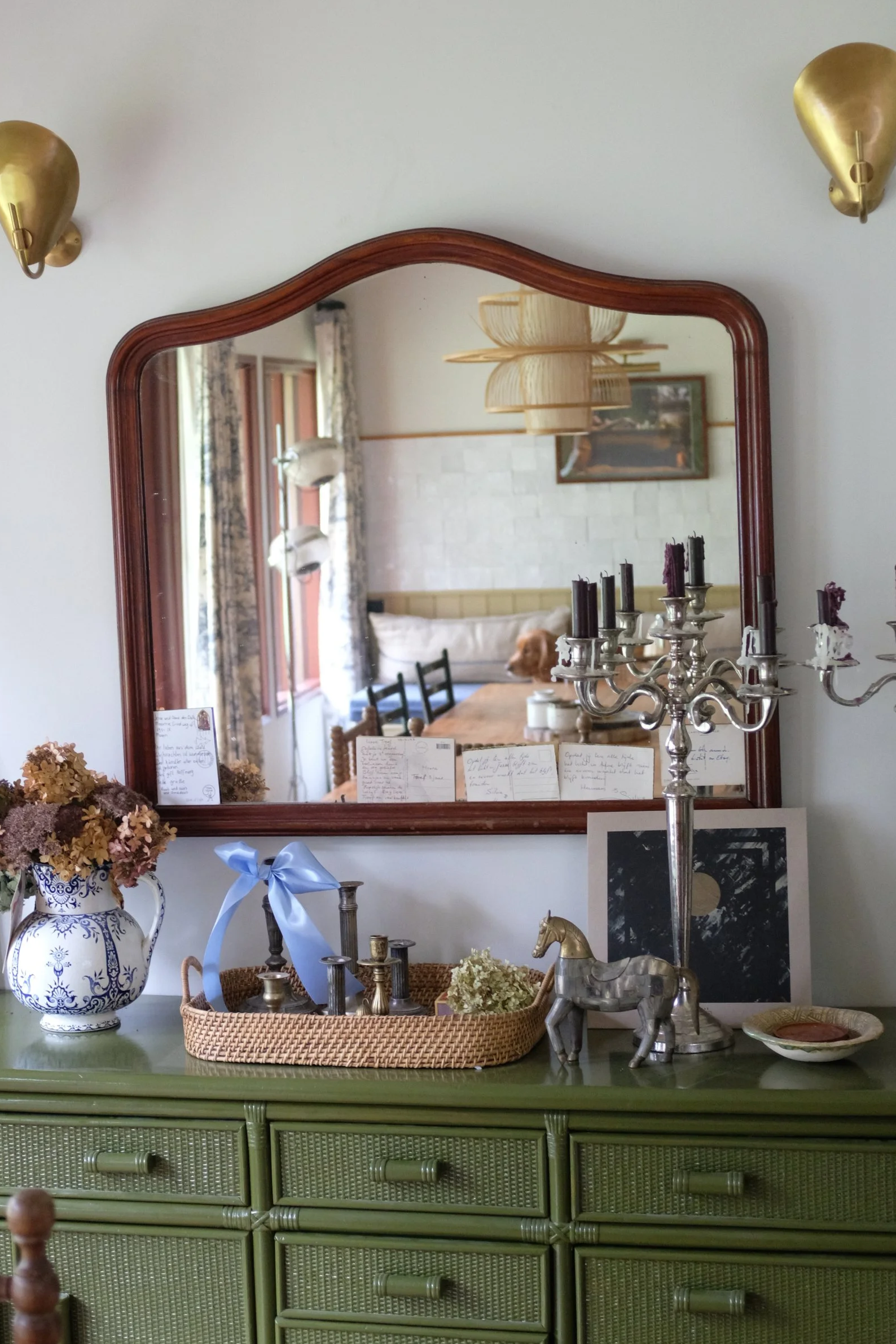
One of the simplest ways to introduce depth into a kitchen is by placing a large antique mirror above a dresser.
A tall mirror such as The Grand immediately softens the room. The gentle patina in antique glass reflects light in a slightly imperfect way, giving the space a warmth that new mirrors rarely have.
Placed above an antique dresser, it creates a natural focal point. The dresser itself brings another layer of character — the worn edges, scratches and subtle irregularities of old wood make the kitchen feel less like a fitted installation and more like a room that has evolved over time.
It also becomes the perfect place to display favourite objects: antique ceramics, candlesticks, a vase with branches from the garden. In the evening, lighting a few candles nearby allows the mirror to reflect the glow, doubling the atmosphere in the room.
For an even softer look, wall lights placed on either side of the mirror frame the dresser beautifully.
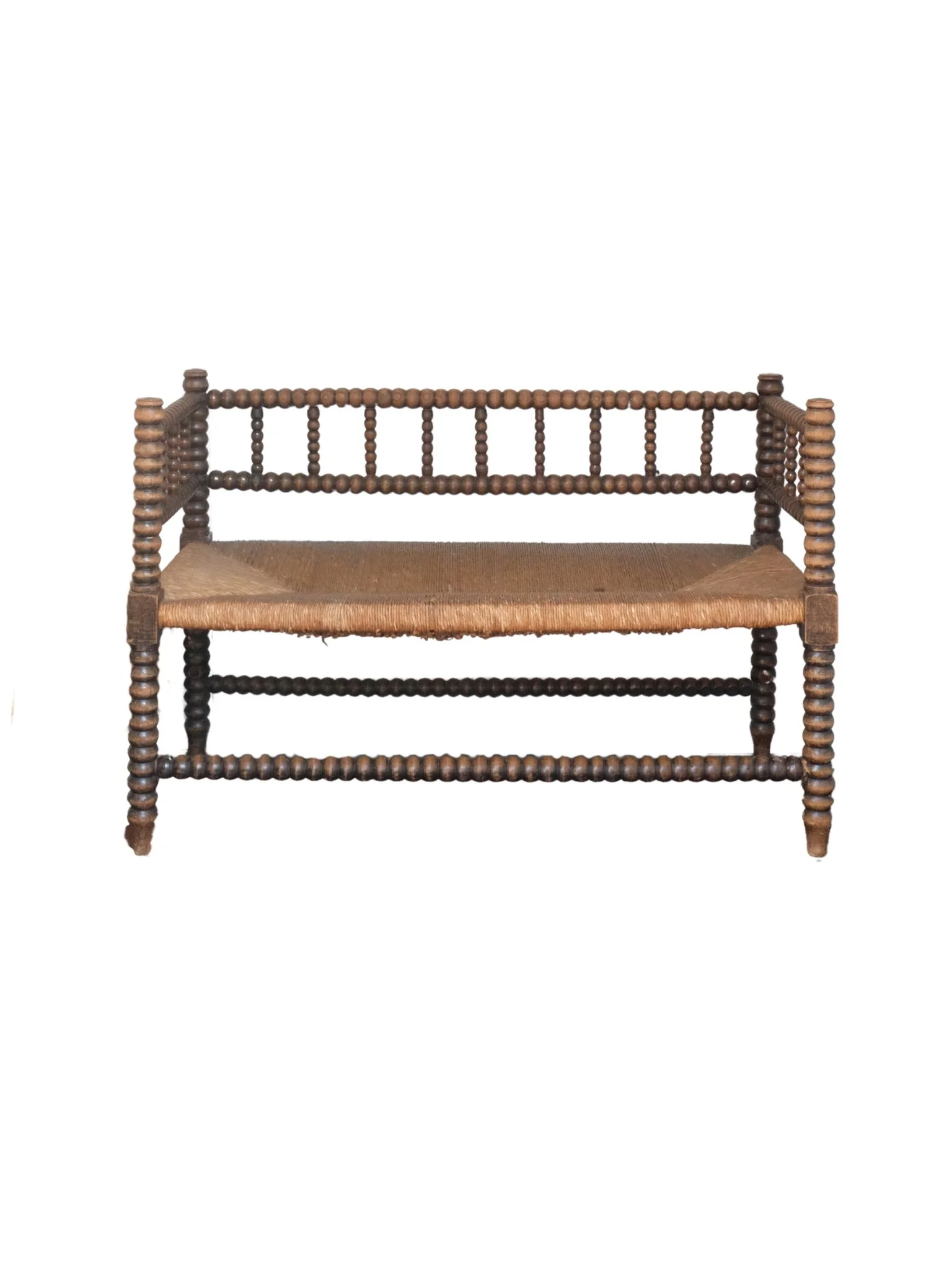
An antique bobbin bench, easy to place throughout the home. Over 100 years old and entirely one of a kind, each bench retains its original wood and patina, with subtle signs of age that add character.
Suitable for use in the hallway, at the foot of a bed, or as an accent piece beneath artwork.
This bobbin bench is in lovely antique condition. The seat shows a little wear from age (a broken strand and a darker spot) whilst the wood is in beautiful shape, rich in character with that time-worn patina only antique pieces can offer. At some point two of the stretchers have been removed, leaving a mark on the legs.
101cm width
43cm depth
67cm height
38cm seat height
Please note: as with all antique items, small variations and imperfections are part of the charm and authenticity of the piece.
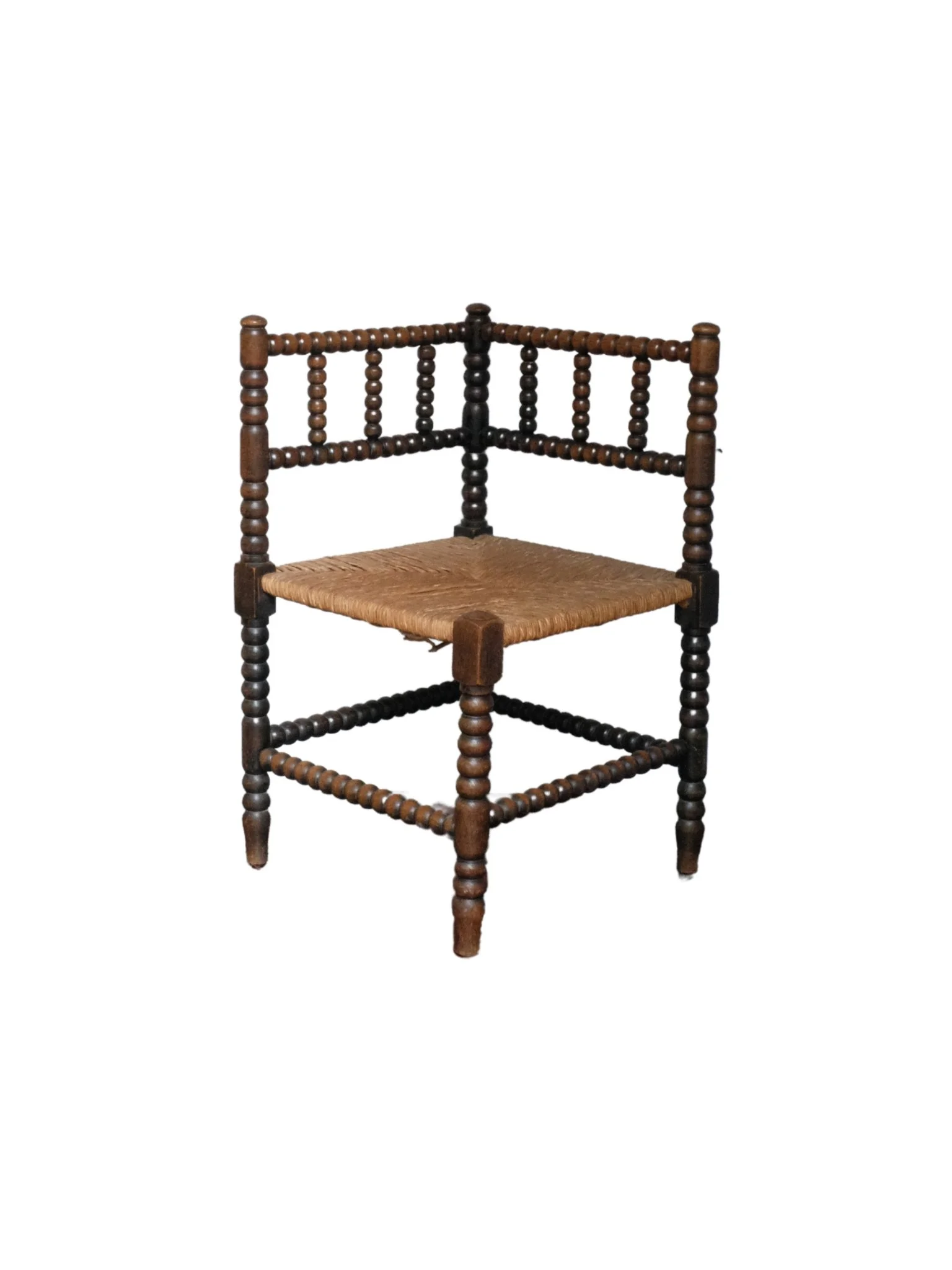
An antique bobbin stool in classic proportions, easy to place throughout the home. Over 100 years old and entirely one of a kind, she retains her original wood and patina, with subtle signs of age that add character.
Ideal as a hallway stool, bedside table, child’s chair or accent piece.
Width: 42 cm
Total height: 70 cm
Seat height: 38 cm
Please note: as with all antique items, small variations and imperfections are part of the charm and authenticity of the piece.
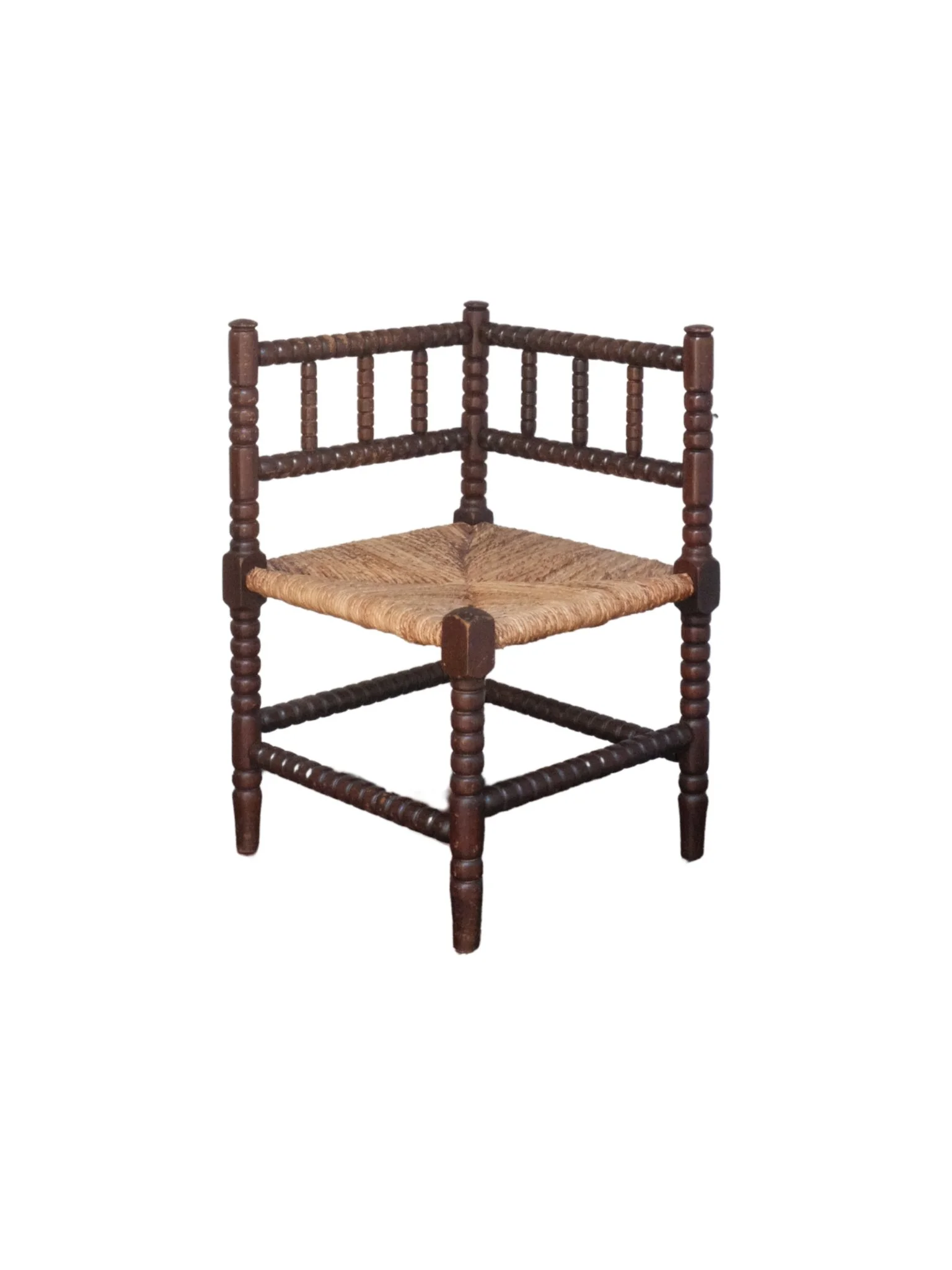
An antique bobbin stool in classic proportions, easy to place throughout the home. Over 100 years old and entirely one of a kind, she retains her original wood and patina, with subtle signs of age that add character.
All bobbin stools can be painted in one of five paint colours, or custom colours on request.
Width: 42 cm
Total height: 65 cm
Seat height: 35 cm
Please note: as with all antique items, small variations and imperfections are part of the charm and authenticity of the piece.
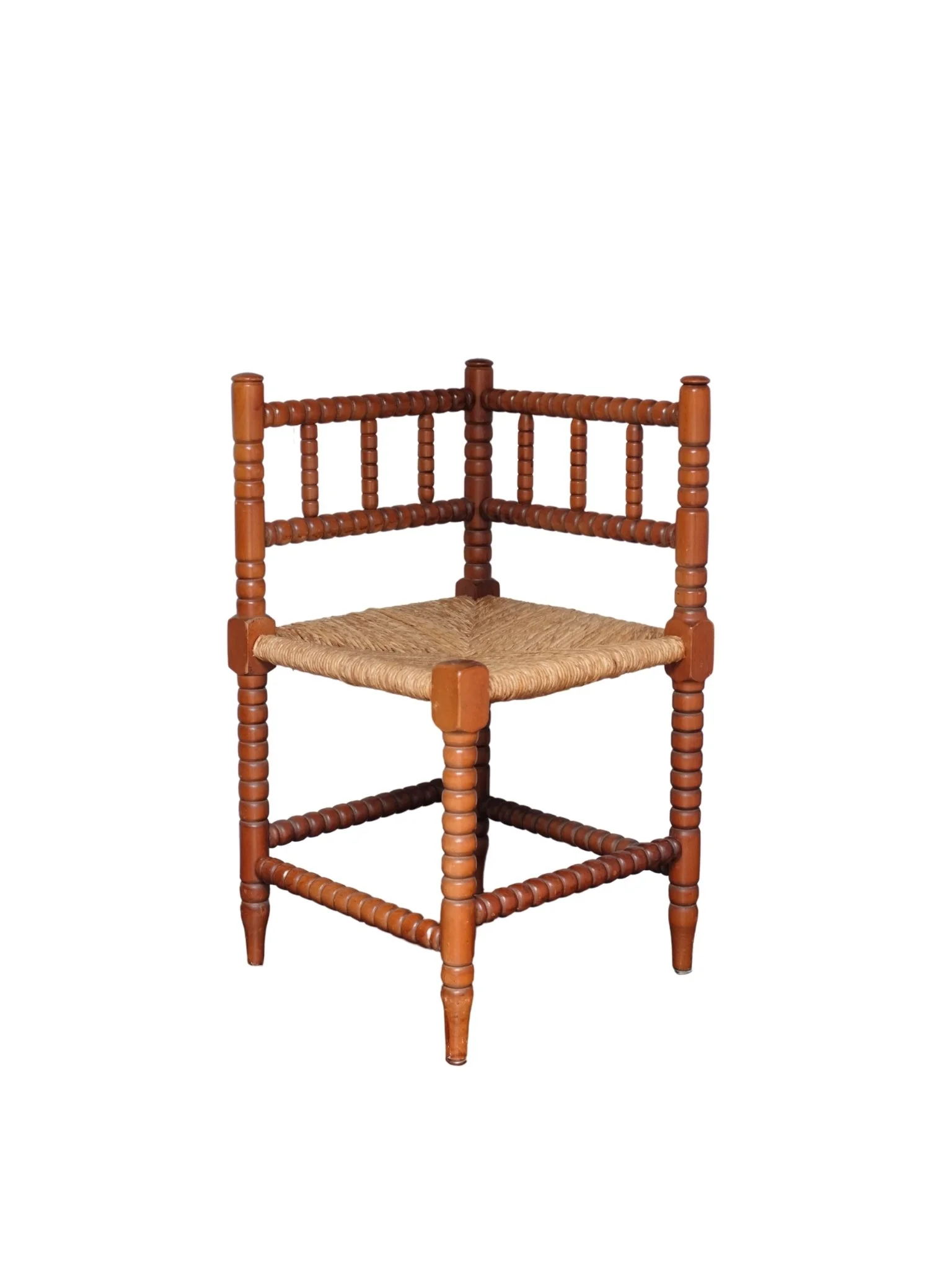
An antique bobbin stool in classic proportions, easy to place throughout the home. Over 100 years old and entirely one of a kind, she retains her original wood and patina, with subtle signs of age that add character.
All bobbin stools can be painted in one of five paint colours, or custom colours on request.
Width: 39,5 cm
Total height: 70,5 cm
Seat height: 41 cm
Please note: as with all antique items, small variations and imperfections are part of the charm and authenticity of the piece.
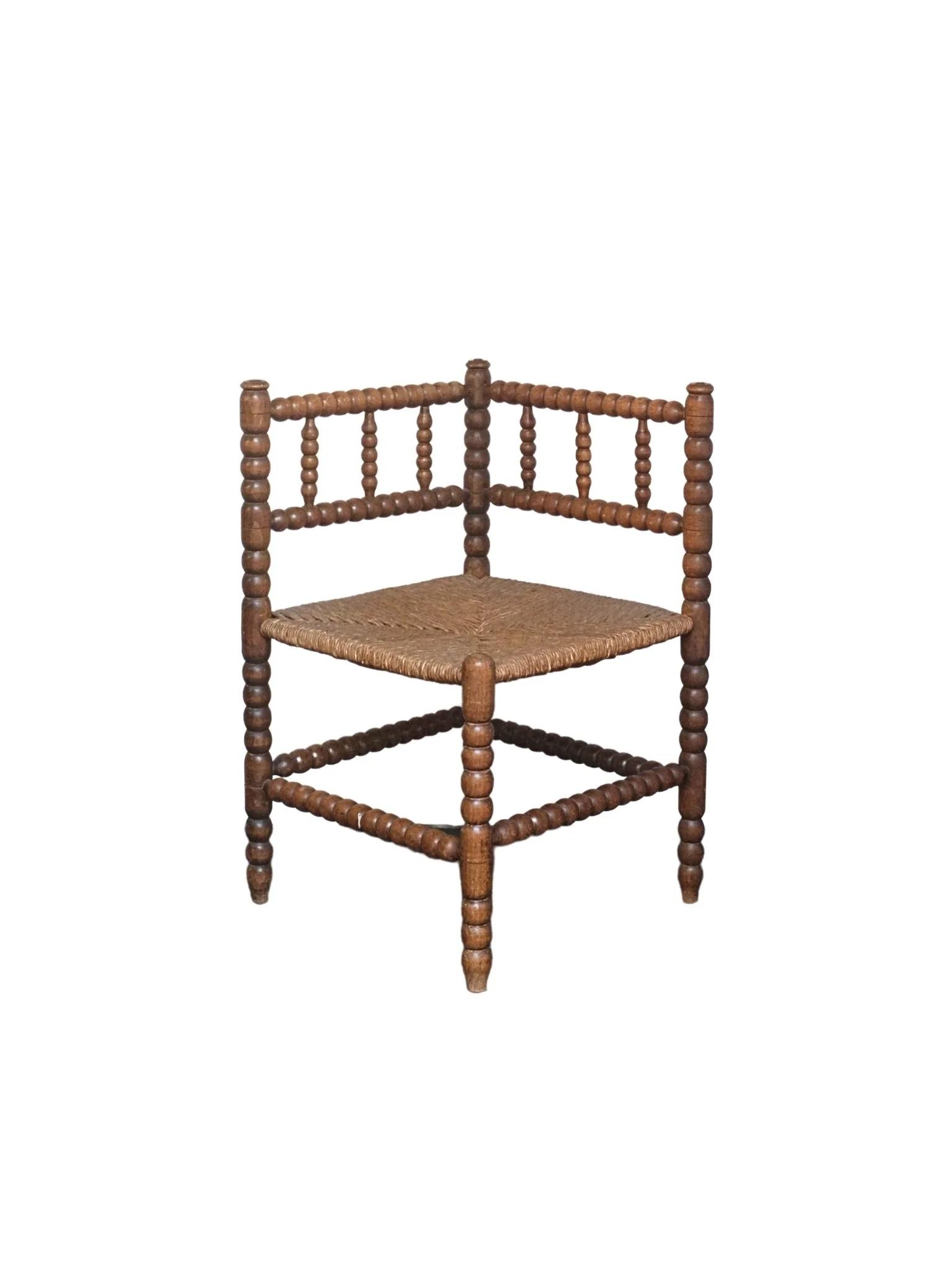
An antique bobbin stool in classic proportions, easy to place throughout the home. Over 100 years old and entirely one of a kind, she retains her original wood and patina, with subtle signs of age that add character.
All bobbin stools can be painted in one of five paint colours, or custom colours on request.
Width: 42 cm
Total height: 66 cm
Seat height: 38 cm
Please note: as with all antique items, small variations and imperfections are part of the charm and authenticity of the piece.
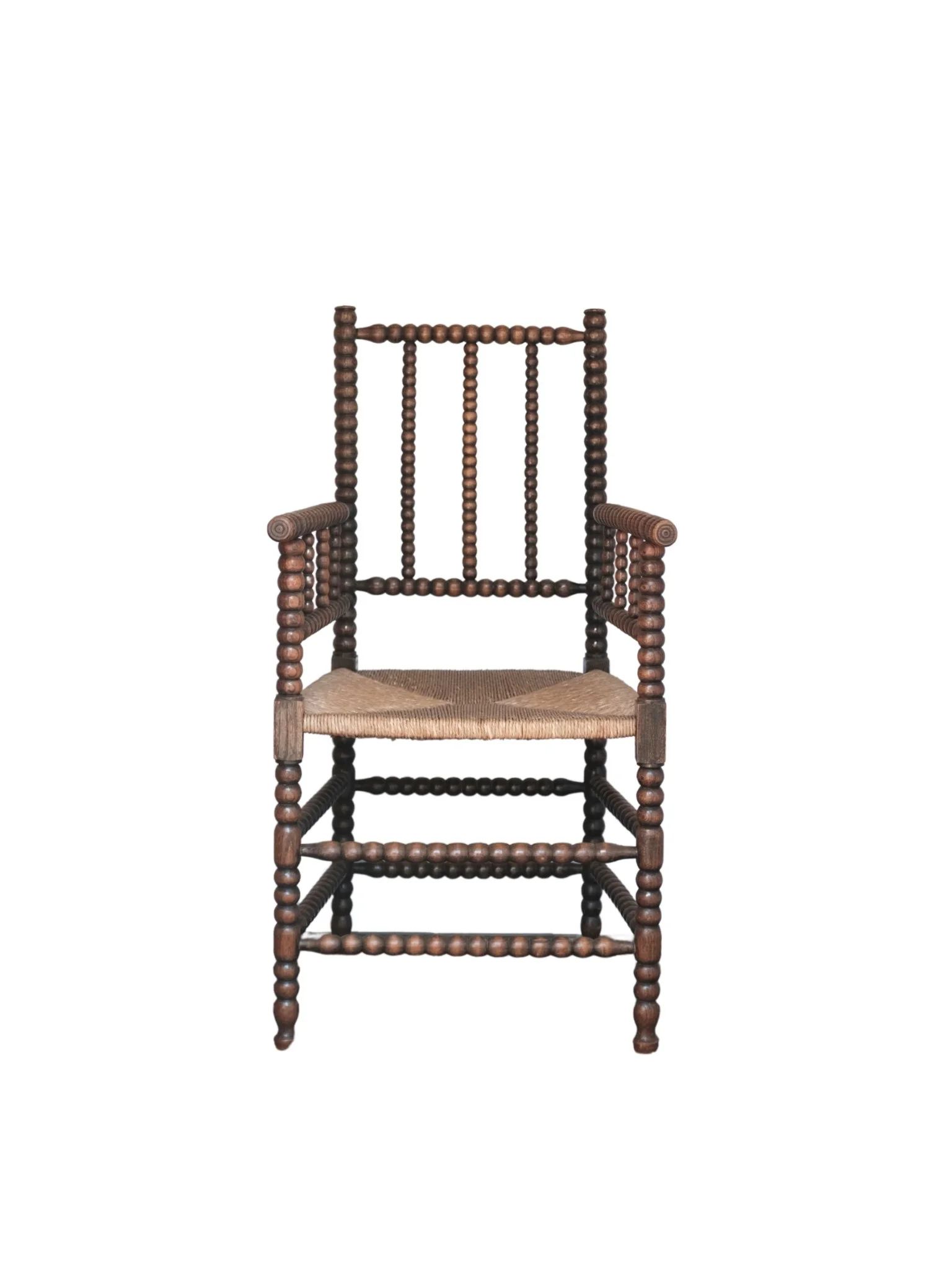
An antique bobbin armchair on the larger side, making it easy to place throughout the home as a functional chair. Over 100 years old and entirely one of a kind, each chair retains its original wood and patina, with subtle signs of age that add character. Carefully sourced and gently restored.
48cm width
94cm height
46cm seat height
Please note: as with all antique items, small variations and imperfections are part of the charm and authenticity of the piece.
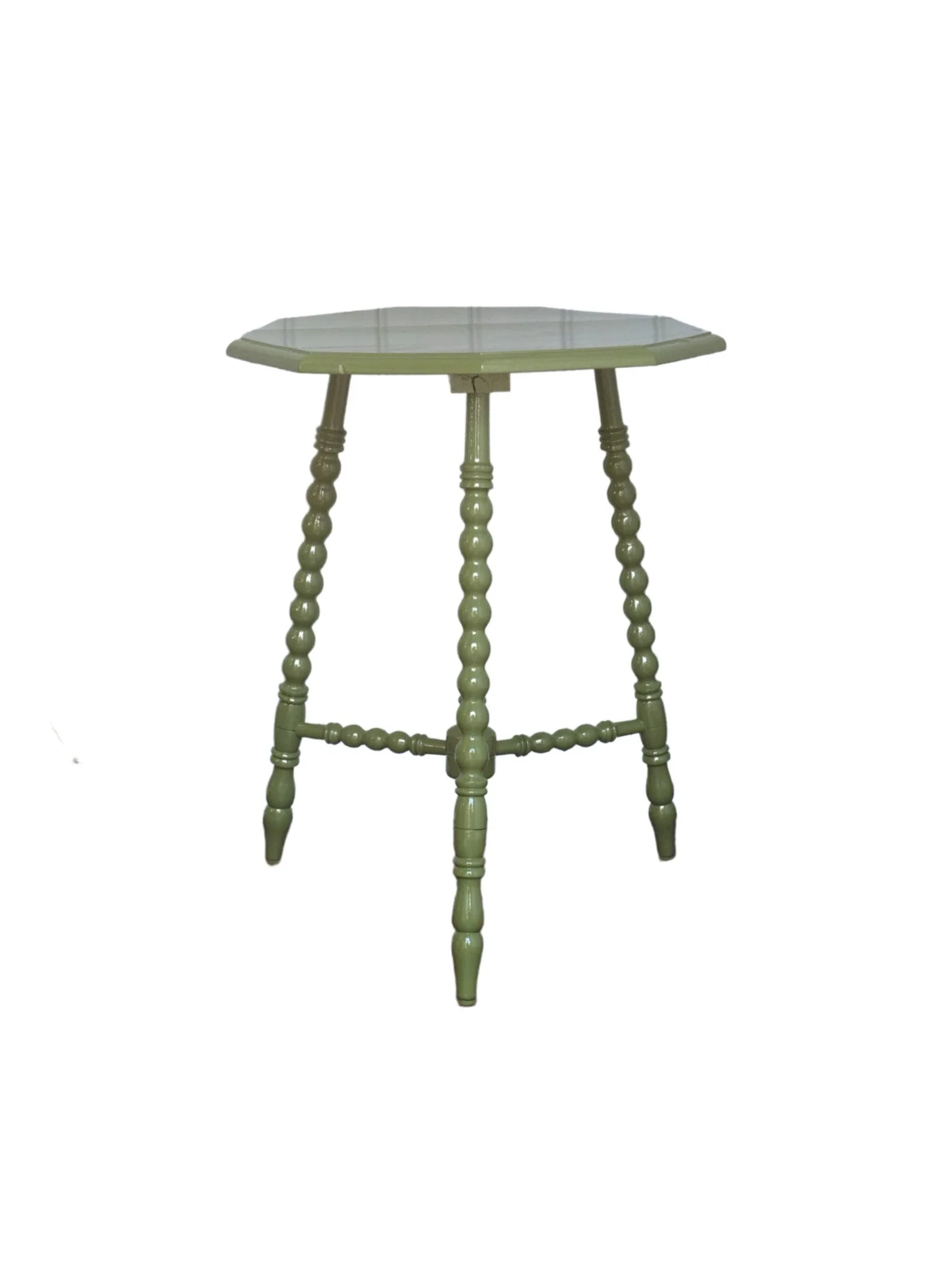
An antique bobbin side table in classic proportions, easy to place throughout the home. Over 100 years old and entirely one of a kind, he retains his original wood and patina, with subtle signs of age that add character. Carefully sourced and gently restored.
54cm width
54cm deep
66cm hight
Please note: as with all antique items, small imperfections are part of the charm and authenticity of the piece. Laurent has two cracks in the top as shown on the photo’s.
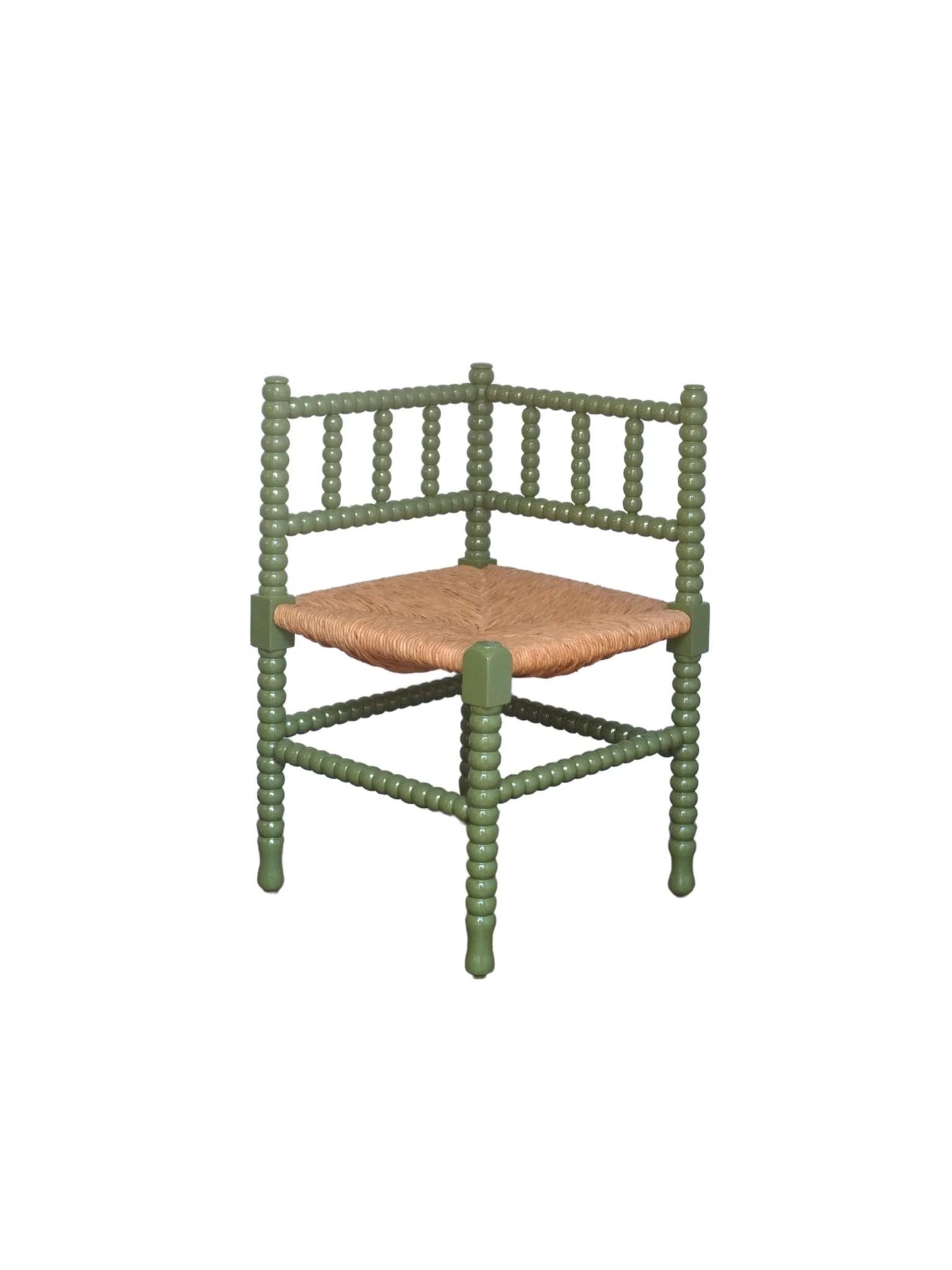
A hand painted green antique bobbin stool in classic proportions, easy to place throughout the home. Over 100 years old and entirely one of a kind, she retains her original wood and patina, with subtle signs of age that add character. Carefully sourced and gently restored.
Ideal as a hallway stool, bedside table, child’s chair or accent piece.
Width: 41 cm
Total height: 67 cm
Seat height: 39 cm
Please note: as with all antique items, imperfections are part of the charm and authenticity of the piece.
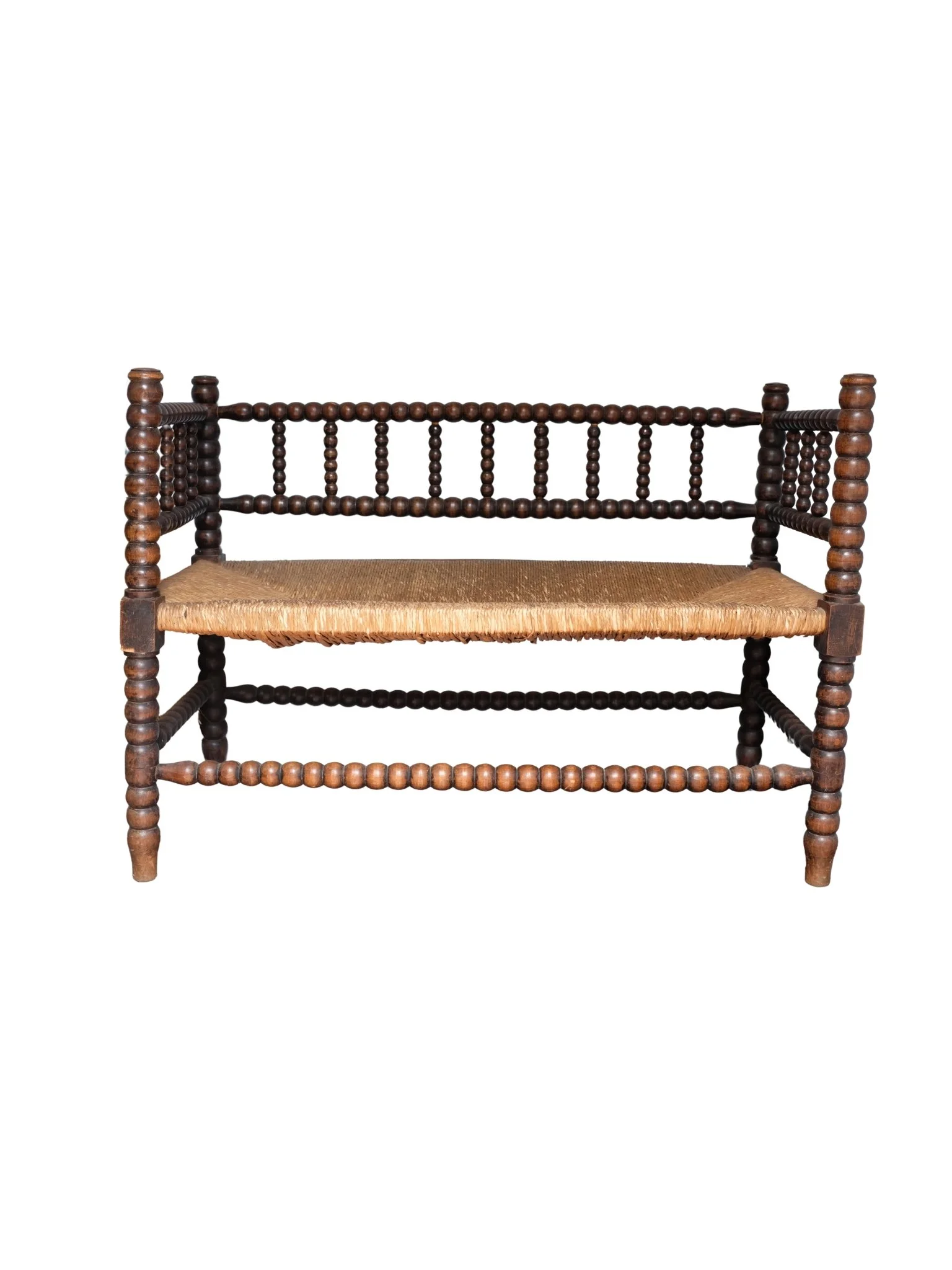
An antique bobbin bench, easy to place throughout the home. Over 100 years old and entirely one of a kind, each bench retains its original wood and patina, with subtle signs of age that add character. Carefully sourced and gently restored.
Suitable for use in the hallway, at the foot of a bed, or as an accent piece beneath artwork.
This bobbin bench is in great antique condition. The seat and wood are in beautiful shape, rich in character with that time-worn patina only antique pieces can offer.
90cm width
45cm depth
69cm height
40cm seat height
Please note: as with all antique items, small variations and imperfections are part of the charm and authenticity of the piece.
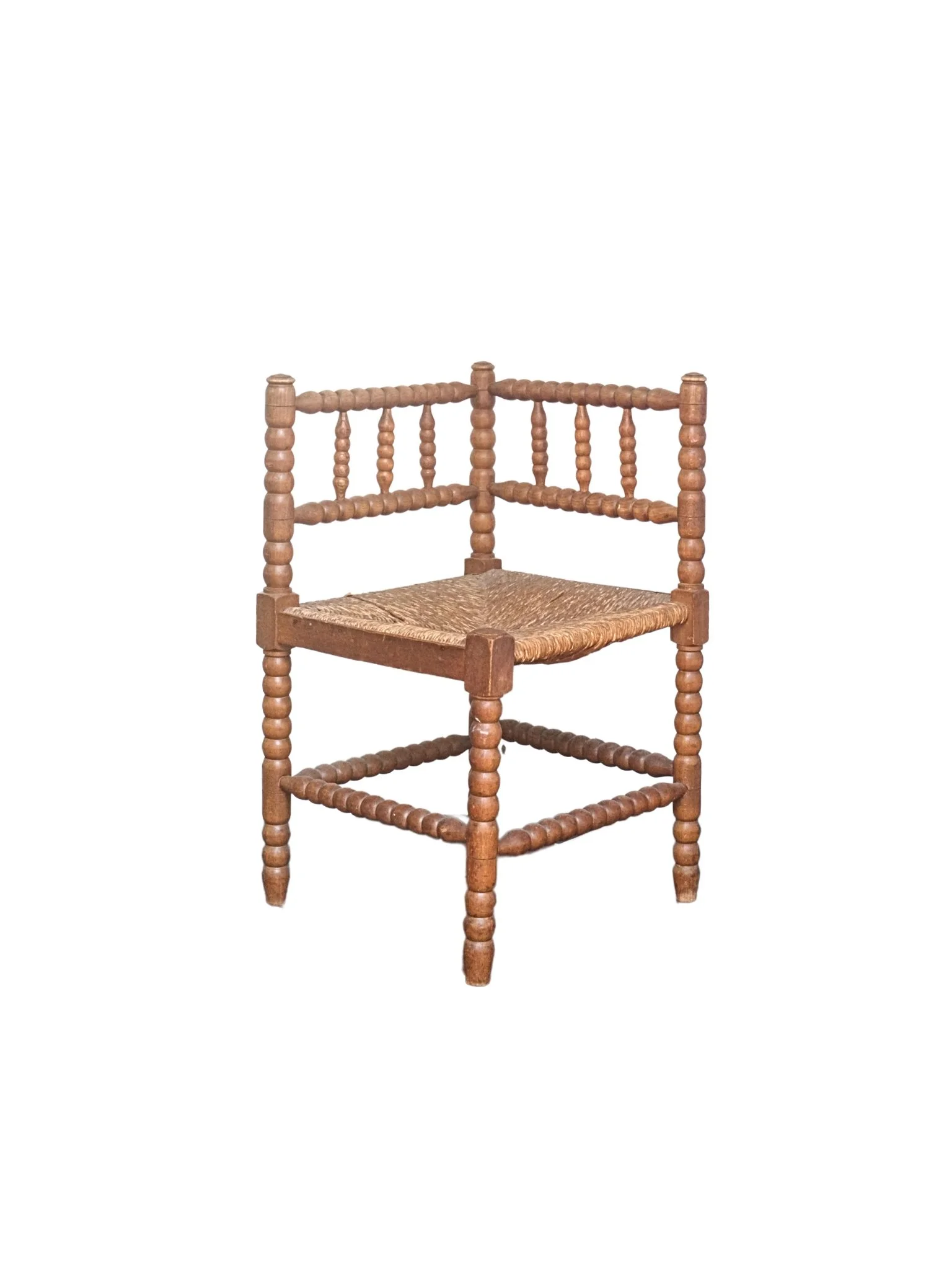
An antique bobbin stool in classic proportions, easy to place throughout the home. Over 100 years old and entirely one of a kind, she retains her original wood and patina, with subtle signs of age that add character.
All bobbin stools can be painted in one of five paint colours, or custom colours on request.
Width: 41 cm
Total height: 70 cm
Seat height: 40 cm
Please note: as with all antique items, small variations and imperfections are part of the charm and authenticity of the piece.
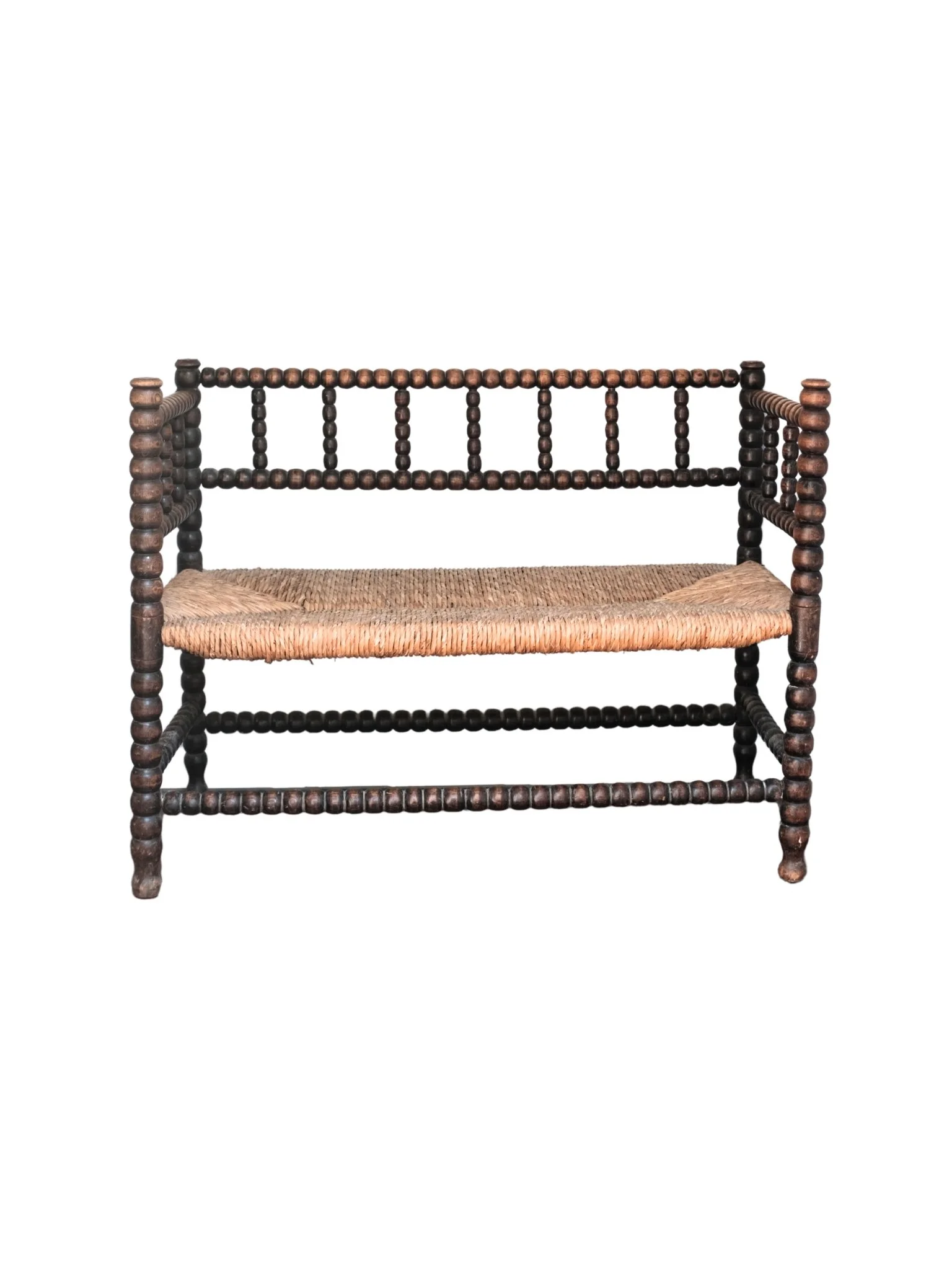
An antique bobbin bench, easy to place throughout the home. Over 100 years old and entirely one of a kind, each bench retains its original wood and patina, with subtle signs of age that add character. Carefully sourced and gently restored.
Suitable for use in the hallway, at the foot of a bed, or as an accent piece beneath artwork.
This bobbin bench is in great antique condition. The seat and wood are in beautiful shape, rich in character with that time-worn patina only antique pieces can offer. Bastien has previously been repaired with a screw, shown in the pictures.
102cm width
44cm depth
69cm height
34cm seat height
Please note: as with all antique items, small variations and imperfections are part of the charm and authenticity of the piece.
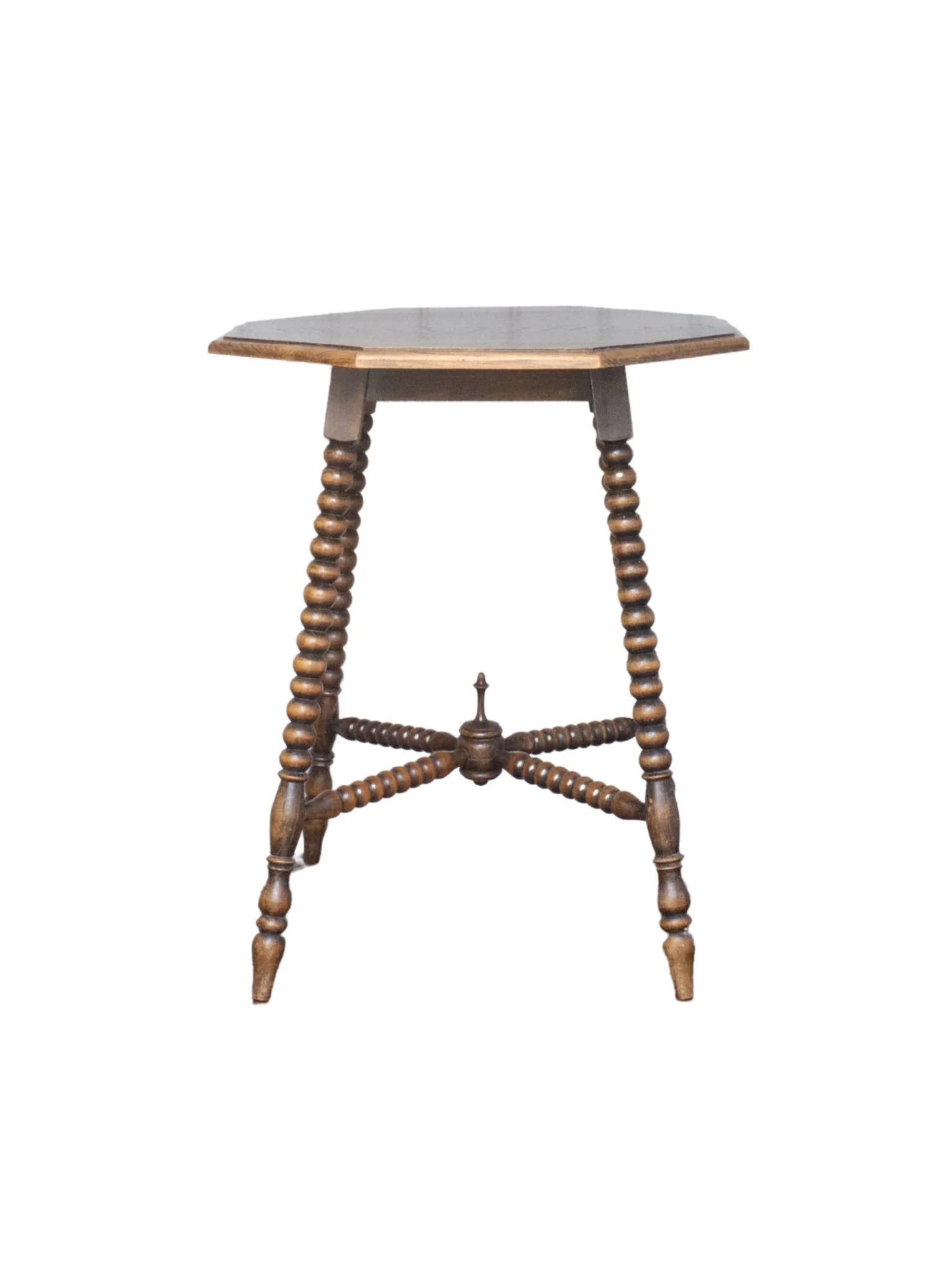
An antique bobbin side table in classic proportions, easy to place throughout the home. Over 100 years old and entirely one of a kind, she retains her original wood and patina, with subtle signs of age that add character.
Suitable as a side table beside the sofa, in the hallway, or as a bedside table.
58cm width
71cm height
Please note: as with all antique items, small variations and imperfections are part of the charm and authenticity of the piece.
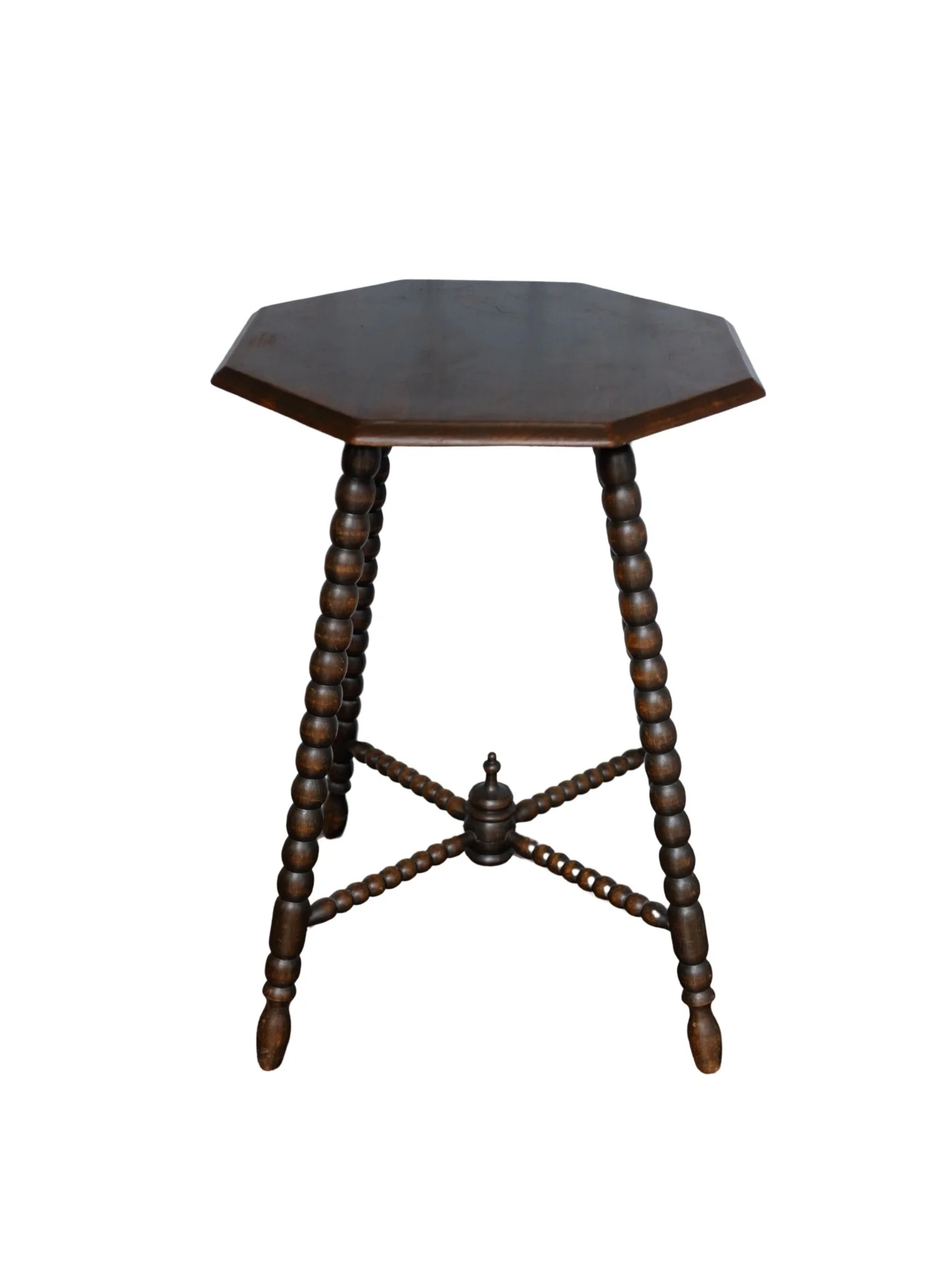
An antique bobbin side table in classic proportions, easy to place throughout the home. Over 100 years old and entirely one of a kind, she retains her original wood and patina, with subtle signs of age that add character. Carefully sourced and gently restored.
Suitable as a side table beside the sofa, in the hallway, or as a bedside table.
49cm width
71cm height
Please note: as with all antique items, imperfections are part of the charm and authenticity of the piece.
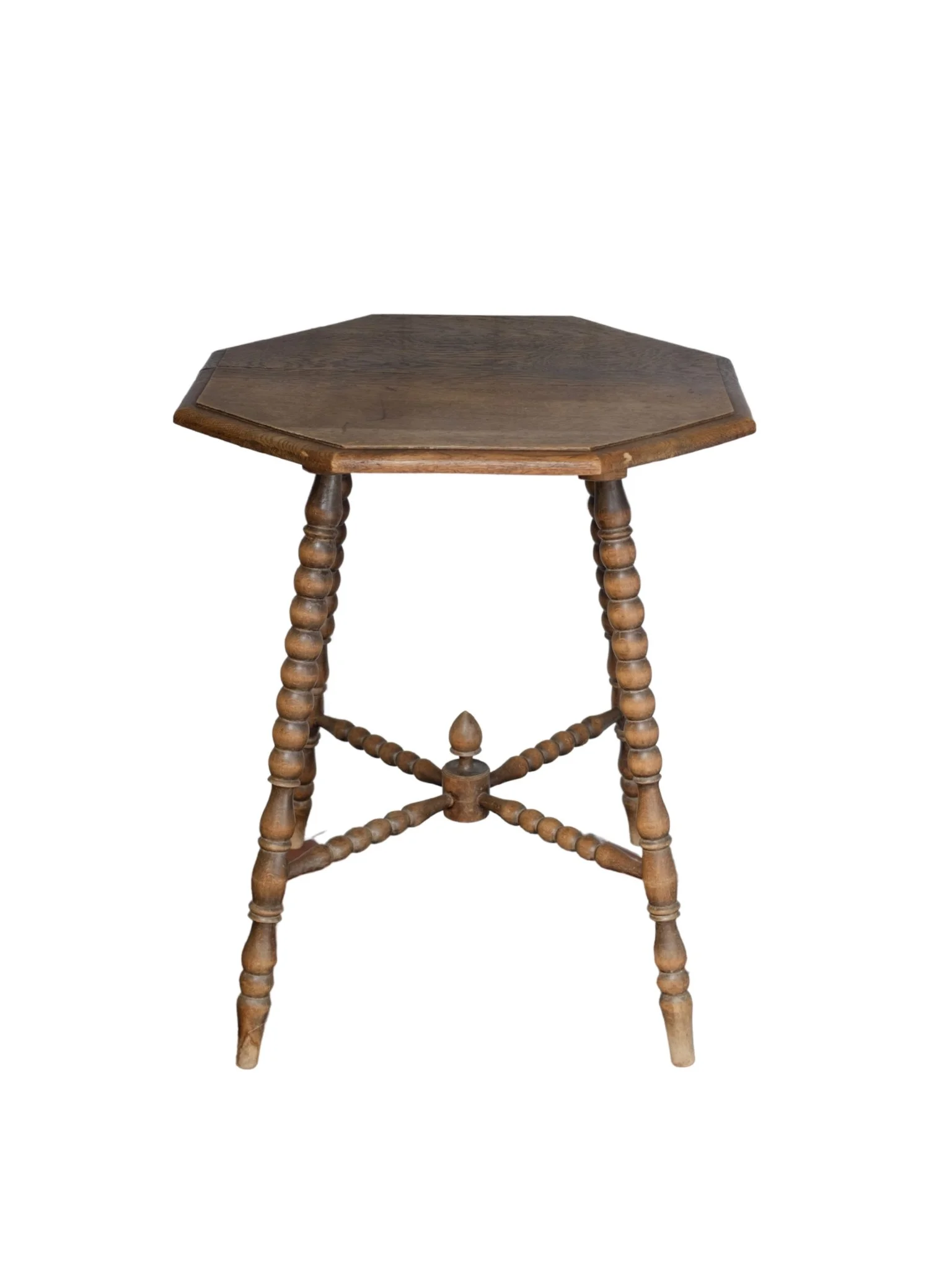
An antique bobbin side table in classic proportions, easy to place throughout the home. Over 100 years old and entirely one of a kind, he retains his original wood and patina, with subtle signs of age that add character. Carefully sourced and gently restored.
60cm width
60cm deep
73cm hight
Please note: as with all antique items, small imperfections are part of the charm and authenticity of the piece. Laurent has two cracks in the top as shown on the photo’s.
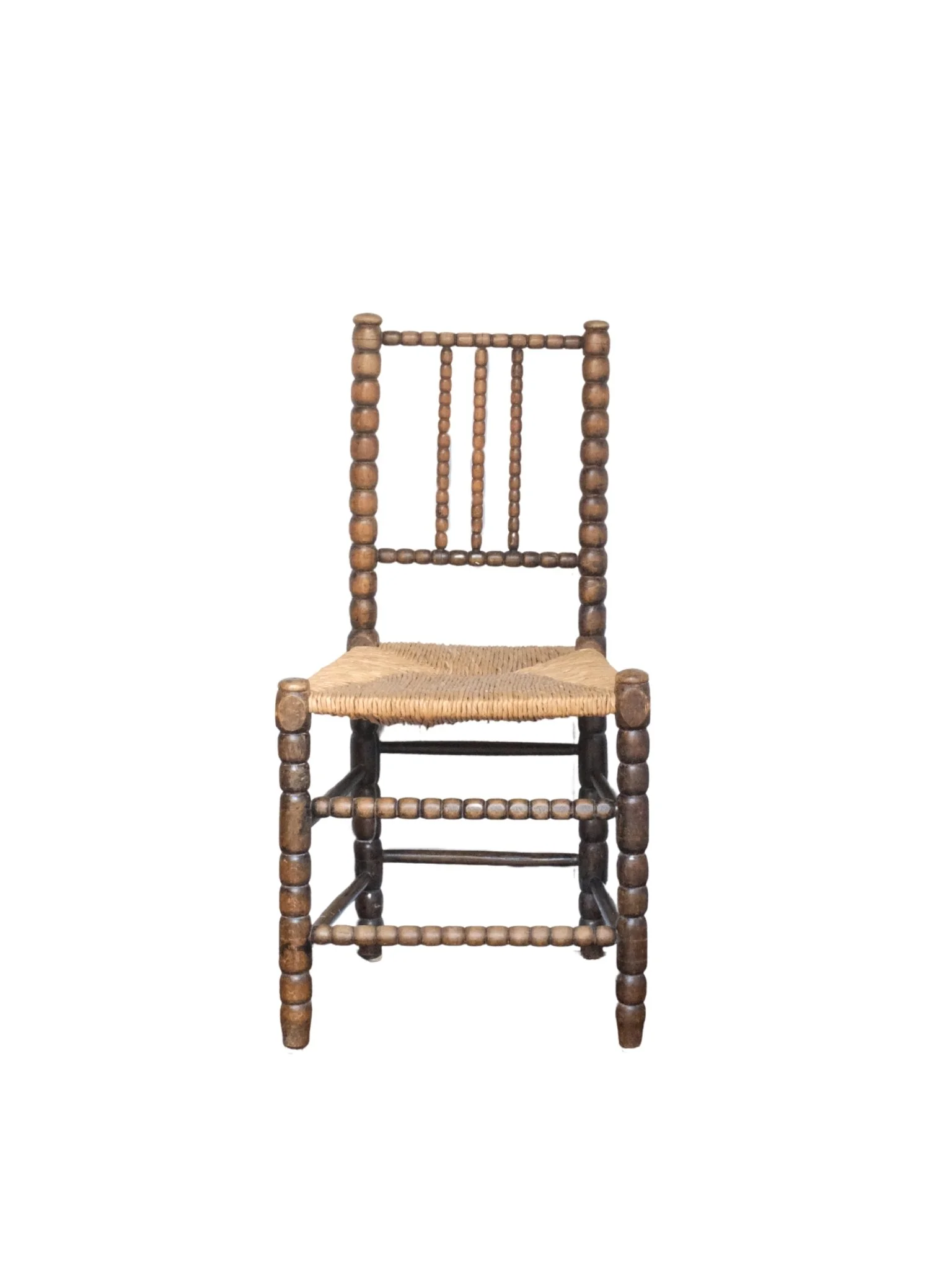
An antique bobbin chair, easy to place throughout the home as a functional chair. Over 100 years old and entirely one of a kind, each chair retains its original wood and patina, with subtle signs of age that add character. Carefully sourced and gently restored.
Cecilia makes a perfect pair with bobbin armchair Eleanor.
48cm width
94cm height
46cm seat height
Please note: as with all antique items, small variations and imperfections are part of the charm and authenticity of the piece.
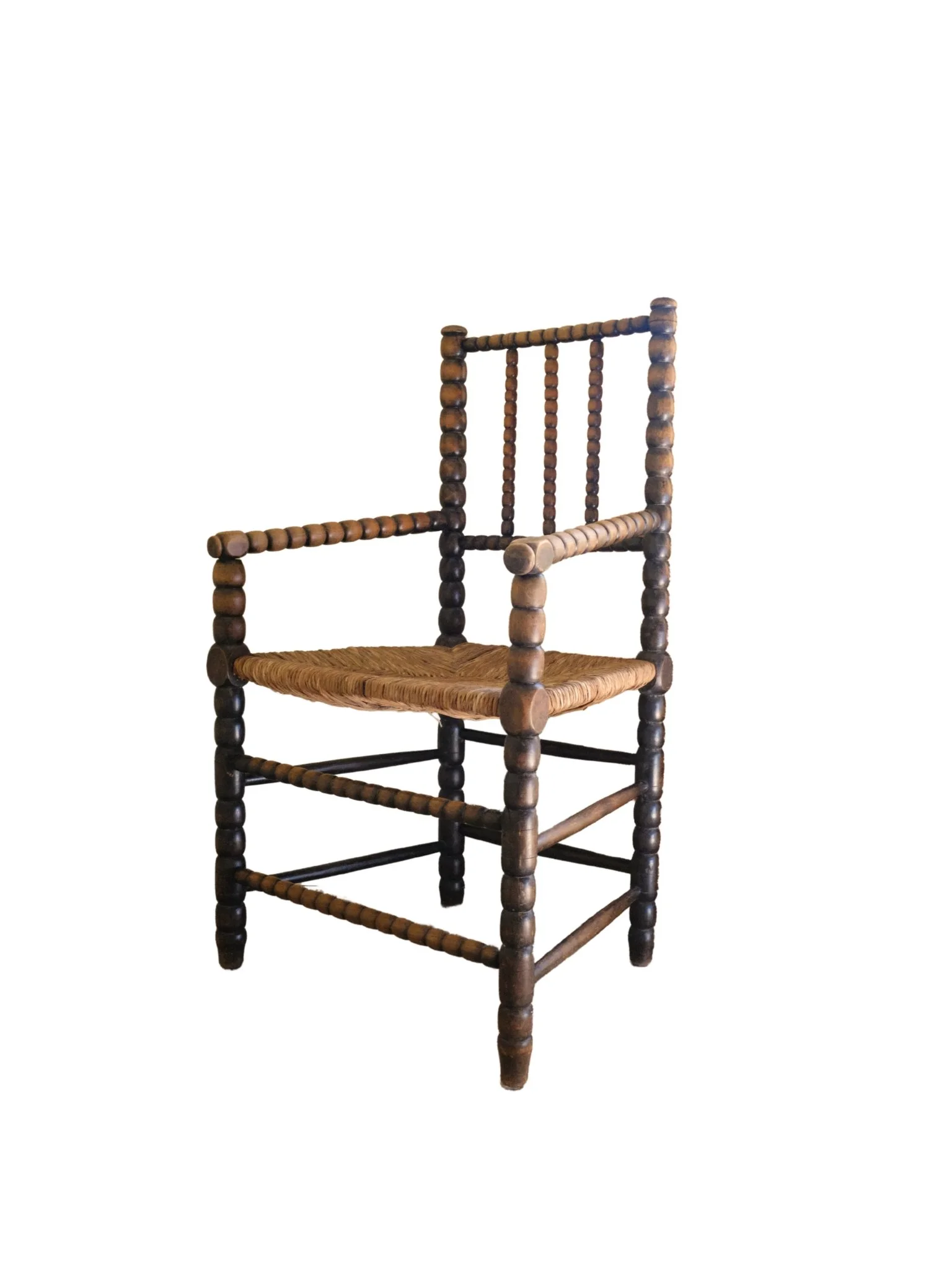
An antique bobbin armchair, easy to place throughout the home as a functional chair. Over 100 years old and entirely one of a kind, each chair retains its original wood and patina, with subtle signs of age that add character. Carefully sourced and gently restored.
56cm width
98cm height
46cm seat height
Please note: as with all antique items, small variations and imperfections are part of the charm and authenticity of the piece.
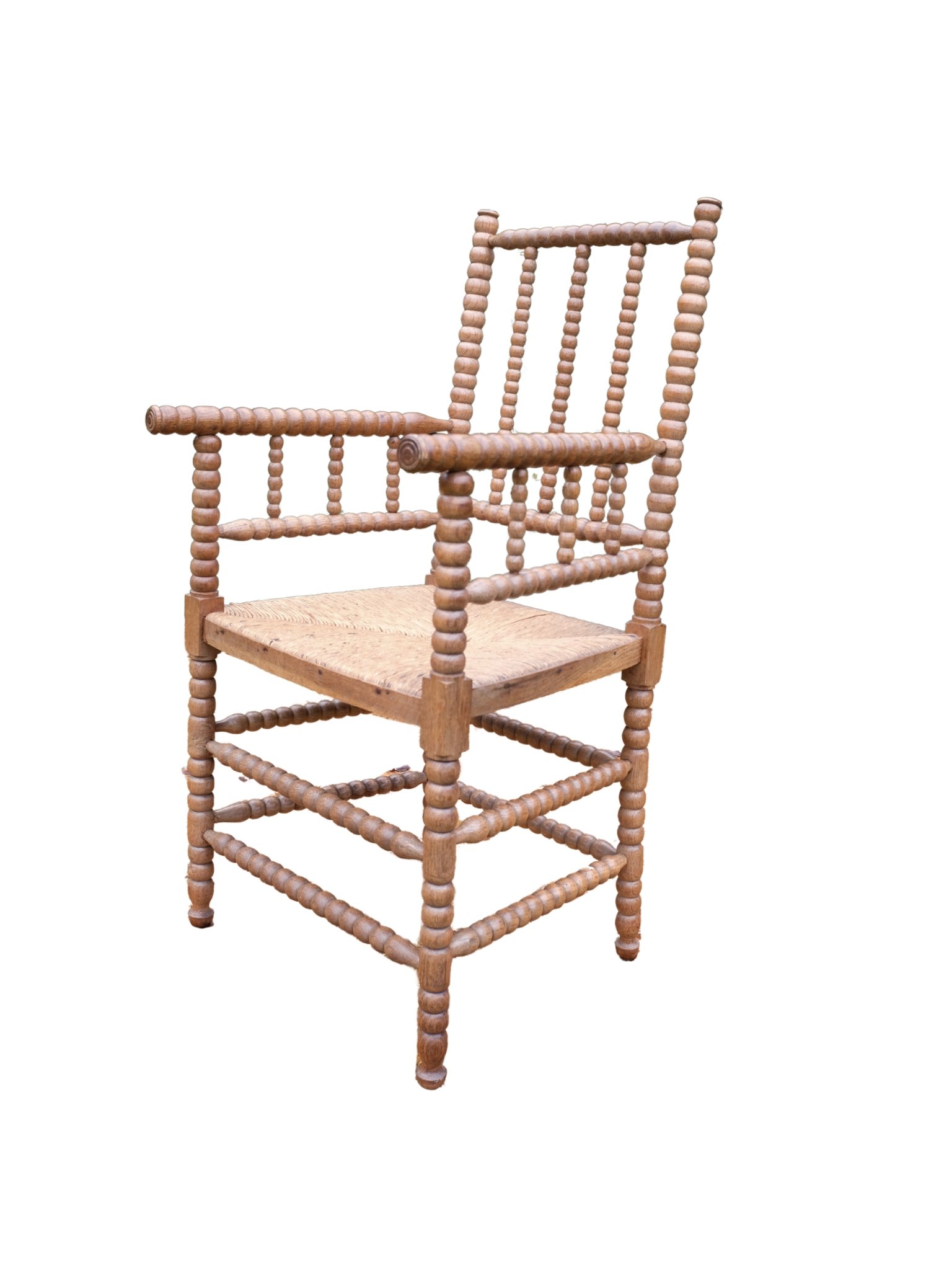
An antique bobbin armchair on the larger side, making it easy to place throughout the home as a functional chair. Over 100 years old and entirely one of a kind, each chair retains its original wood and patina, with subtle signs of age that add character. Carefully sourced and gently restored.
54cm width
105cm height
48cm seat height
Please note: as with all antique items, small variations and imperfections are part of the charm and authenticity of the piece.
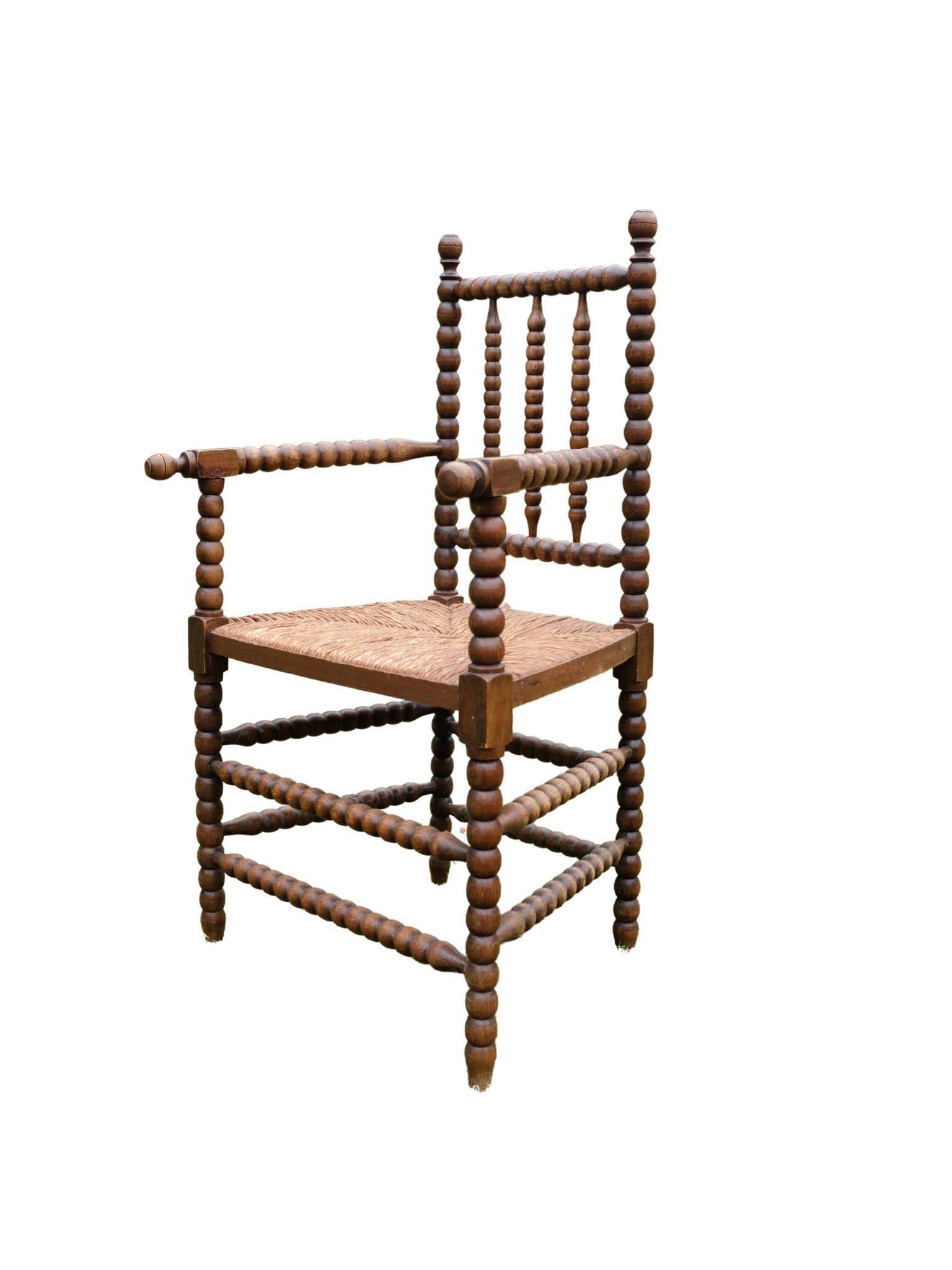
An antique bobbin armchair in a well-balanced, standard size that fits comfortably in most spaces and is easy to place throughout the home. Over 100 years old and entirely one of a kind, each chair retains its original wood and patina, with subtle signs of age that add character. Carefully sourced and gently restored.
57cm width
105cm height
48,5cm seat height
Please note: as with all antique items, small variations and imperfections are part of the charm and authenticity of the piece.
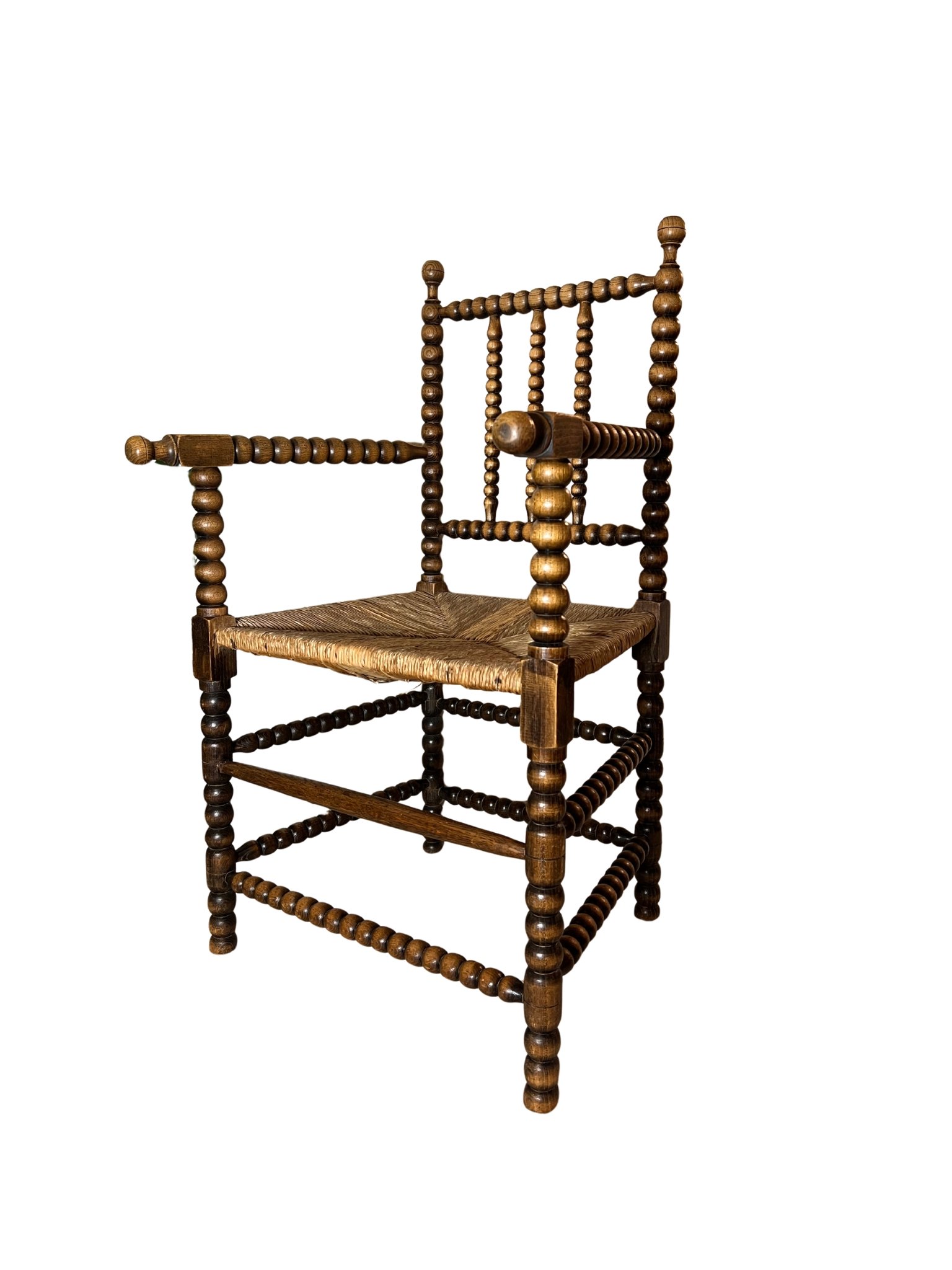
A bobbin armchair, well over a century old, with the kind of proportions that work almost anywhere in the house.
She has kept her original wood and her patina, and the small marks that come with a hundred years of use. A touch unsteady these days, if we're honest. Which is why she's better suited to sitting quietly than being sat on — holding a stack of books in the living room, or a thrown-over cardigan in the bedroom.
56cm width
95cm height
44cm seat height
Please note: as with all antique items, small variations and imperfections are part of the charm and authenticity of the piece.
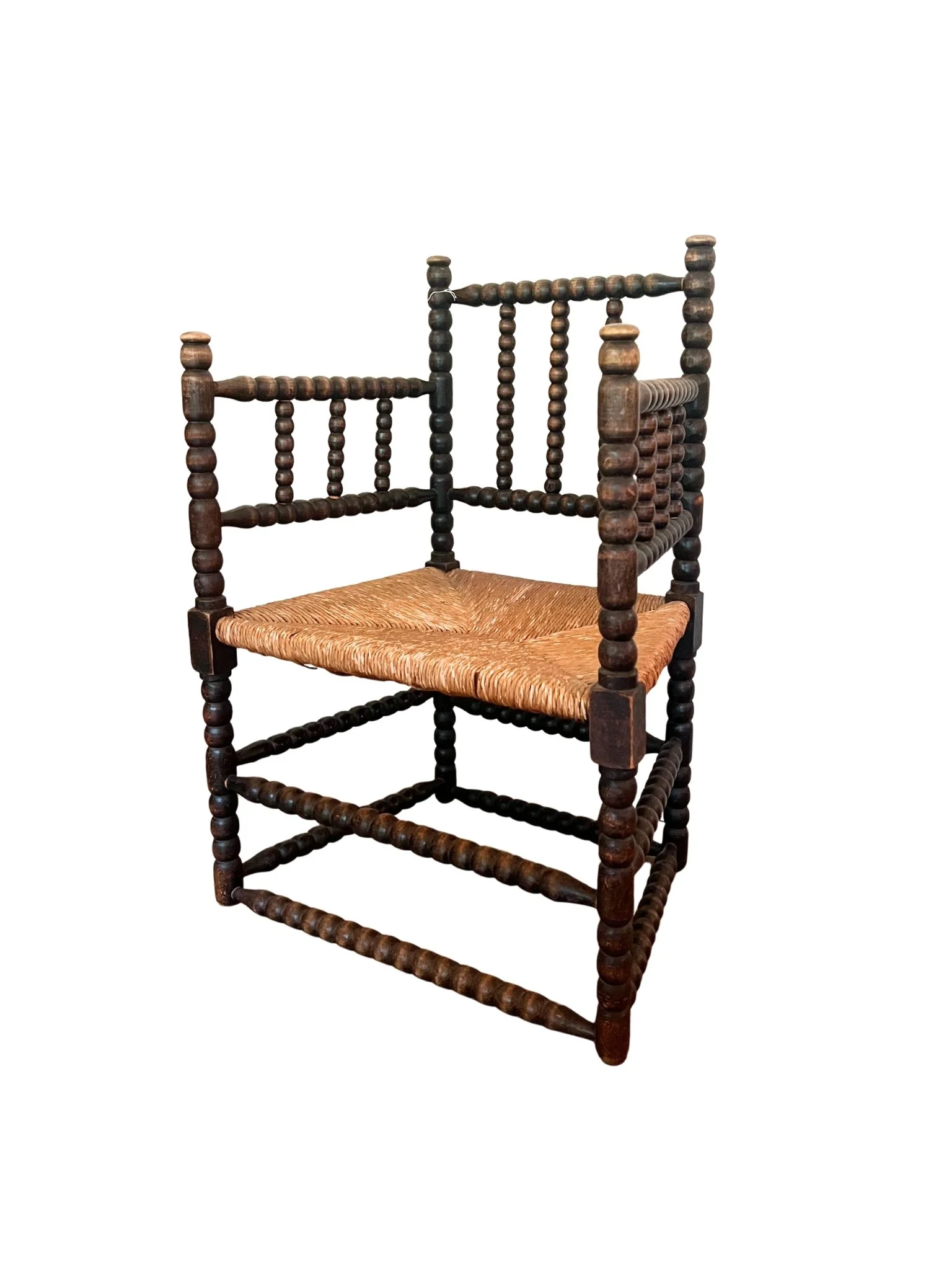
An antique bobbin armchair with a lower seat height than standard chairs, making it easy to place throughout the home and suitable for children. Over 100 years old and entirely one of a kind, each chair retains its original wood and patina, with subtle signs of age that add character. Carefully sourced and gently restored.
56cm width
82,5cm height
37,5cm seat height
Please note: as with all antique items, small variations and imperfections are part of the charm and authenticity of the piece.
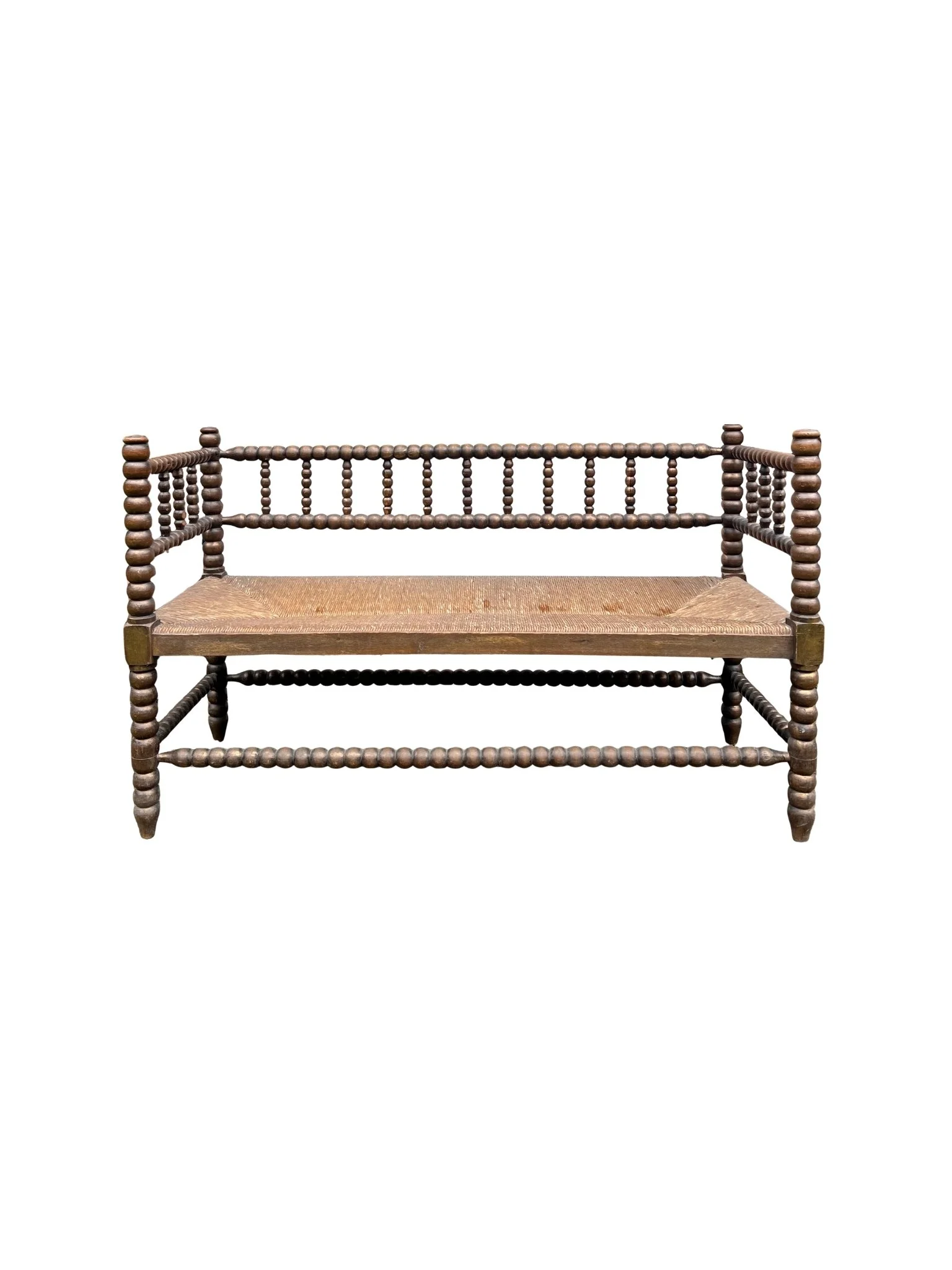
An antique bobbin bench, easy to place throughout the home. Over 100 years old and entirely one of a kind, each bench retains its original wood and patina, with subtle signs of age that add character. Carefully sourced and gently restored.
Suitable for use in the hallway, at the foot of a bed, or as an accent piece beneath artwork.
Benji is in good overall condition. Showing gentle signs of age and use. The seat displays a touch of wear consistent with its history. At some point, parts of the wood appear to have been lightly misted with a metallic gold paint, visible in the photo’s.
119,5cm width
44cm depth
71,5cm height
38,5cm seat height
Please note: as with all antique items, small variations and imperfections are part of the charm and authenticity of the piece.
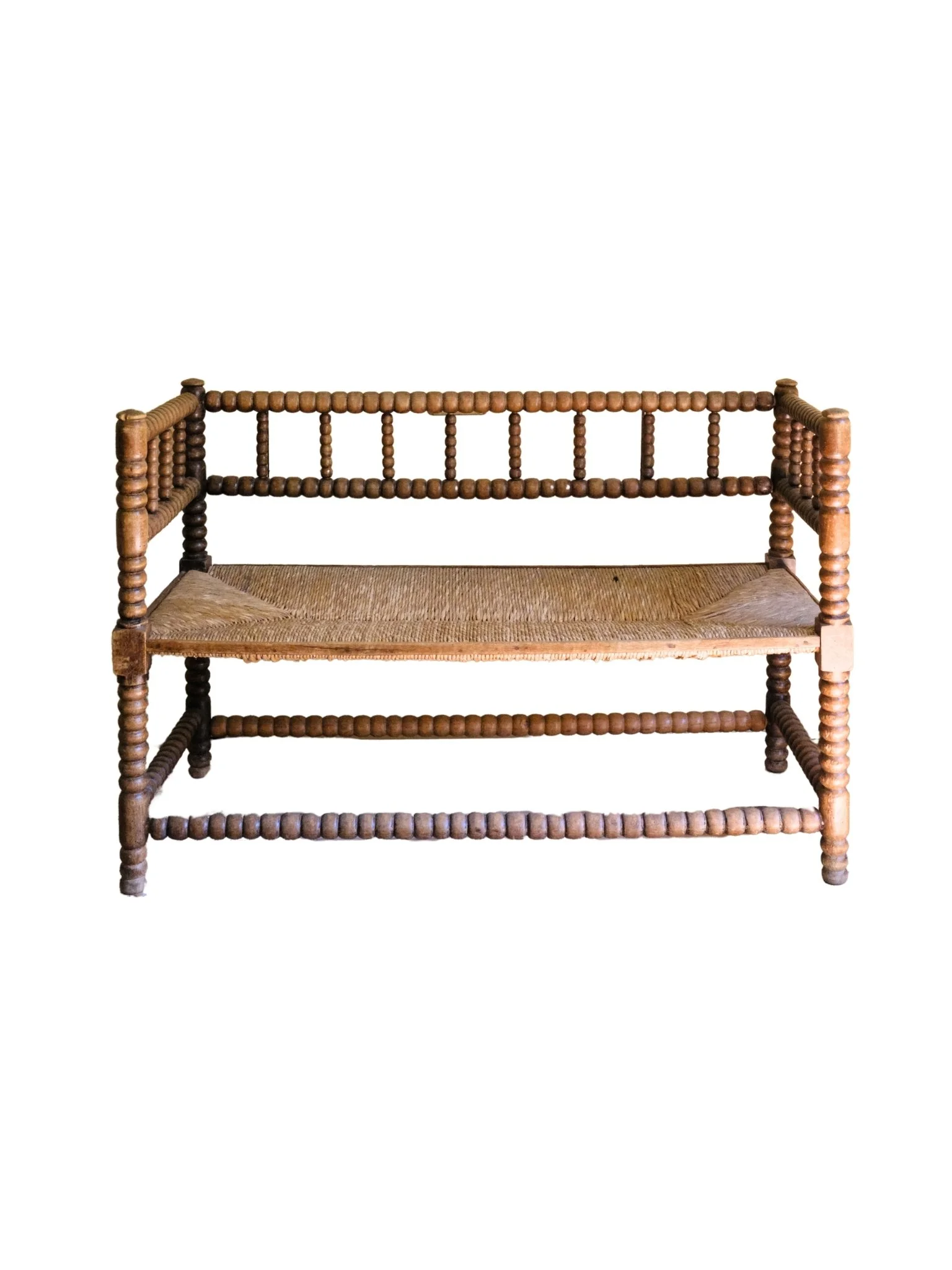
An antique bobbin bench, easy to place throughout the home. Over 100 years old and entirely one of a kind, each bench retains its original wood and patina, with subtle signs of age that add character. Carefully sourced and gently restored.
Suitable for use in the hallway, at the foot of a bed, or as an accent piece beneath artwork.
This bobbin bench is in lovely antique condition. The seat is still perfect and the wood is in beautiful shape, rich in character with that time-worn patina only antique pieces can offer. The bench has a slight wiggle from side to side, but is perfectly sturdy to sit on when putting shoes on and off.
109cm width
44cm depth
56cm height
38cm seat height
Please note: as with all antique items, small variations and imperfections are part of the charm and authenticity of the piece.
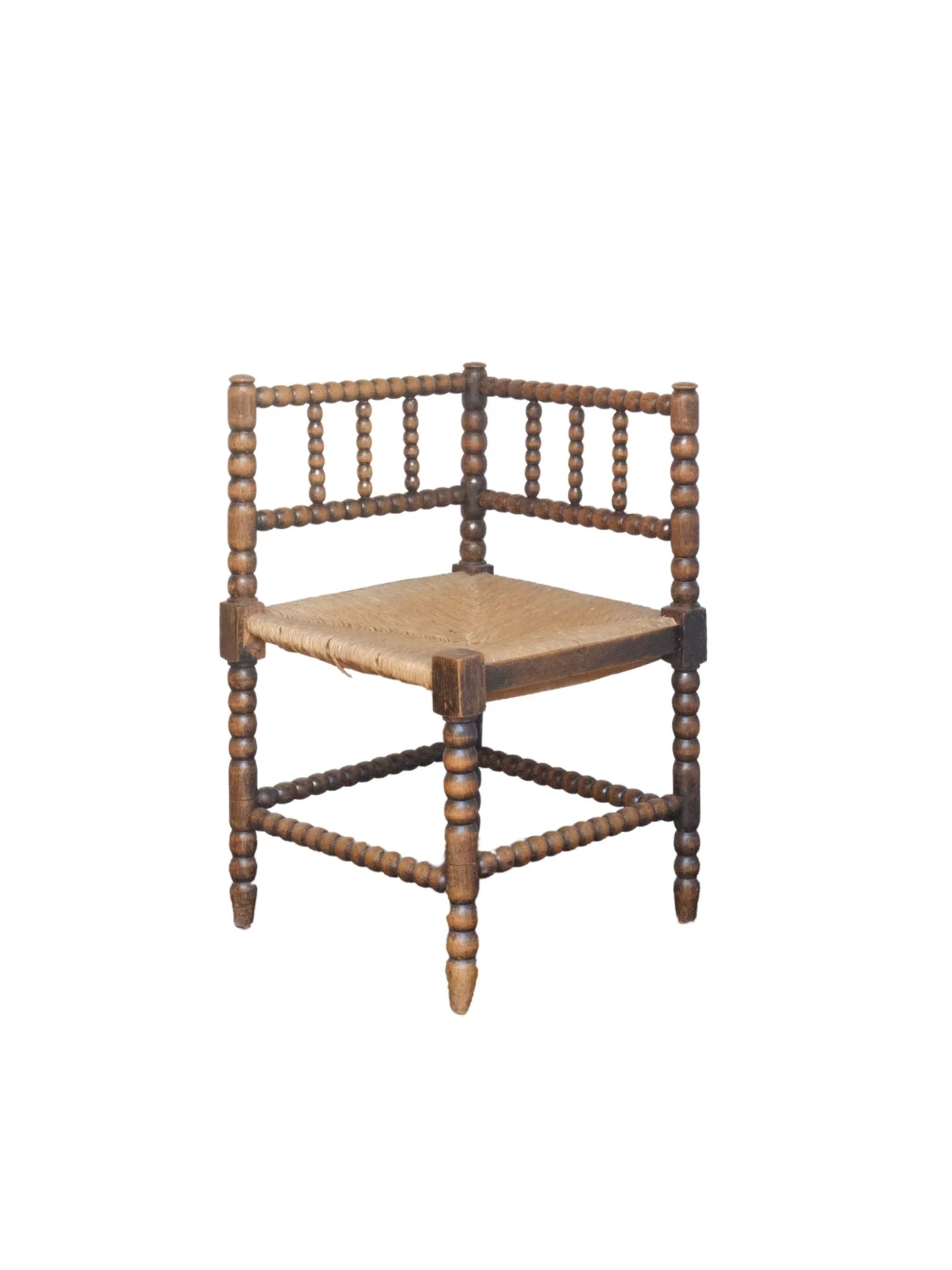
An antique bobbin stool in classic proportions, easy to place throughout the home. Over 100 years old and entirely one of a kind, she retains her original wood and patina, with subtle signs of age that add character. Carefully sourced and gently restored.
Ideal as a hallway stool, bedside table, child’s chair or accent piece.
All bobbin stools can be painted in one of five paint colours, or custom colours on request.
Width: 43 cm
Total height: 68 cm
Seat height: 40 cm
Please note: as with all antique items, small variations and imperfections are part of the charm and authenticity of the piece.
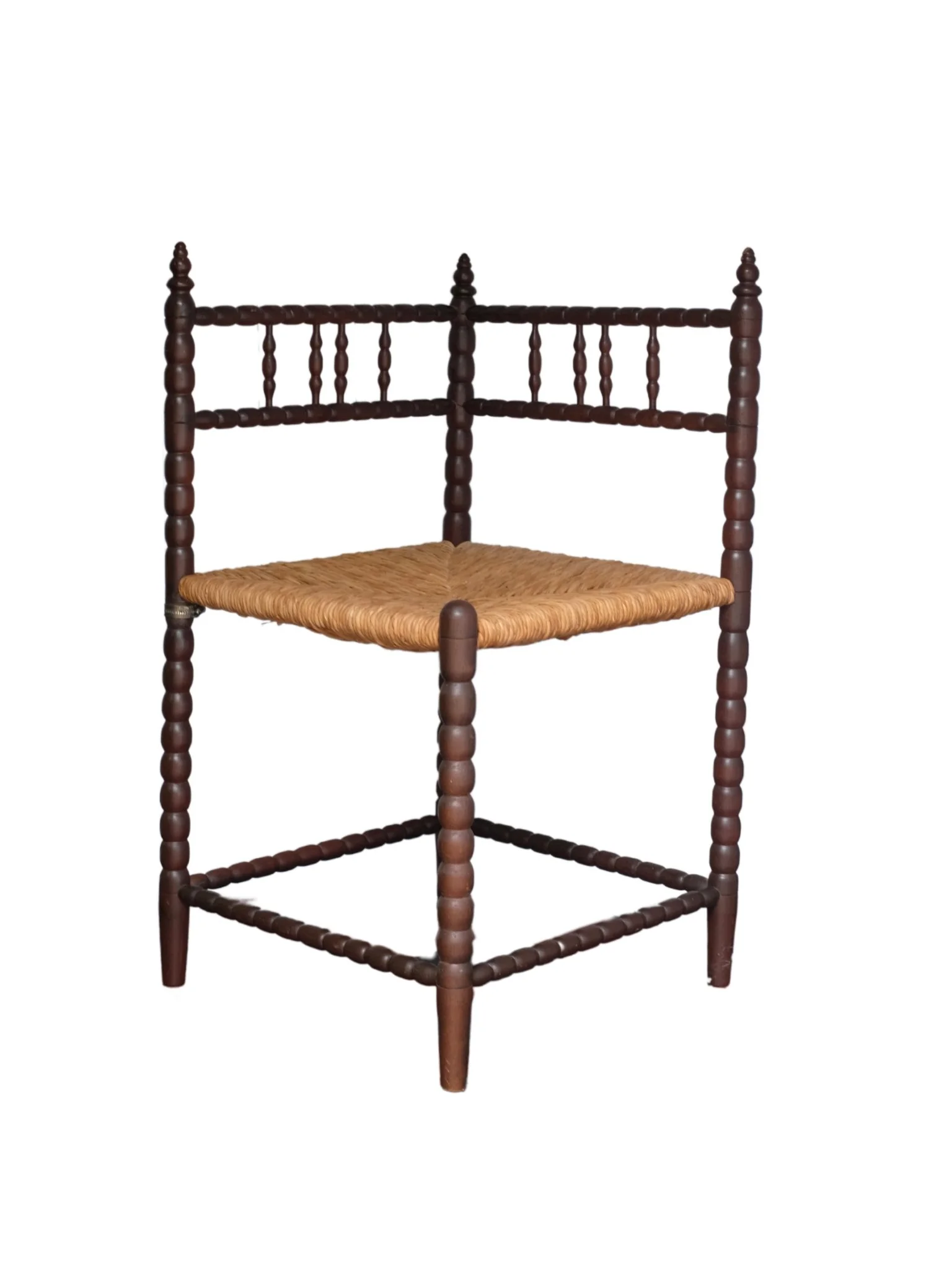
An antique bobbin stool in classic proportions, easy to place throughout the home. Over 100 years old and entirely one of a kind, she retains her original wood and patina, with subtle signs of age that add character. Carefully sourced and gently restored.
Ideal as a hallway stool, bedside table, child’s chair or accent piece.
All bobbin stools can be painted in one of five paint colours, or custom colours on request.
Width: 44,5 cm
Total height: 77,5 cm
Seat height: 43,5 cm
Please note: as with all antique items, small variations and imperfections are part of the charm and authenticity of the piece. With Colette, one leg seems to have been broken once upon a time and fixed with glue and a hose clamp as shown in the image.
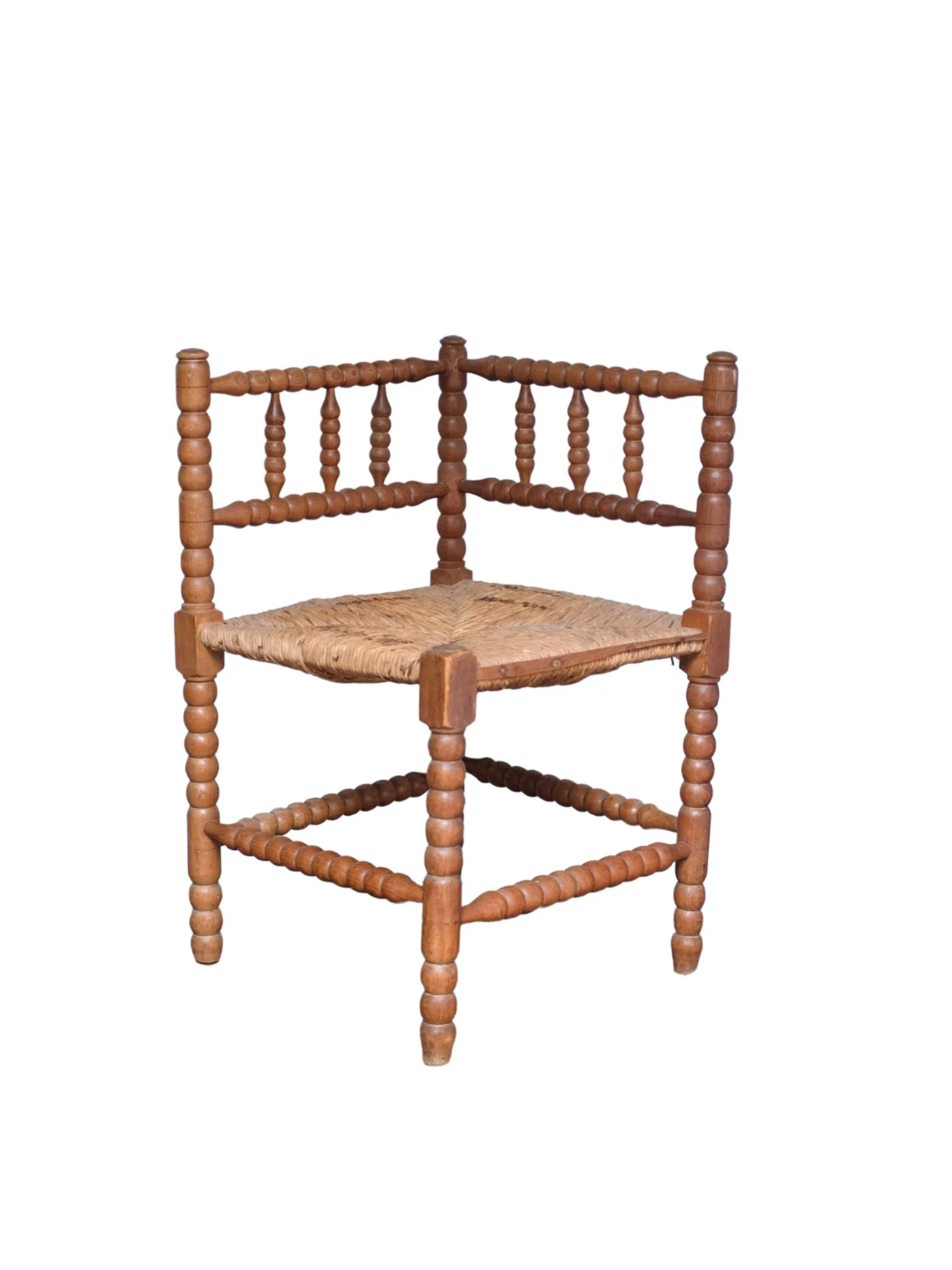
An antique bobbin stool in classic proportions, easy to place throughout the home. Over 100 years old and entirely one of a kind, she retains her original wood and patina, with subtle signs of age that add character. Carefully sourced and gently restored.
Ideal as a hallway stool, bedside table, child’s chair or accent piece.
All bobbin stools can be painted in one of five paint colours, or custom colours on request.
Width: 43 cm
Total height: 67,5 cm
Seat height: 38 cm
Please note: as with all antique items, small variations and imperfections are part of the charm and authenticity of the piece. Harper is priced lower than the other stools due to a bit of rust discolouration on this seat.
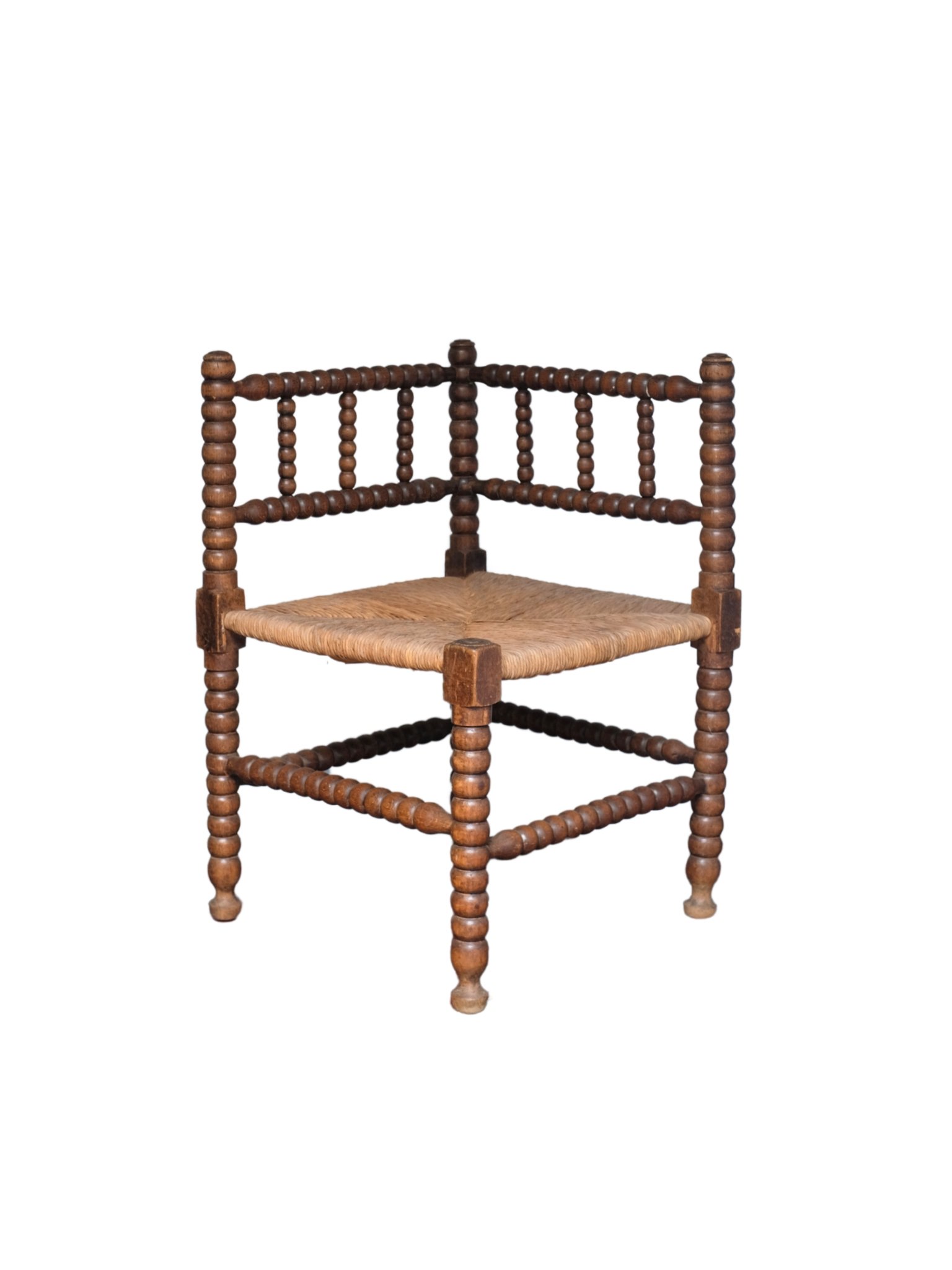
An antique bobbin stool in classic proportions, easy to place throughout the home. Over 100 years old and entirely one of a kind, she retains her original wood and patina, with subtle signs of age that add character.
All bobbin stools can be painted in one of five paint colours, or custom colours on request.
Width: 44 cm
Total height: 65 cm
Seat height: 35 cm
Please note: as with all antique items, small variations and imperfections are part of the charm and authenticity of the piece.
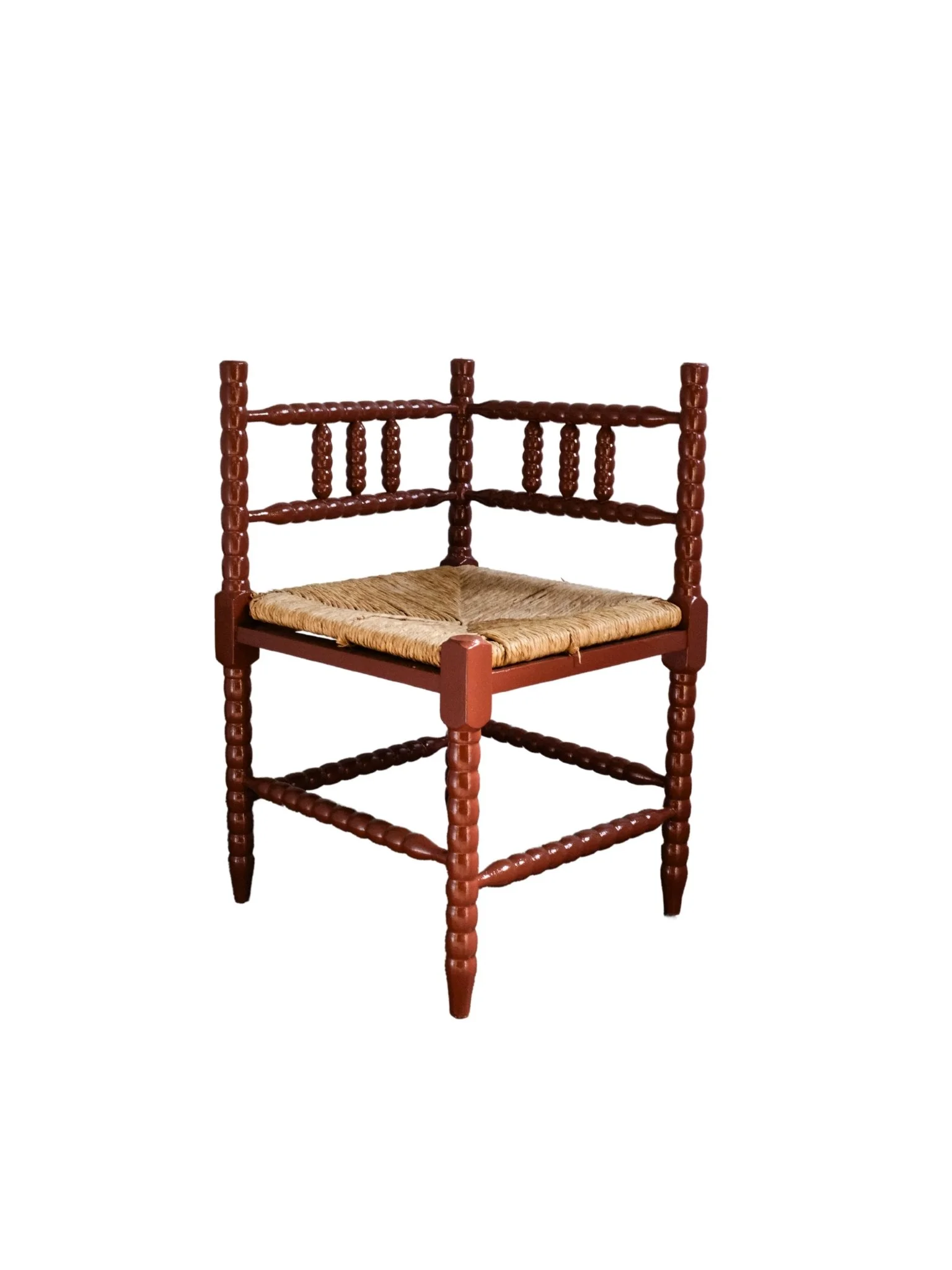
A hand painted red antique bobbin stool in classic proportions, easy to place throughout the home. Over 100 years old and entirely one of a kind.
Width: 43 cm
Total height: 70 cm
Seat height: 40 cm
Please note: as with all antique items, small variations and imperfections are part of the charm and authenticity of the piece.
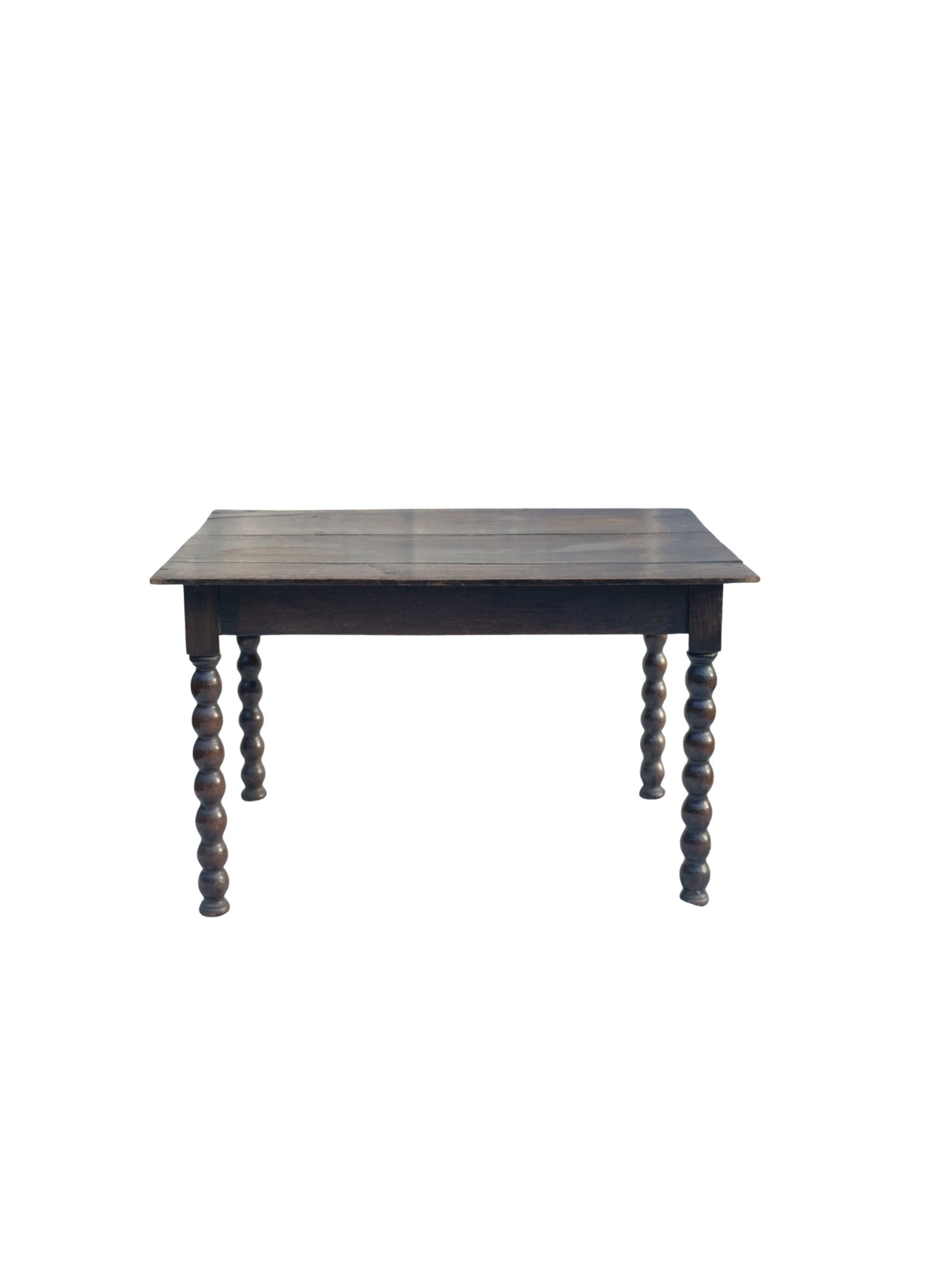
An antique bobbin side table easy to place throughout the home. Over 100 years old and entirely one of a kind, he retains his original wood and patina, with subtle signs of age that add character. Carefully sourced and gently restored.
Due to it’s lower size, Bowie is ideal for next to a sofa or chair.
63cm width
42,5cm deep
39cm hight
Please note: as with all antique items, small variations and imperfections are part of the charm and authenticity of the piece.
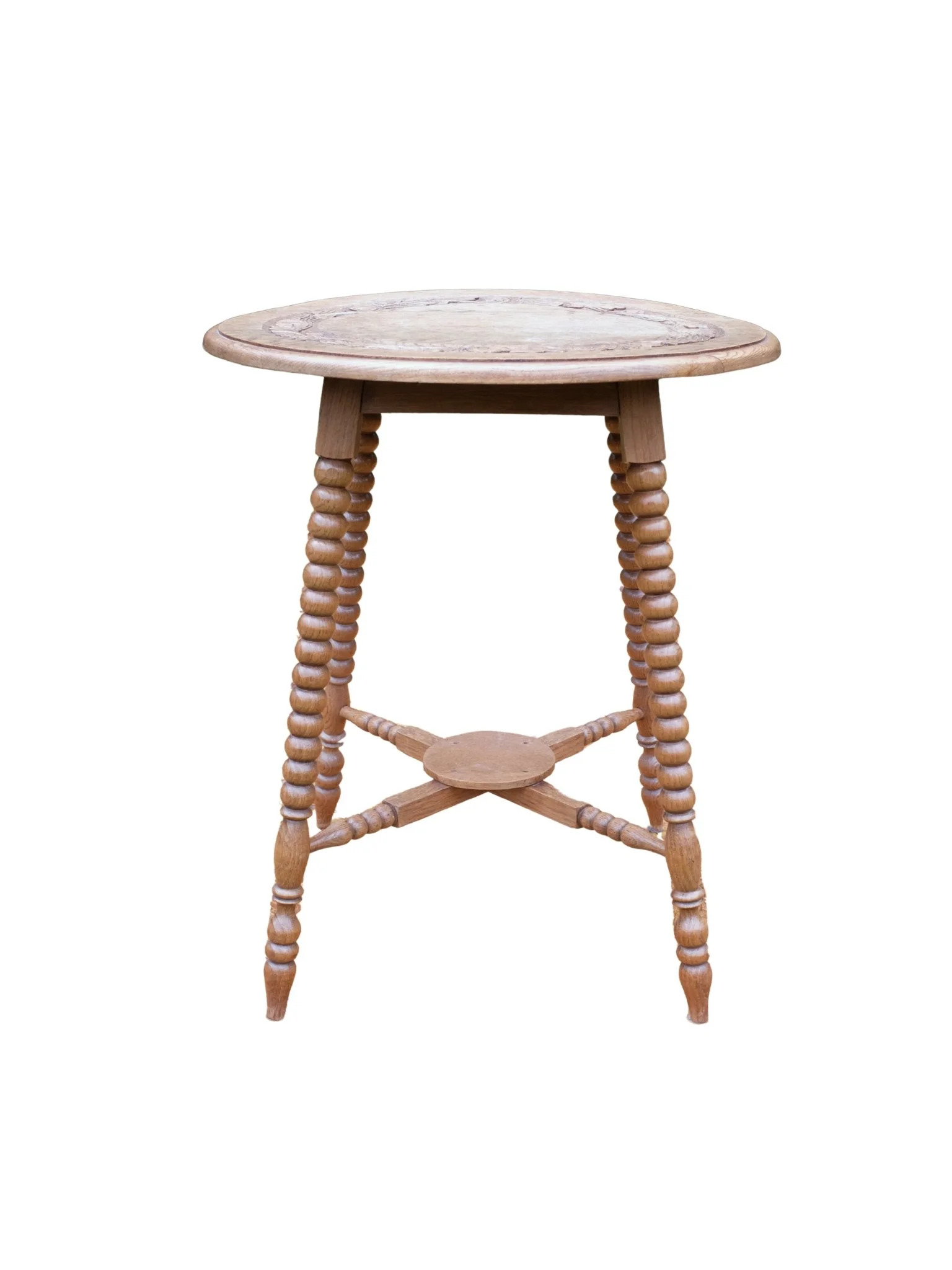
An antique bobbin side table, slightly bigger than the others but easy to place throughout the home. Over 100 years old and entirely one of a kind, she retains her original wood and patina, with subtle signs of age that add character. Louis has a slight bow in the table top. Visible in the photographs — further images available on request.
Suitable as a side table beside the sofa, in the hallway, or as a bedside table.
60cm width
70cm height
Please note: as with all antique items, small variations and imperfections are part of the charm and authenticity of the piece.
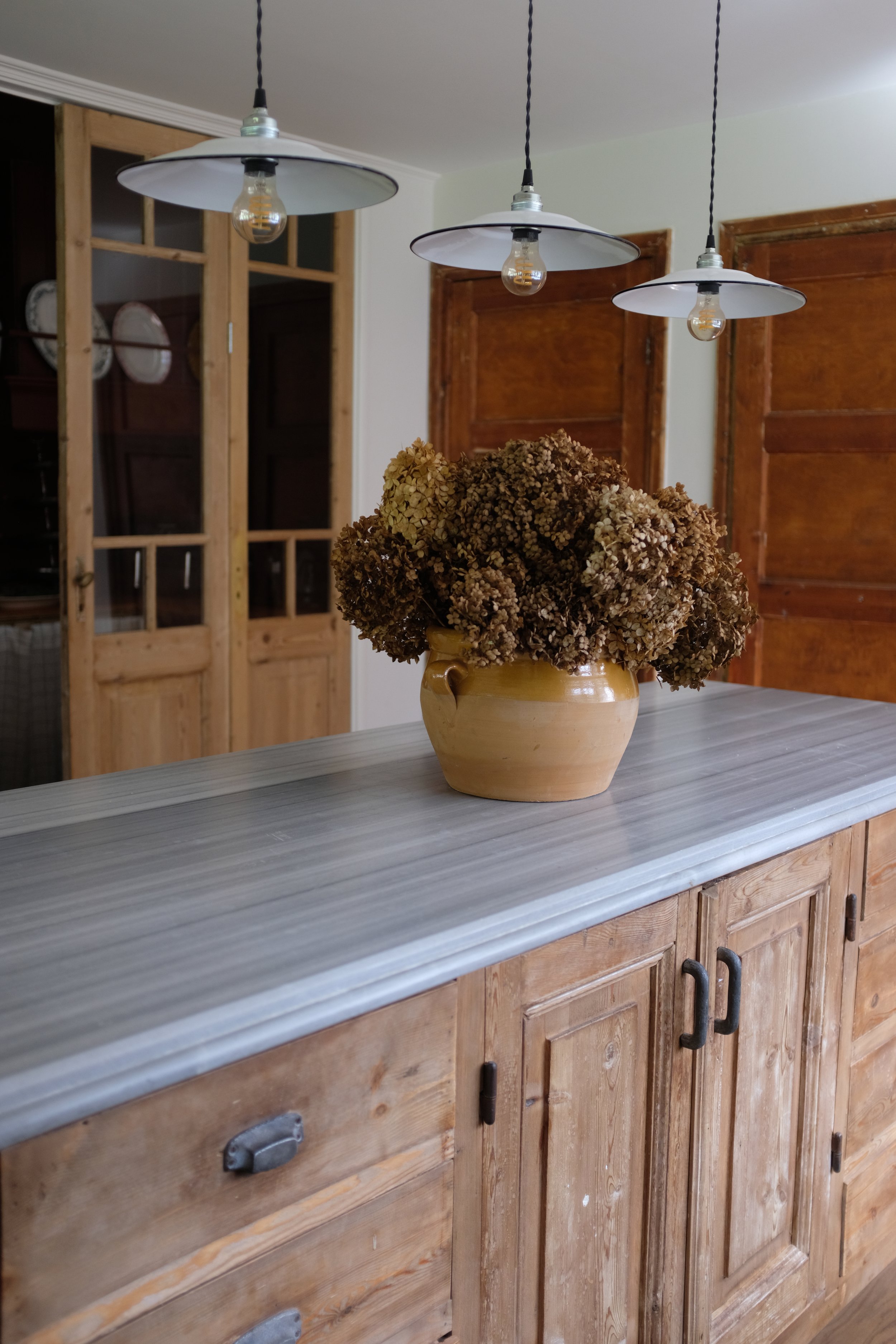
A Kitchen Island That Feels Like Furniture
Another way to soften a kitchen is by introducing furniture rather than relying only on built-in cabinetry.
Instead of a standard fitted island, an antique butcher’s block or wooden kitchen table can become the heart of the room. Because it is a piece of furniture rather than part of the kitchen structure, it brings a different kind of presence — slightly imperfect, tactile and full of character.
These pieces often carry subtle marks of time, the kind that come from years of daily use. Rather than looking sterile or overly polished, they make the kitchen feel more like a living space where cooking, gathering and conversation naturally take place.
The room begins to feel less like a technical workspace and more like part of the home.
A Pantry That Displays Everyday Ceramics
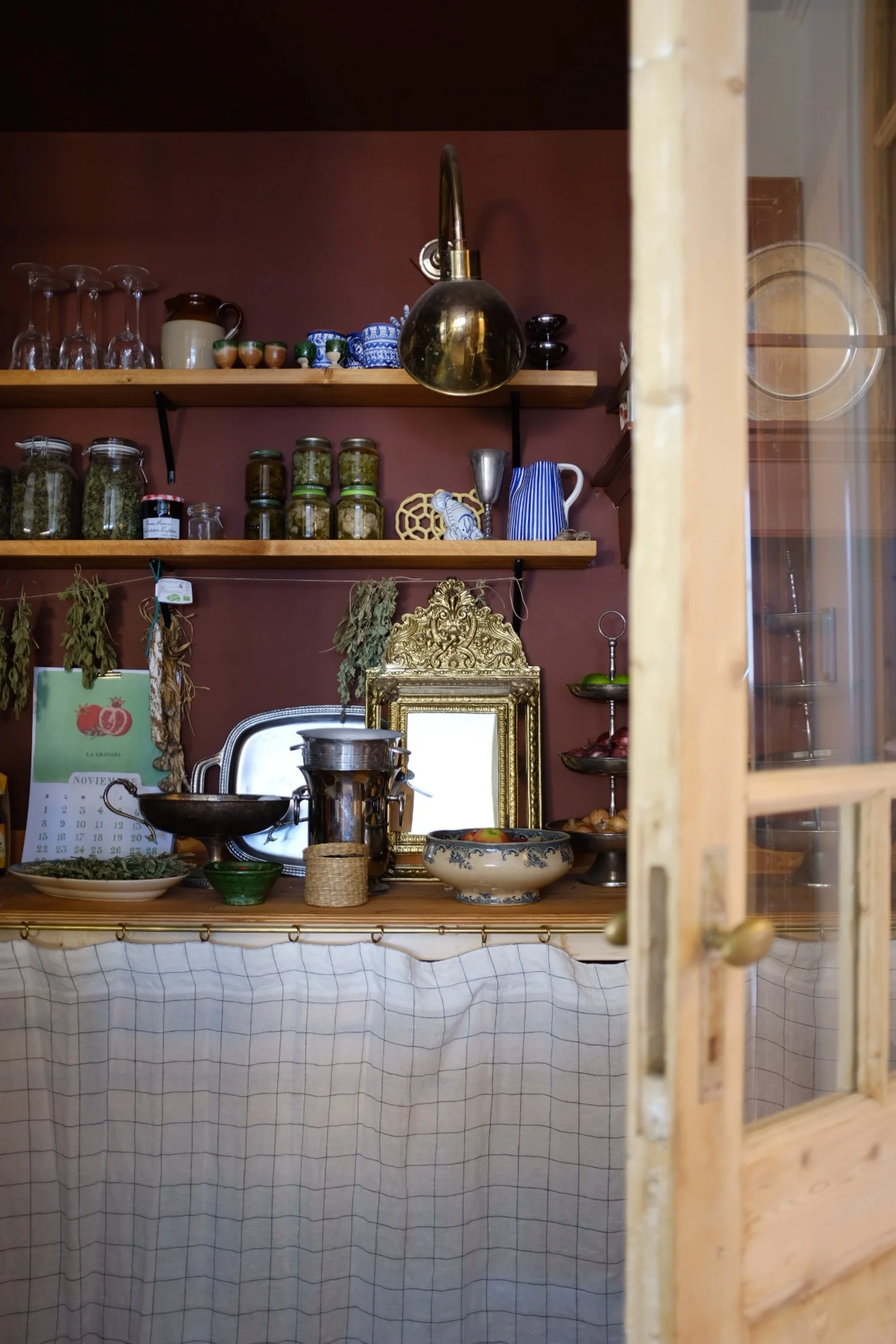
In our own kitchen, the pantry has become a place where many of our favourite antique ceramics live.
Rather than storing them away for special occasions, they are used daily — bowls filled with fruit, dishes holding onions or garlic, plates stacked and ready for dinner. Antiques become far more meaningful when they are part of everyday life.
Displaying them on open shelves allows the colours and textures of the ceramics to quietly shape the atmosphere of the room.
Even in the pantry, a mirror can help bounce light around and make the space feel larger and brighter. Small details like this create depth, even in the most practical corners of the kitchen.
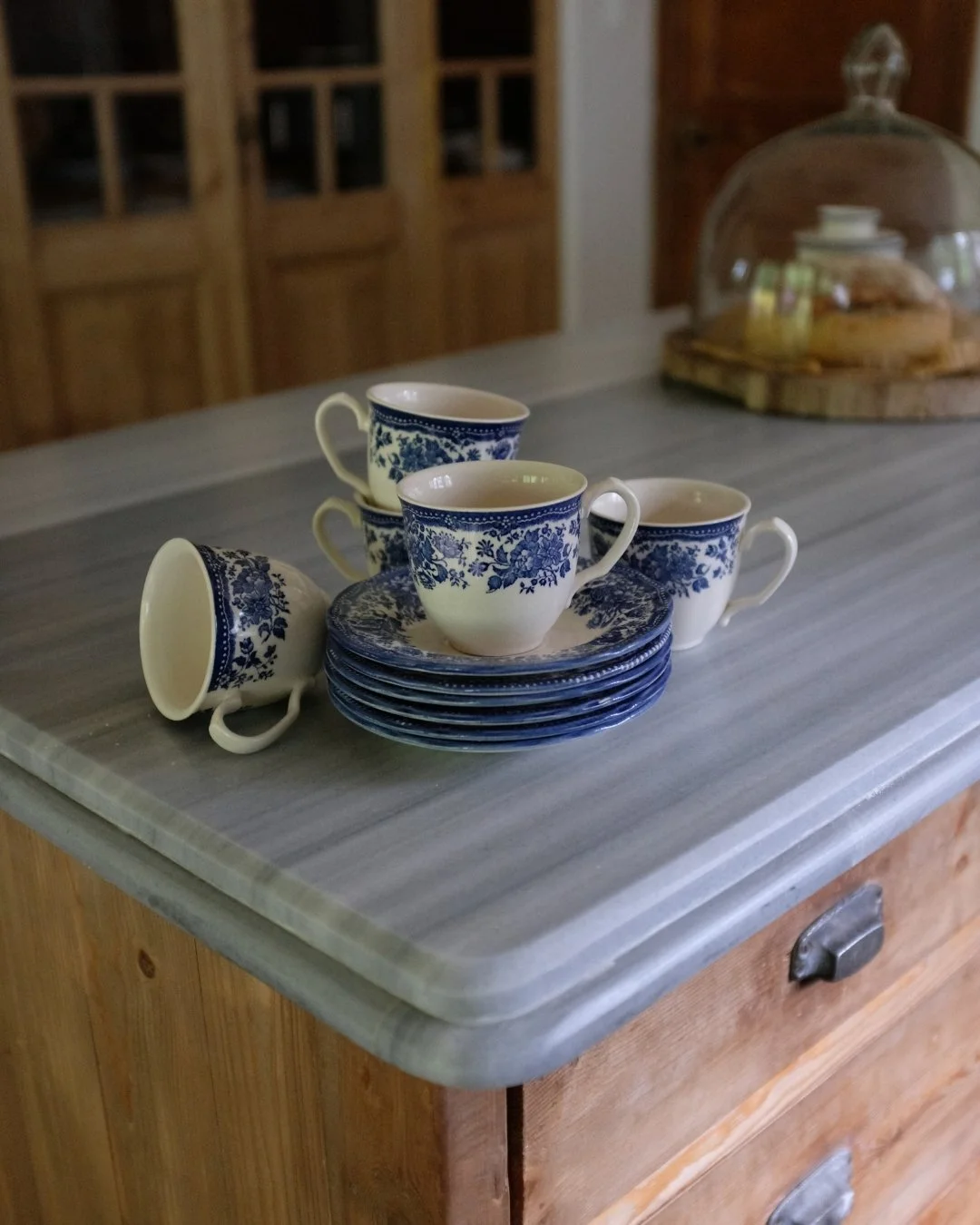
A blue floral cup-and-saucer service, still in production today by Claytan Tableware in Malaysia — new rather than antique, chosen here for how well the pattern sits alongside older pieces on a table.
Every piece is packed with the same care we'd want it to arrive with, and our shipping cost reflects that.
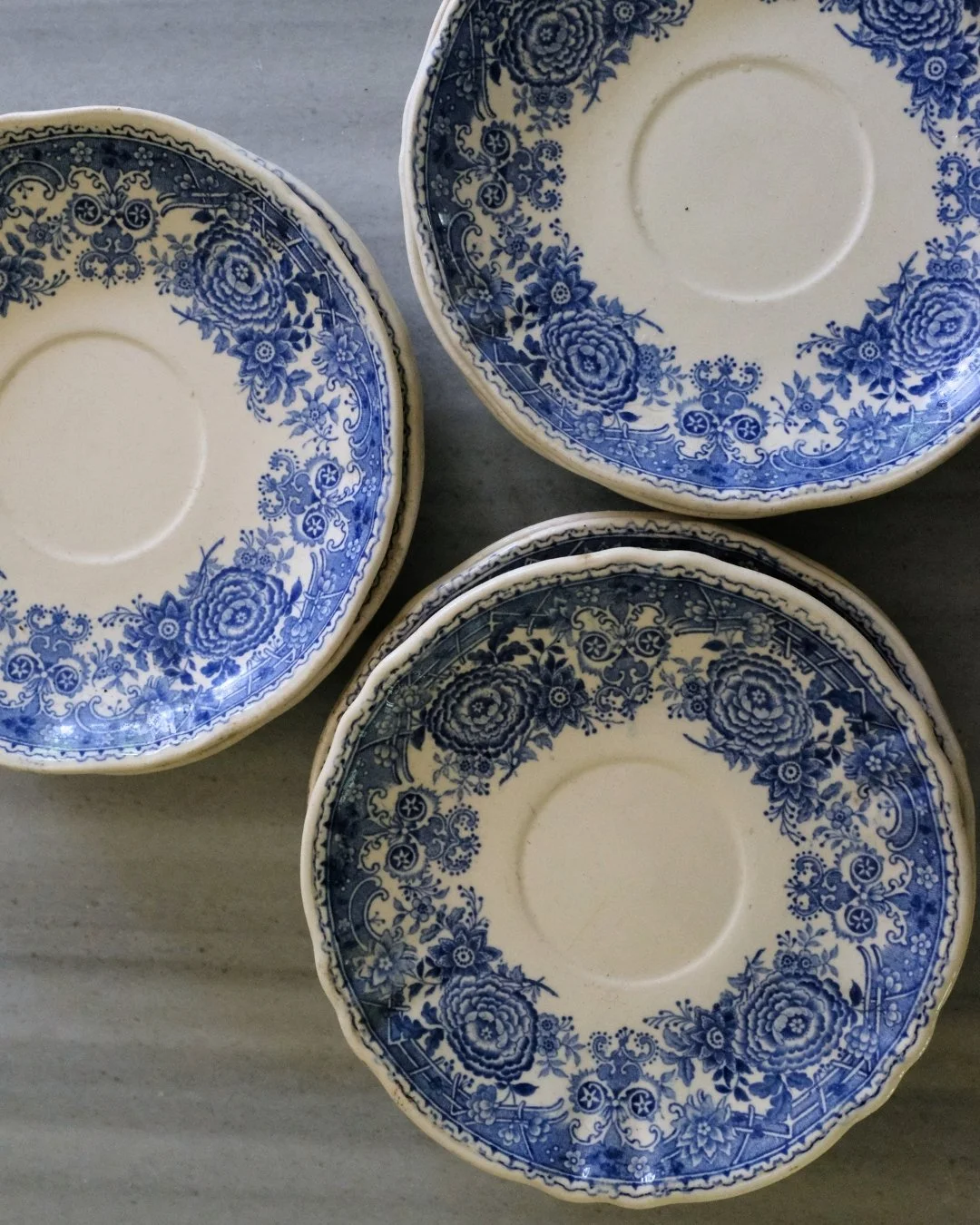
Villeroy & Boch is one of the oldest continuously working names in European ceramics, and Burgenland is the pattern most collectors reach for first when they search the maker. The mark on the reverse — "fabrique en Sarre" — was only ever used during the years the Saarland sat under French economic administration, so this set carries its own dated window rather than a vague guess at the century. Ten matching pieces have stayed together, in a pattern that more often turns up scattered across estate sales one or two plates at a time; a set this complete, from a name this established, is not something that comes along often.
14,5cm wide
We've done our best to photograph and describe each piece as accurately as possible, though with antique ceramics, a little craquelure and discolouring is part of the charm rather than a flaw to hide. Every piece is packed with the same care we'd want it to arrive with, and our shipping cost reflects that.
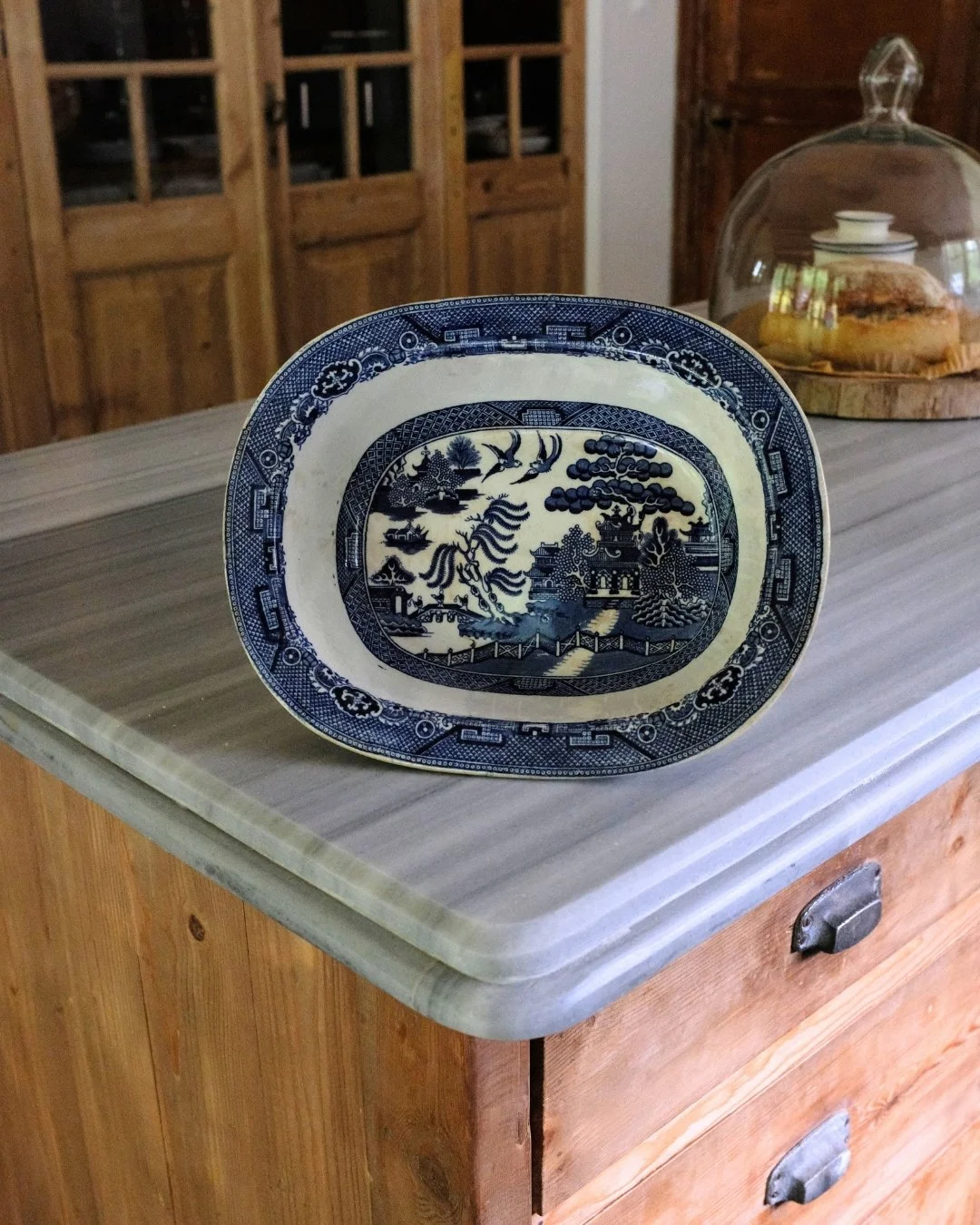
The backstamp reads simply "England," a wording used on export ware between 1891 and roughly 1920, before "Made in England" became the standard — narrow enough to place this deep oval dish somewhere around the turn of the last century, over a hundred years of use behind it. It is also the largest and most functional serving piece in the whole collection, the kind that was made to survive a working kitchen rather than sit in a cabinet, and the tea-coloured staining worked into the glaze is exactly the evidence of that.
28 x 22 x 7,5 cm
We've done our best to photograph and describe each piece as accurately as possible, though with antique ceramics, a little craquelure and discolouring is part of the charm rather than a flaw to hide. Every piece is packed with the same care we'd want it to arrive with, and our shipping cost reflects that.
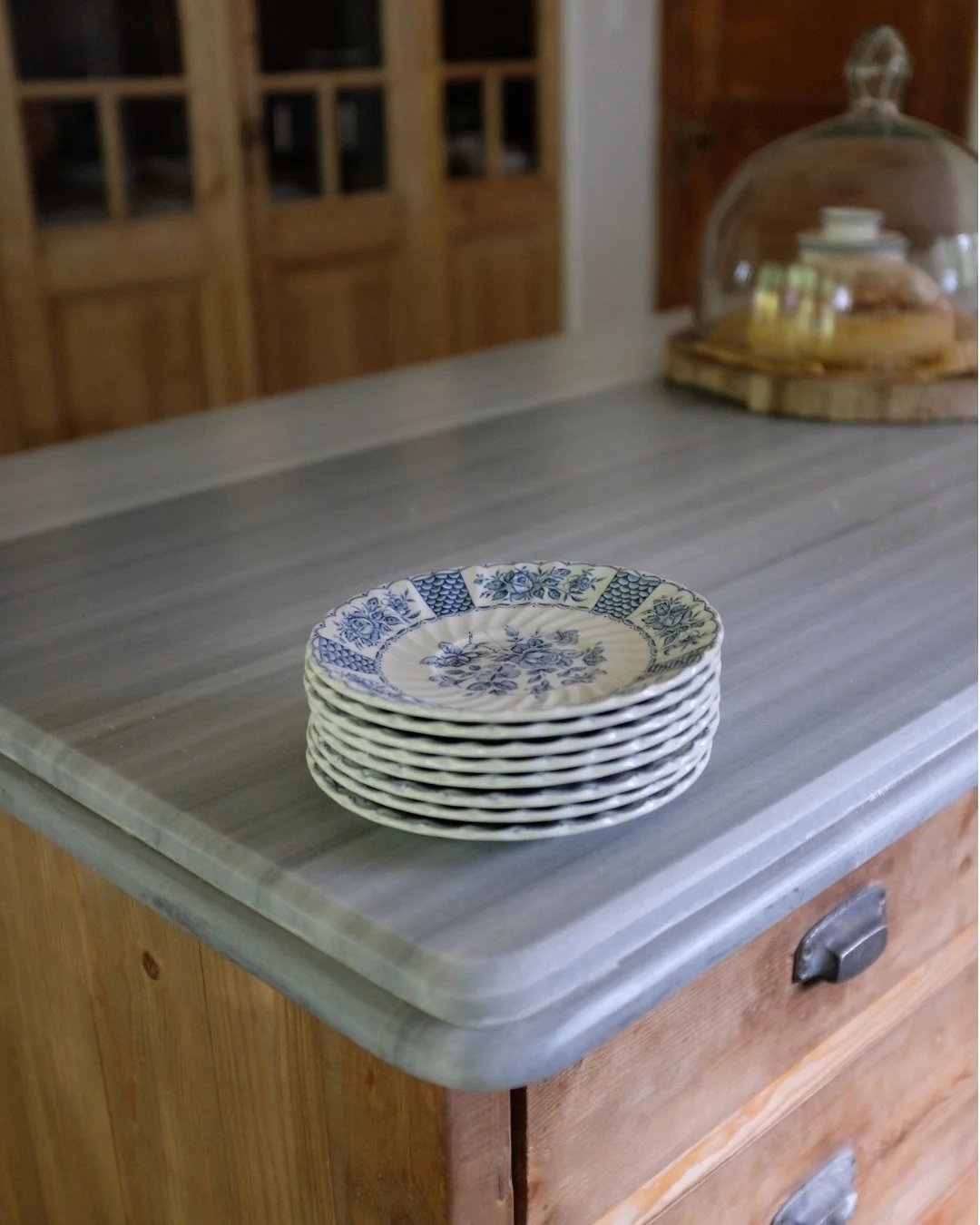
Made by Myott in Staffordshire in 1982, this set of nine side plates carries the Melody pattern — a swirled ironstone body with alternating floral and fish-scale panels in blue. Not antique in the strict sense, but a complete, unchipped set of English tableware old enough to have its own settled patina. Sold together because sets like this are harder to find intact than the pattern itself, which turns up often but rarely in nine matching pieces.
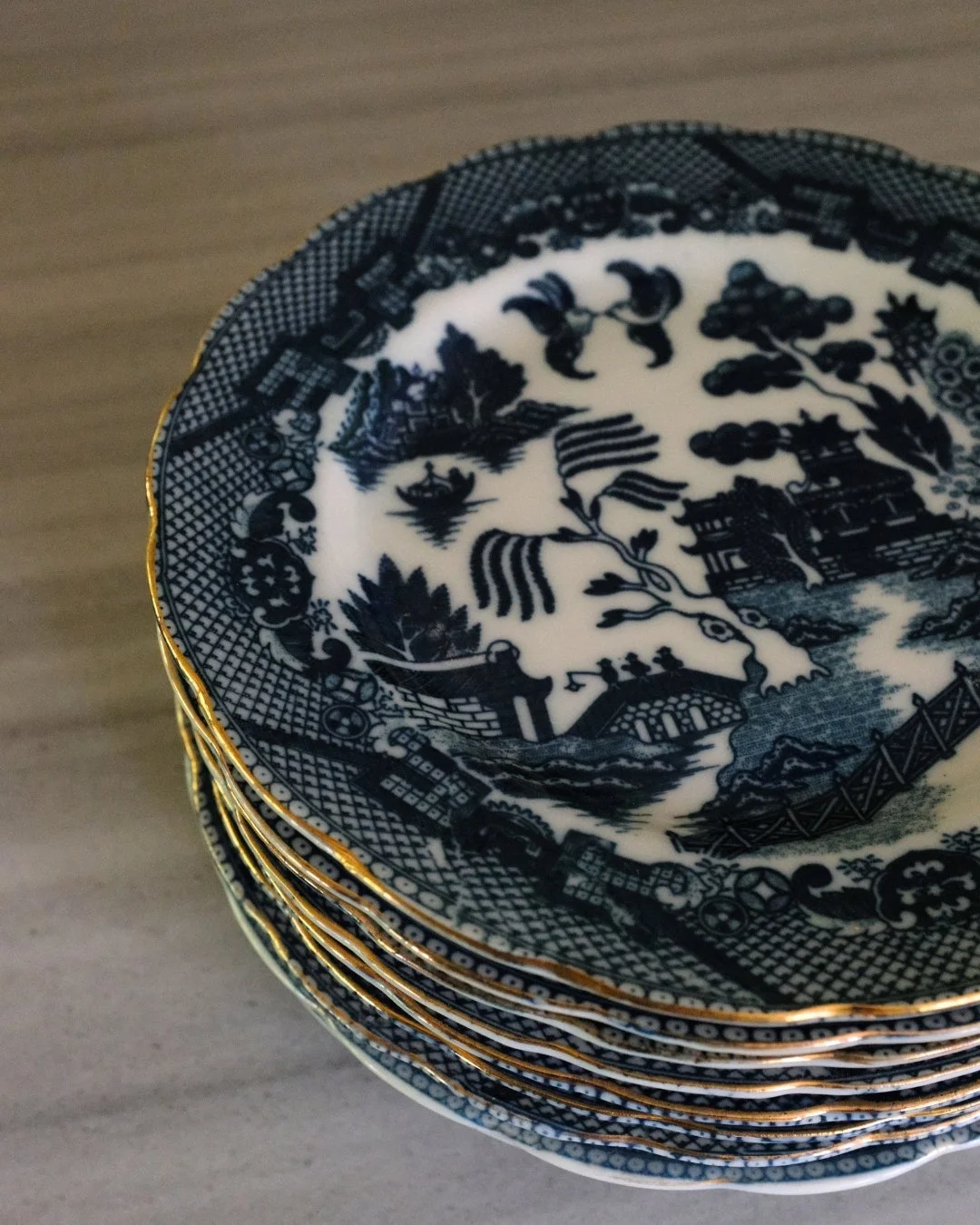
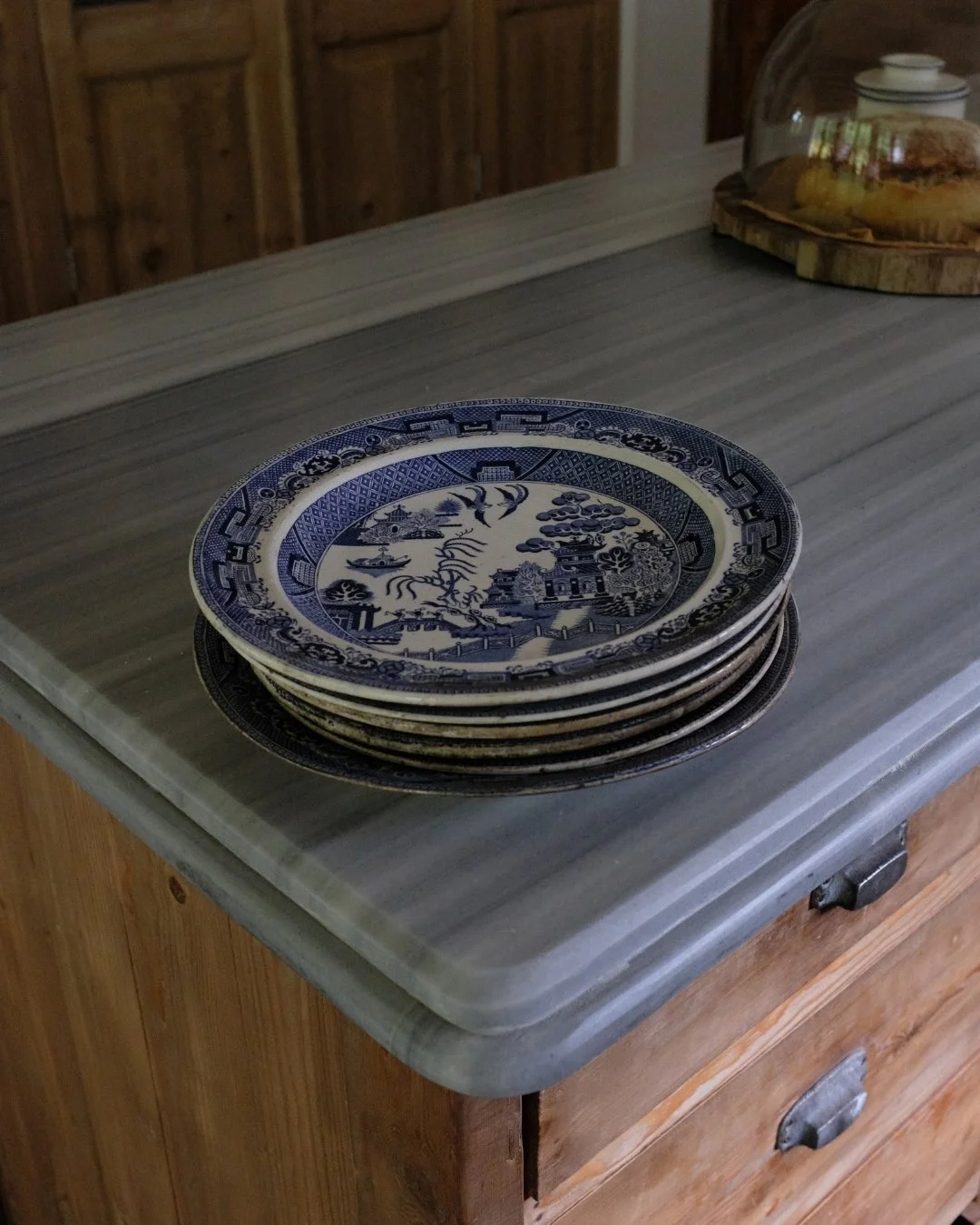
Nine plates from the same run, close enough in transfer and glaze to read as a proper set rather than a gathered lot — the larger size of these makes them the more useful, everyday pieces in the willow family running through this collection. Look closely and no two are printed quite the same; the transfer sits a little heavier on some than others, the kind of small variation that comes from hand-applied work rather than a single uniform mould.
18,5cm wide
We've done our best to photograph and describe each piece as accurately as possible, though with antique ceramics, a little craquelure and discolouring is part of the charm rather than a flaw to hide. Every piece is packed with the same care we'd want it to arrive with, and our shipping cost reflects that.
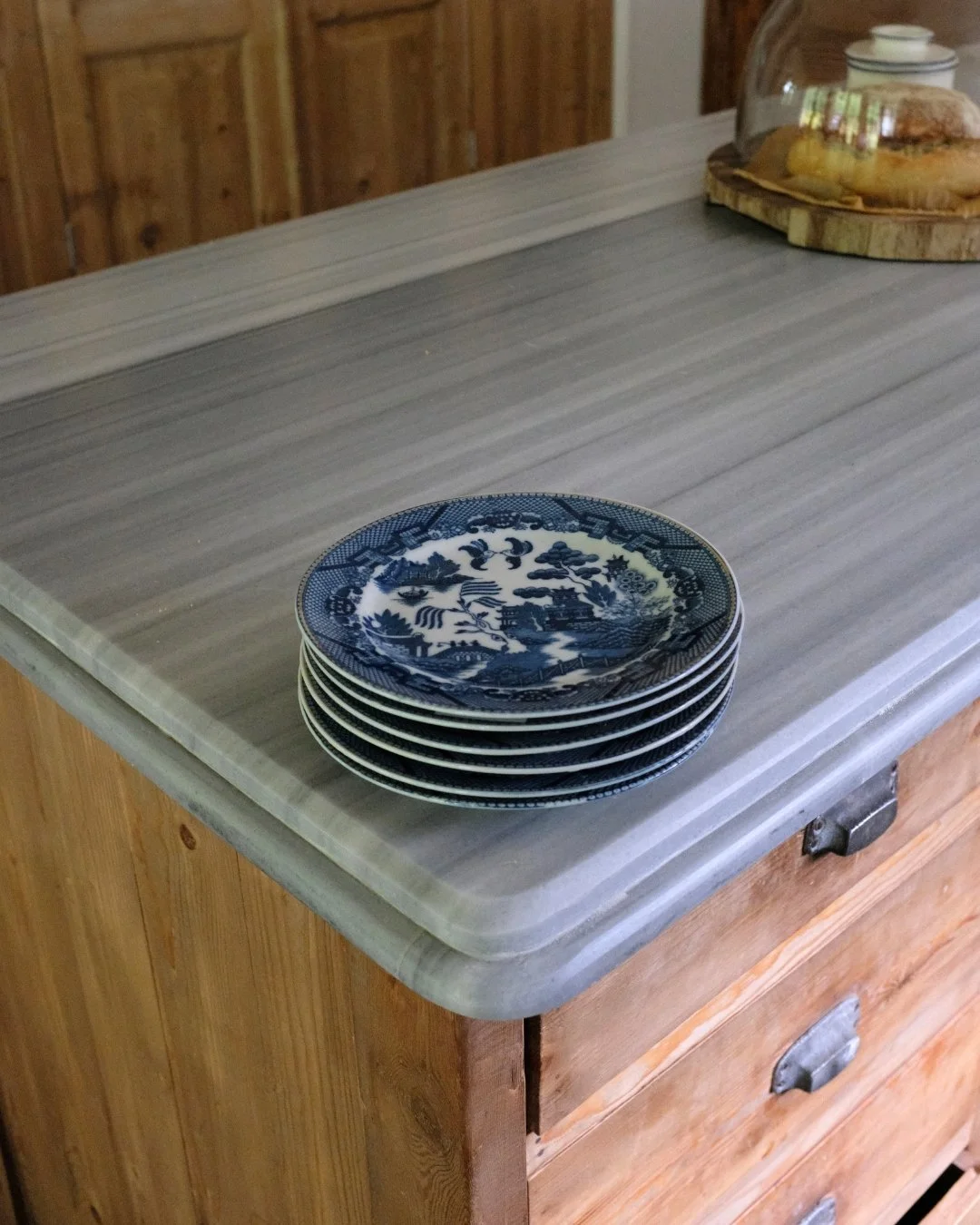
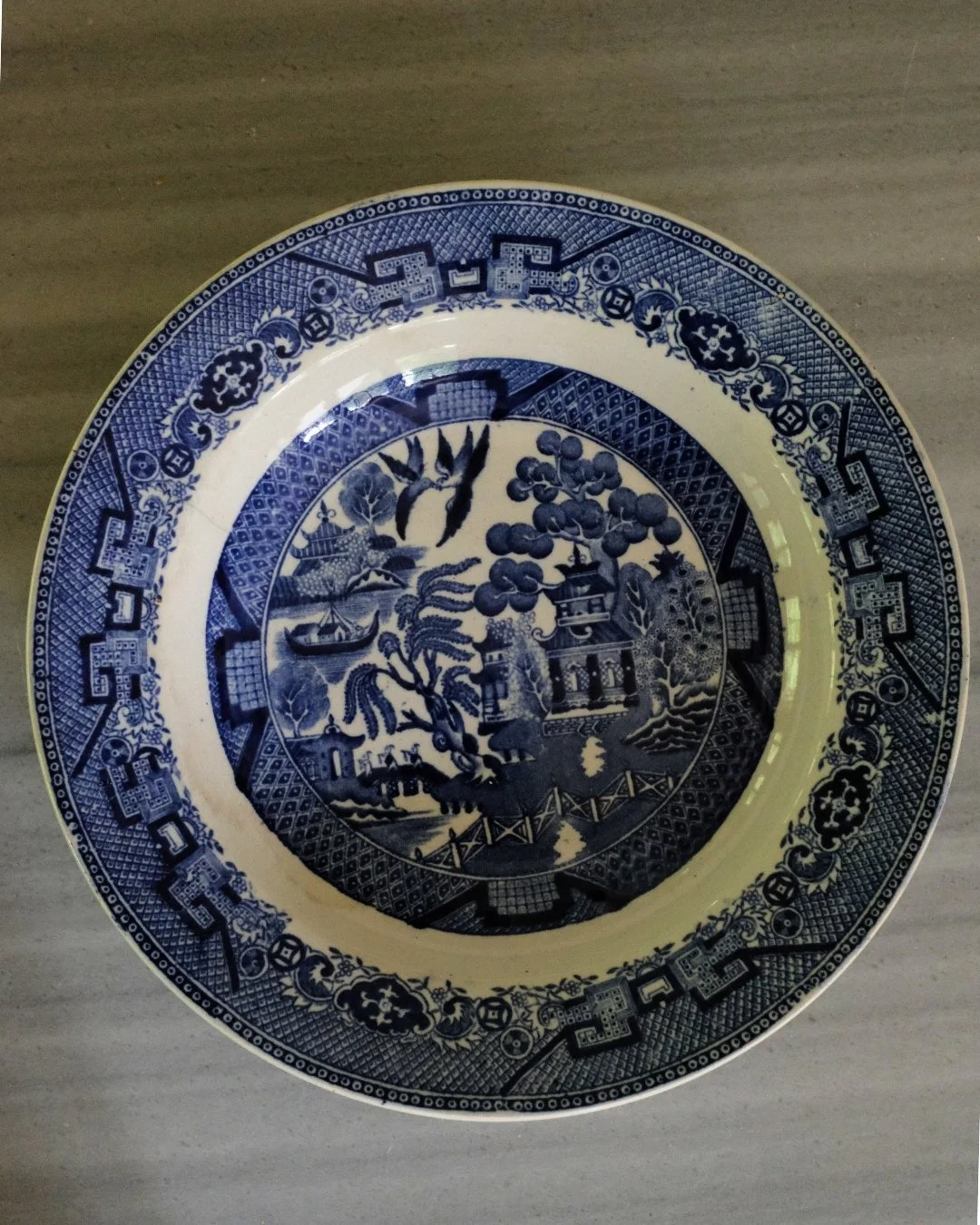
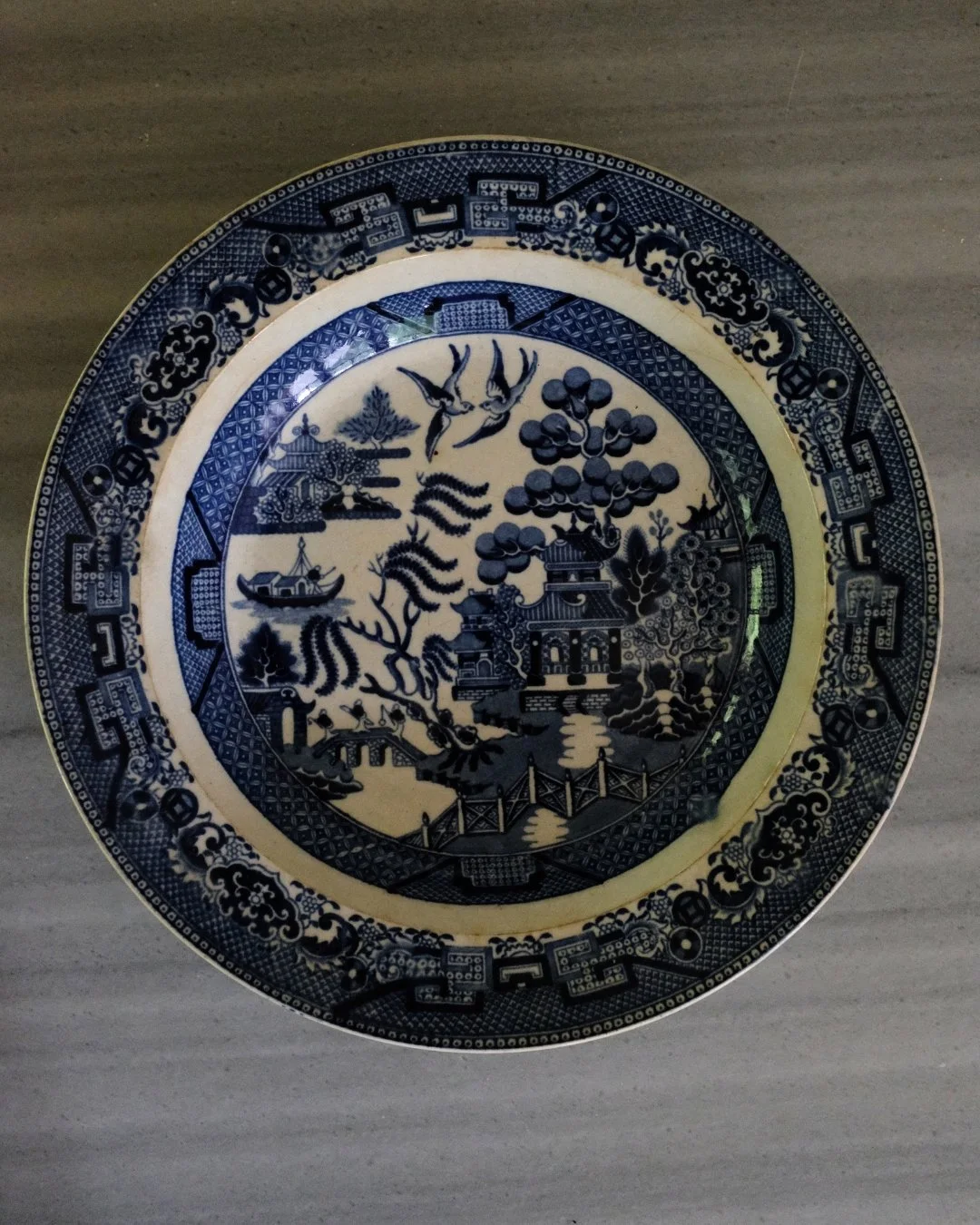
The willow landscape — bridge, pagoda, willow tree, two birds in flight — has been reproduced by dozens of makers since the late eighteenth century, so a set like this earns its keep through completeness rather than rarity. Six matching gilt-edged plates, unchipped and sold together, at a size that suits everyday styling rather than a single showpiece.
18cm wide
We've done our best to photograph and describe each piece as accurately as possible, though with antique ceramics, a little craquelure and discolouring is part of the charm rather than a flaw to hide. Every piece is packed with the same care we'd want it to arrive with, and our shipping cost reflects that.
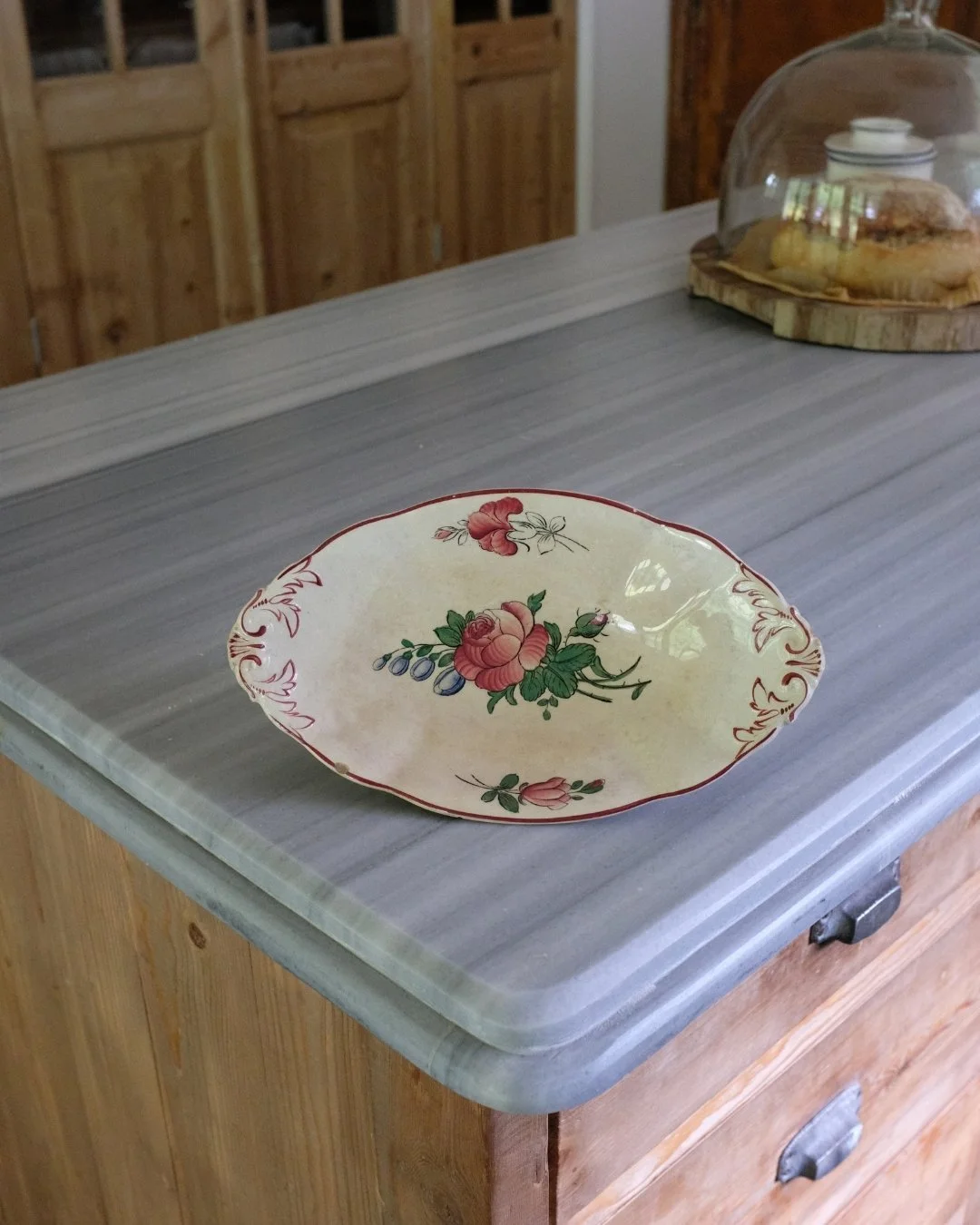
A second Villeroy & Boch pattern in this collection alongside Burgenland, which is a rarer thing to have from one maker than it might sound — "Alt Lothringen," hand-painted-style florals in pink, yellow and green on an oval scalloped dish. Two small old chips, otherwise a strong companion piece to sit near the Burgenland set in photographs.
25x14,5cm
We've done our best to photograph and describe each piece as accurately as possible, though with antique ceramics, a little craquelure and discolouring is part of the charm rather than a flaw to hide. Every piece is packed with the same care we'd want it to arrive with, and our shipping cost reflects that.
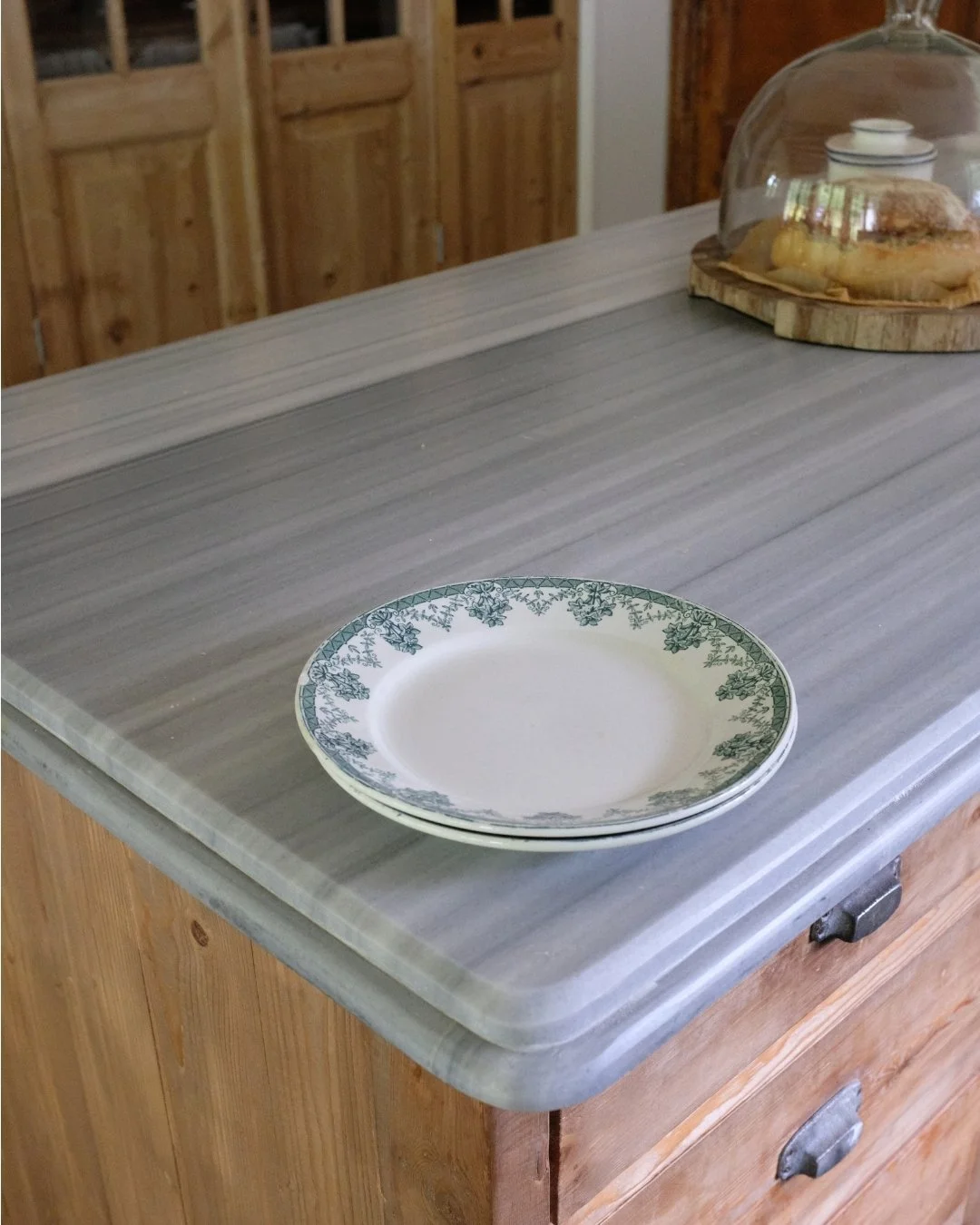
The same factory group as its sibling piece, later merged with Hamage — this one in "Cahors," a green floral scroll pattern with a diamond-trellis border, as marked on the reverse. A lovely pair for anyone photographing pieces together. Two small chips.
22cm wide
We've done our best to photograph and describe each piece as accurately as possible — though with antique ceramics, a little craquelure and discolouring is part of the charm rather than a flaw to hide. Every piece is packed with the same care we'd want it to arrive with, and our shipping cost reflects that.
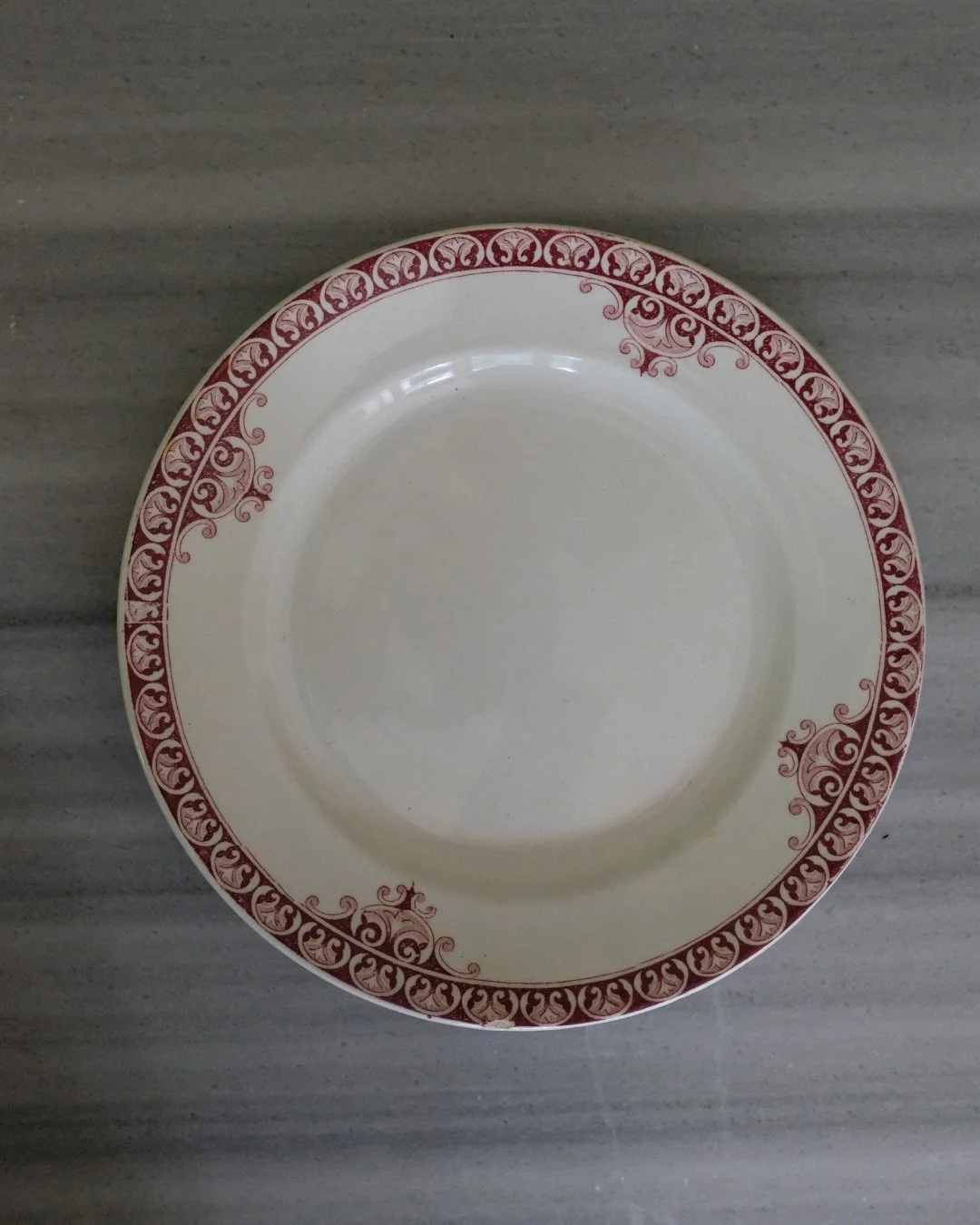
The same factory group as the Cahors, later merged with Hamage — this one in "Andrinople," a red monochrome scroll pattern shared across several French makers of the period, and a natural pair with its sibling piece for anyone photographing the two together. Two small chips.
22cm wide
We've done our best to photograph and describe each piece as accurately as possible — though with antique ceramics, a little craquelure and discolouring is part of the charm rather than a flaw to hide. Every piece is packed with the same care we'd want it to arrive with, and our shipping cost reflects that.
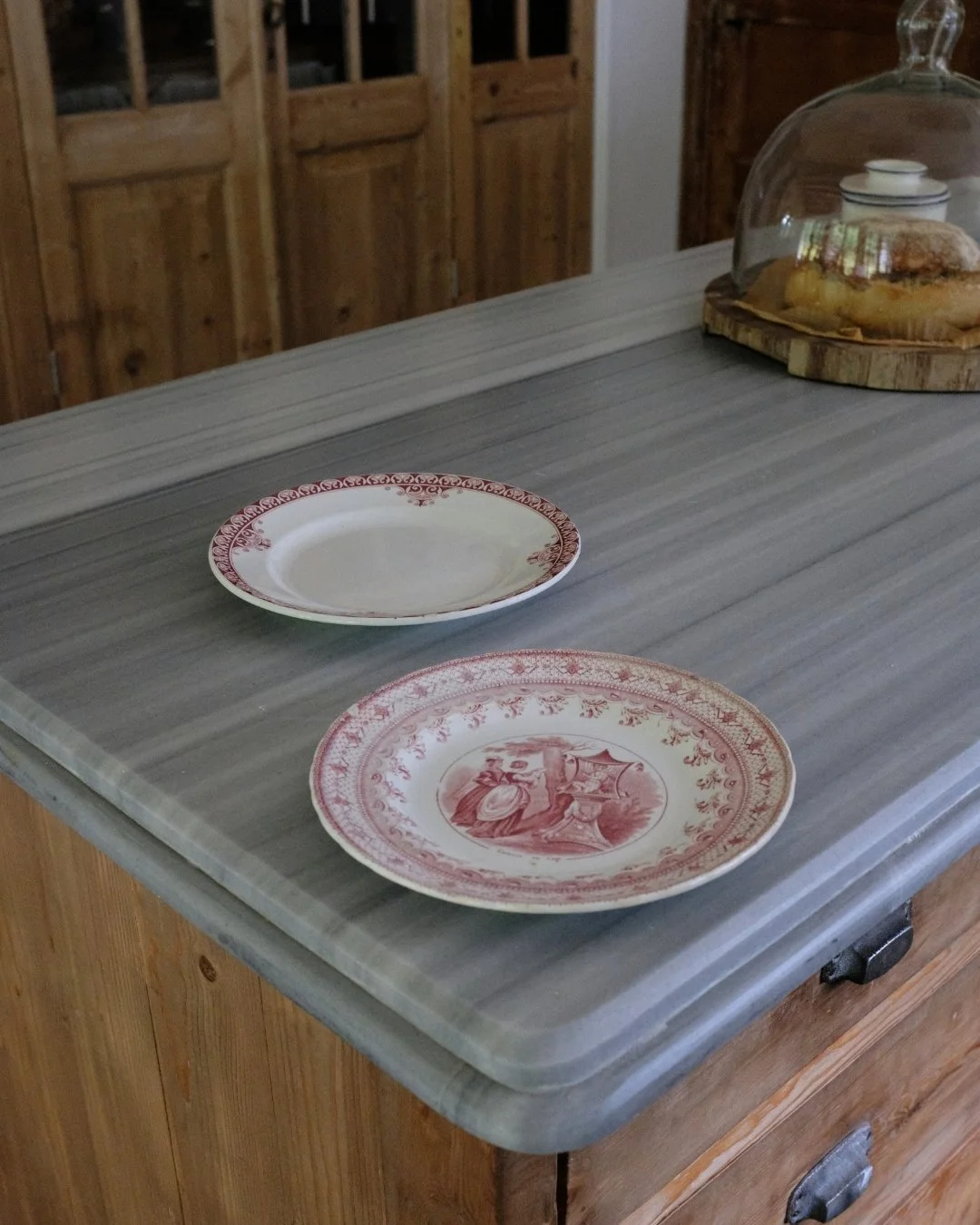
A pastoral scene titled "Labour en Cage" in deep burgundy transferware — French or Belgian, the maker's mark too worn to confirm, sold honestly as unattributed. Red and burgundy transferware turns up far less often than blue and white from this period, which makes it a useful change of colour against the rest of this collection rather than another variation on the same theme. Small chip to the rim.
21cm wide
We've done our best to photograph and describe each piece as accurately as possible — though with antique ceramics, a little craquelure and discolouring is part of the charm rather than a flaw to hide. Every piece is packed with the same care we'd want it to arrive with, and our shipping cost reflects that.
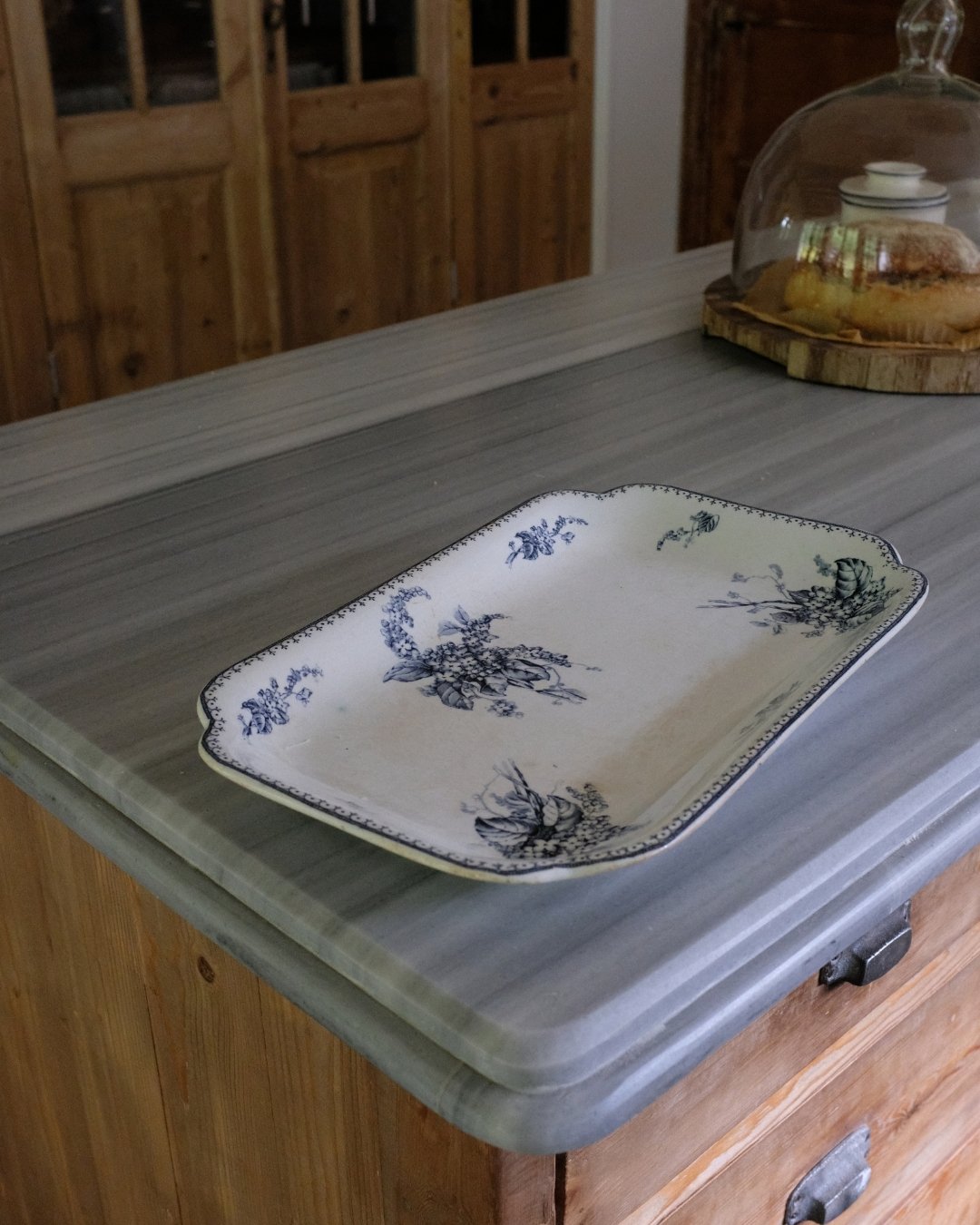
A large serving dish in Regout's "Meibloem" pattern, produced within a documented window between 1895 and 1916 — the biggest and most usable Regout piece in the collection, and large serving pieces like this survive in far smaller numbers than the plates that came with them, most having been broken through decades of actual dinners.
37,5 x 24 x 5 cm
We've done our best to photograph and describe each piece as accurately as possible — though with antique ceramics, a little craquelure and discolouring is part of the charm rather than a flaw to hide. Every piece is packed with the same care we'd want it to arrive with, and our shipping cost reflects that.
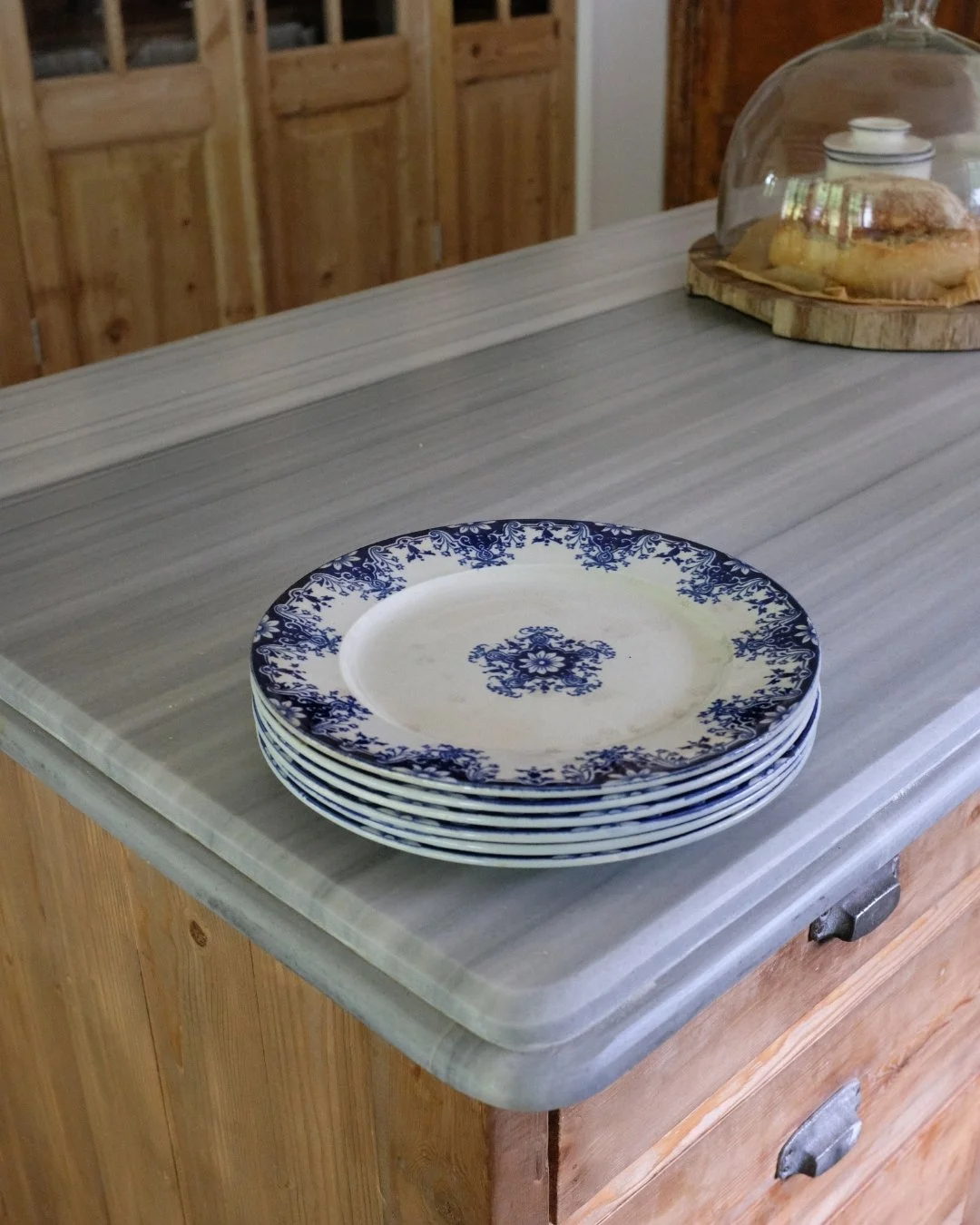
J. Vieillard & Cie operated in Bordeaux from 1829 to 1895, a well-documented and actively collected French faience maker, and "Rouen" was their own decorative line reviving the antique faience style of that city — a dense floral border around a rosette medallion, the genuine article rather than a later imitation. Five plates have come through in excellent order, which for French faience of this age and this maker is a set worth keeping intact; the sixth carries a small chip and is offered separately.
25cm wide
We've done our best to photograph and describe each piece as accurately as possible, though with antique ceramics, a little craquelure and discolouring is part of the charm rather than a flaw to hide. Every piece is packed with the same care we'd want it to arrive with, and our shipping cost reflects that.
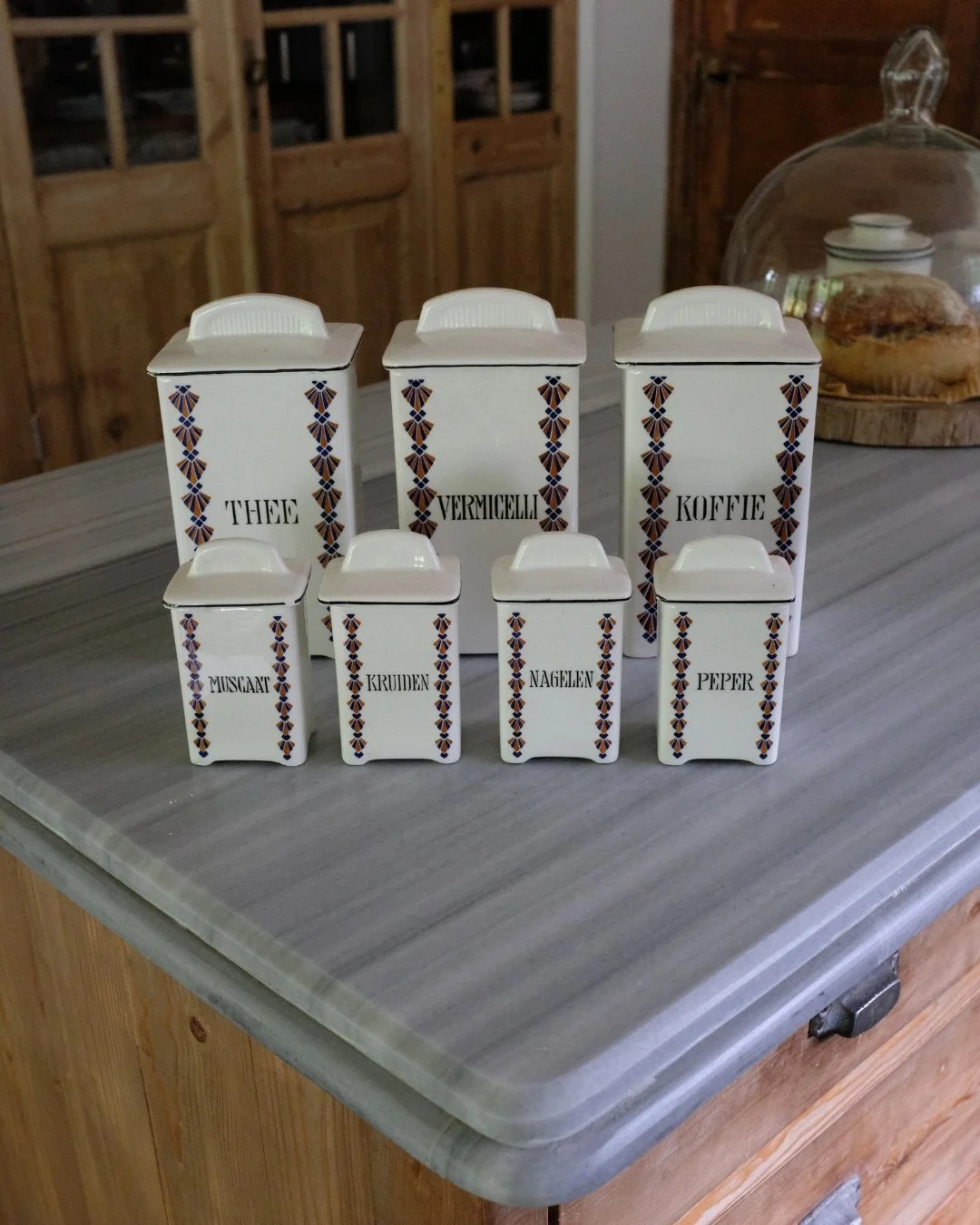
Seven labelled kitchen canisters — thee, koffie, vermicelli, muscaat, nagelen, peper, kruiden — in an art deco fan motif, hand-thrown rather than machine-cast, with the slight unevenness in shape and glaze to prove it. A full run like this, all seven labels intact and together, rarely survives a house move let alone a century; scattered chips throughout, sold as a set for the shelf they were always meant to stand on.
small jars 11 x 5,5 x 7 cm, large jars 20 x 9,5 x 11 cm
We've done our best to photograph and describe each piece as accurately as possible, though with antique ceramics, a little craquelure and discolouring is part of the charm rather than a flaw to hide. Every piece is packed with the same care we'd want it to arrive with, and our shipping cost reflects that.
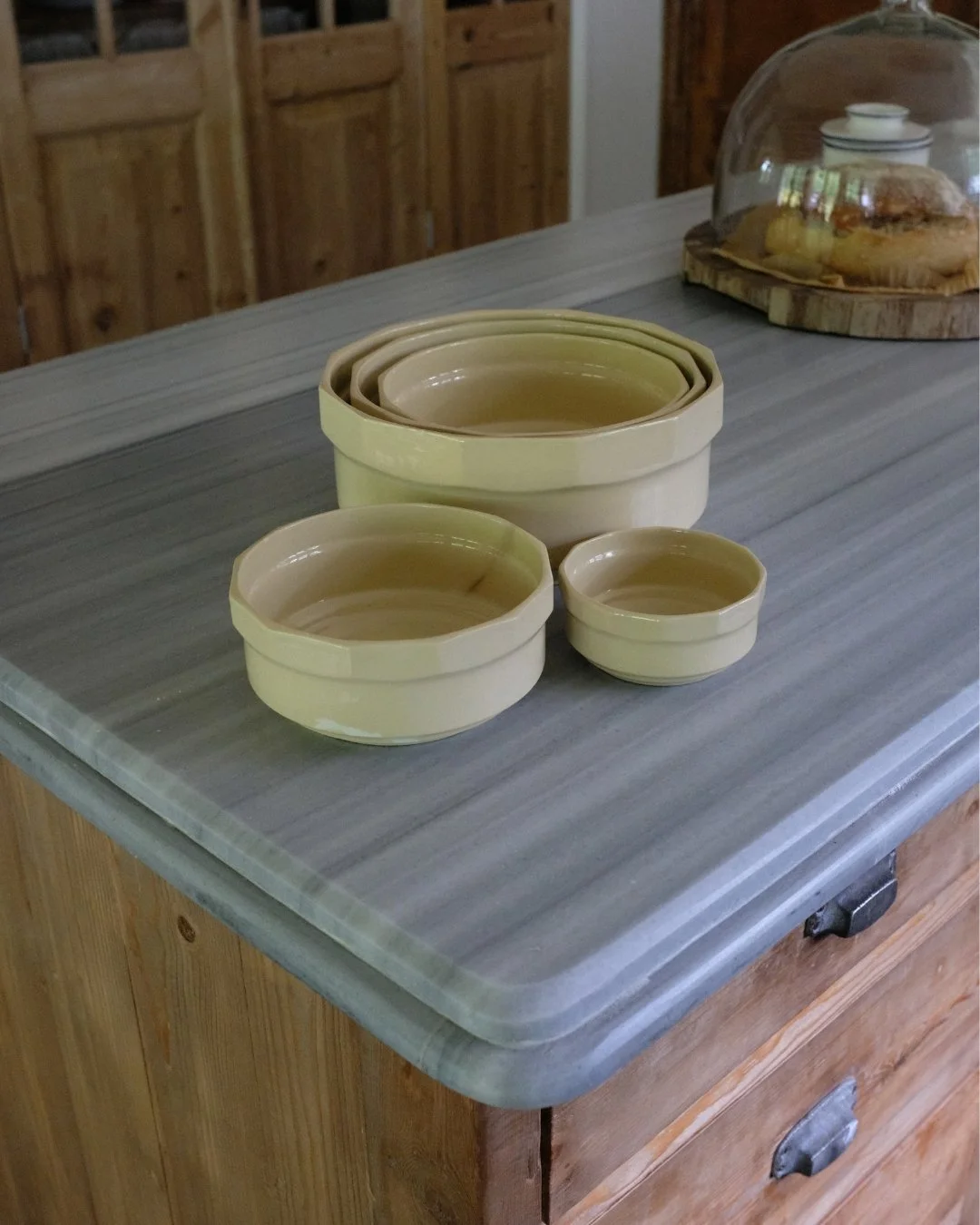
Unmarked, faceted, ivory-toned ironstone bowls, graduated from a large serving size down to a small side dish — the kind of kitchen ware that earns its keep in daily use rather than sitting still on a shelf. A full graduated run surviving together is harder to come by than any single bowl on its own, and the slight irregularities in shape and glaze point to hand-finished production rather than a fully mechanised one.
largest 23 x 10 cm, smallest 10 x 4,5 cm
We've done our best to photograph and describe each piece as accurately as possible, though with antique ceramics, a little craquelure and discolouring is part of the charm rather than a flaw to hide. Every piece is packed with the same care we'd want it to arrive with, and our shipping cost reflects that.
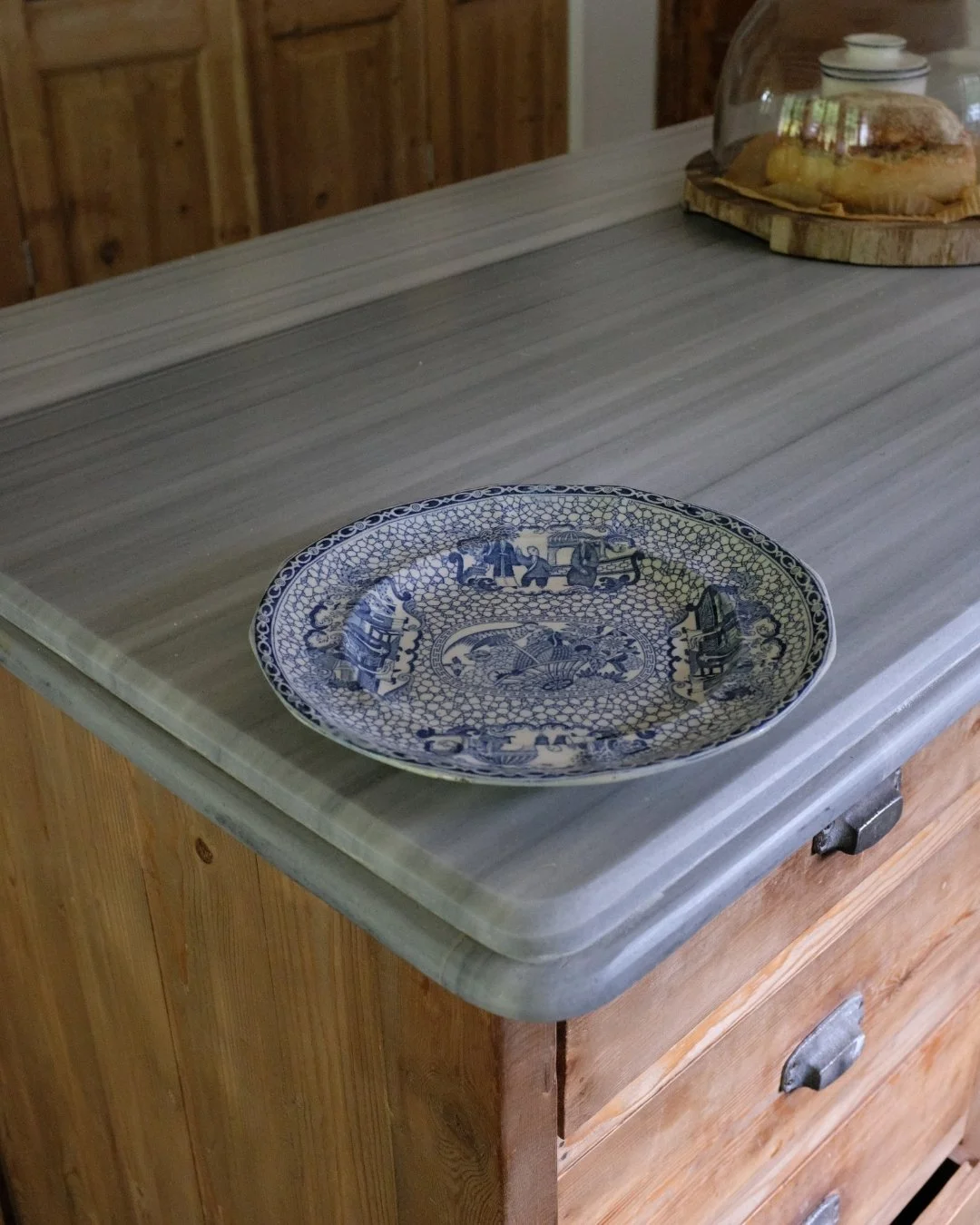
The registration number on the reverse ties this design to 1913 with more certainty than most antique china can offer — part of a range William Adams marketed by pointing back to their own original 1780 pattern, a maker leaning on over a century of its own history. Chinese bird medallions set within a fine trellis border make this a clear step away from the willow pattern running through most of the rest of this collection, and a good piece to photograph on its own.
25,5cm wide
We've done our best to photograph and describe each piece as accurately as possible, though with antique ceramics, a little craquelure and discolouring is part of the charm rather than a flaw to hide. Every piece is packed with the same care we'd want it to arrive with, and our shipping cost reflects that.
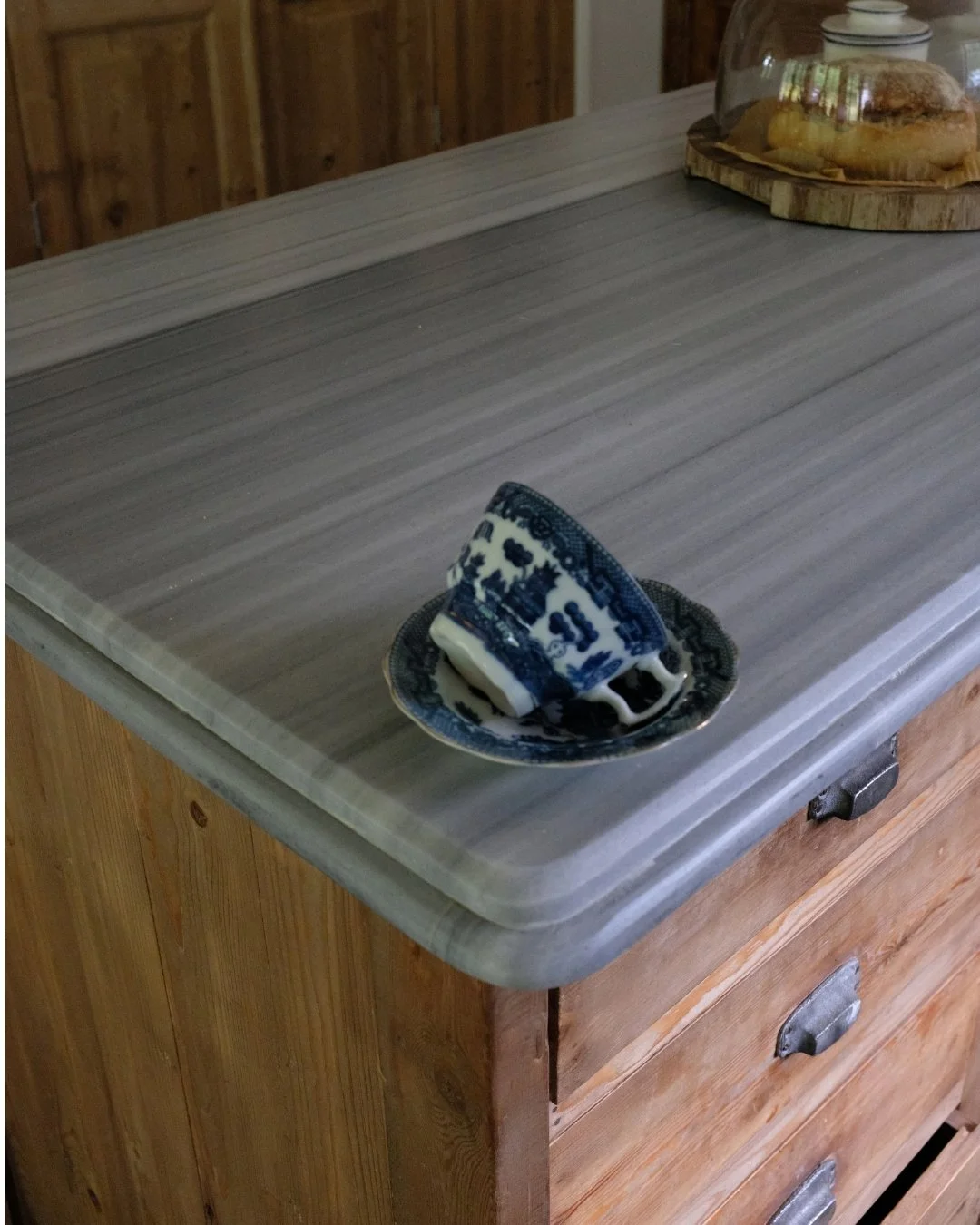
Unmarked, but the scalloped edge and gilt line are the kind of finishing touch a maker only bothers with on a slightly better line — enough to lift it above the plainer willow china nearby, in good condition throughout.
saucer 14,5cm wide
cup 9,5 wide
We've done our best to photograph and describe each piece as accurately as possible, though with antique ceramics, a little craquelure and discolouring is part of the charm rather than a flaw to hide. Every piece is packed with the same care we'd want it to arrive with, and our shipping cost reflects that.
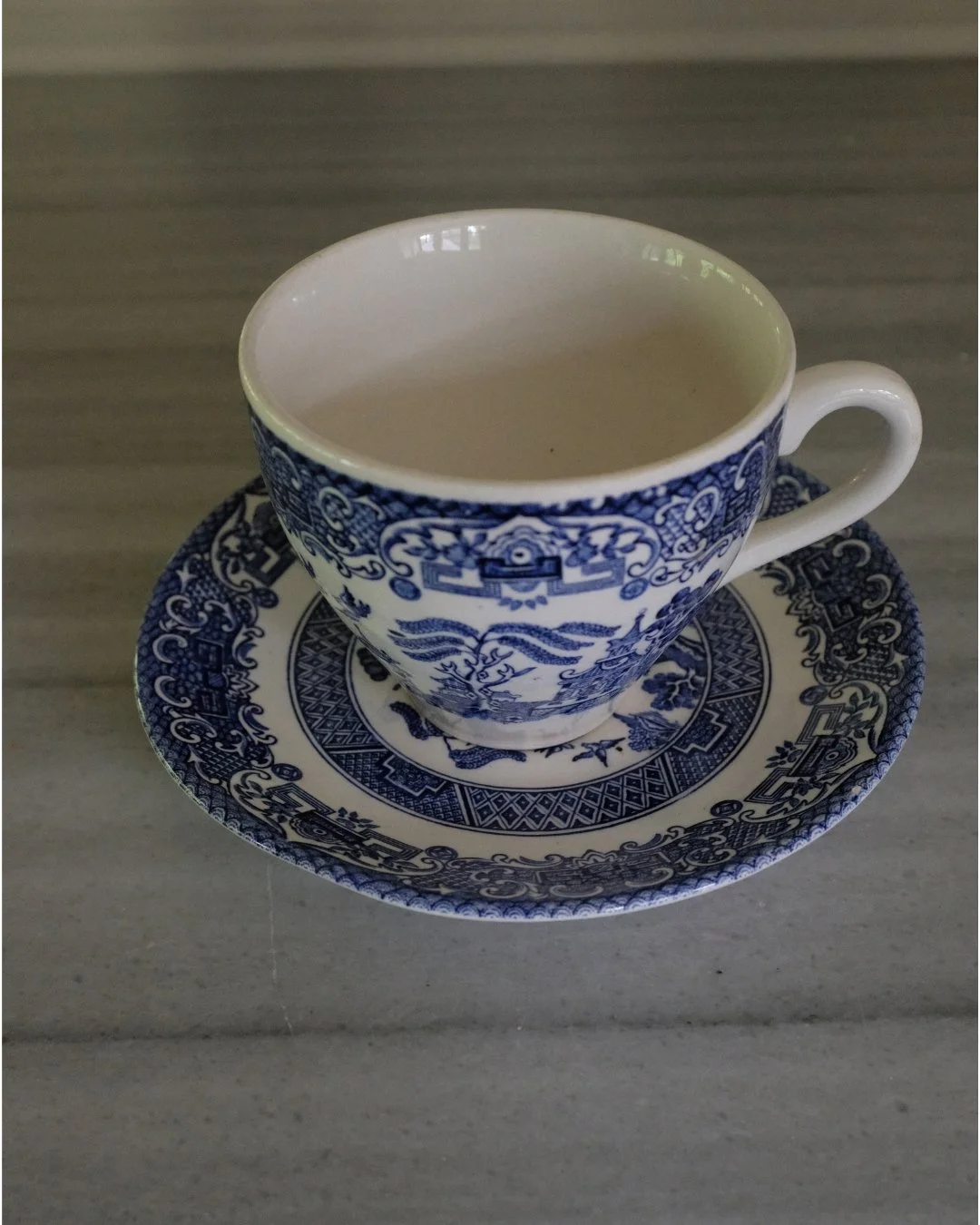
Marked "Old Willow" by English Ironstone Tableware Ltd, a Staffordshire maker working through the 1960s to 80s — vintage rather than antique, and a matching cup and saucer by the look of the transfer print, kept together rather than sold as odd pieces. Two small chips to the cup's footring.
saucer 14,5cm wide
cup 8,5 wide
We've done our best to photograph and describe each piece as accurately as possible, though with antique ceramics, a little craquelure and discolouring is part of the charm rather than a flaw to hide. Every piece is packed with the same care we'd want it to arrive with, and our shipping cost reflects that.
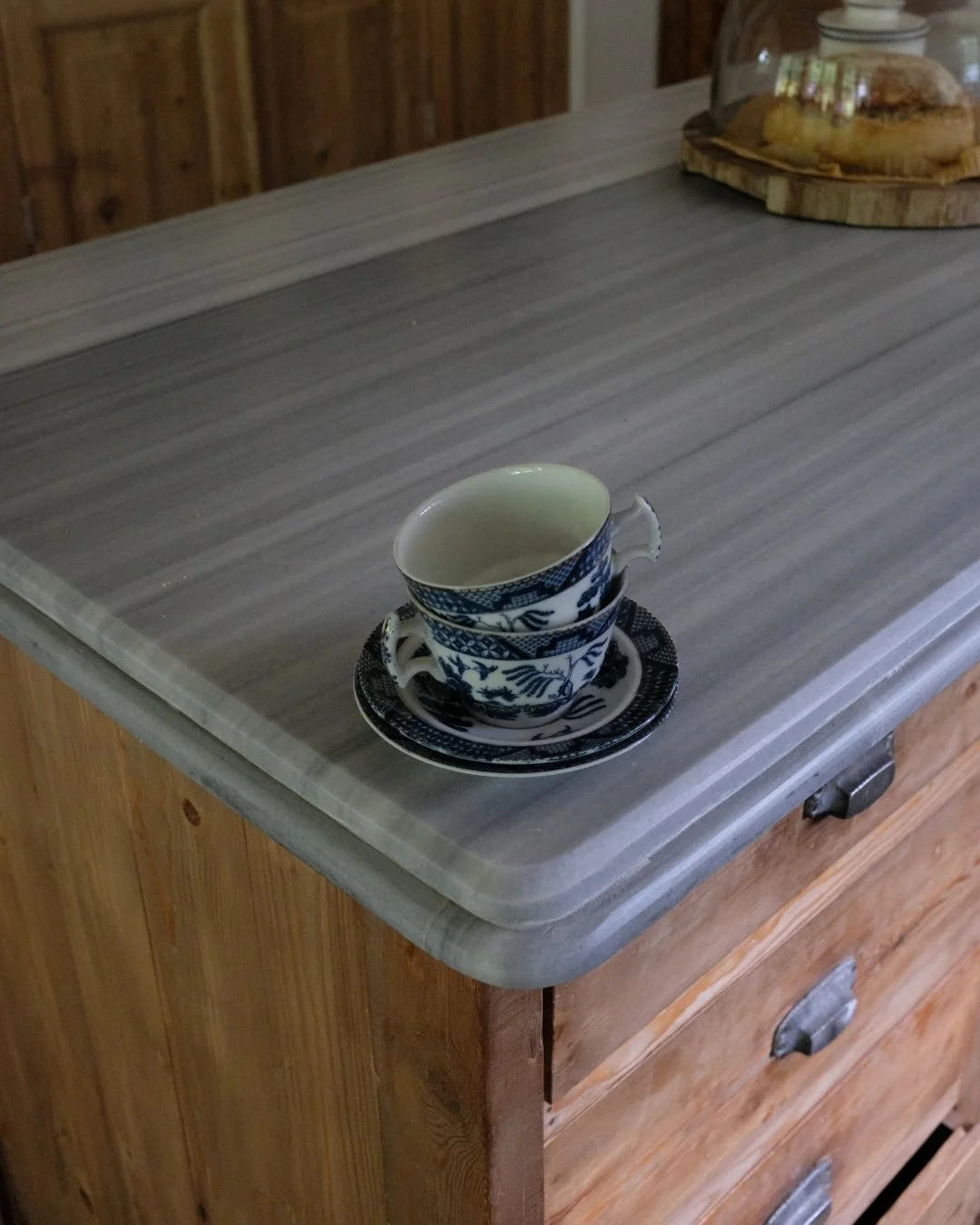
Unmarked, but noticeably finer and thinner than most of the willow china in this collection — thin porcelain rather than the heavier ironstone seen elsewhere, the kind of body that was more costly to produce even without a maker's name attached to say so.
saucer 13,5cm wide
cup 8,5 wide
We've done our best to photograph and describe each piece as accurately as possible, though with antique ceramics, a little craquelure and discolouring is part of the charm rather than a flaw to hide. Every piece is packed with the same care we'd want it to arrive with, and our shipping cost reflects that.
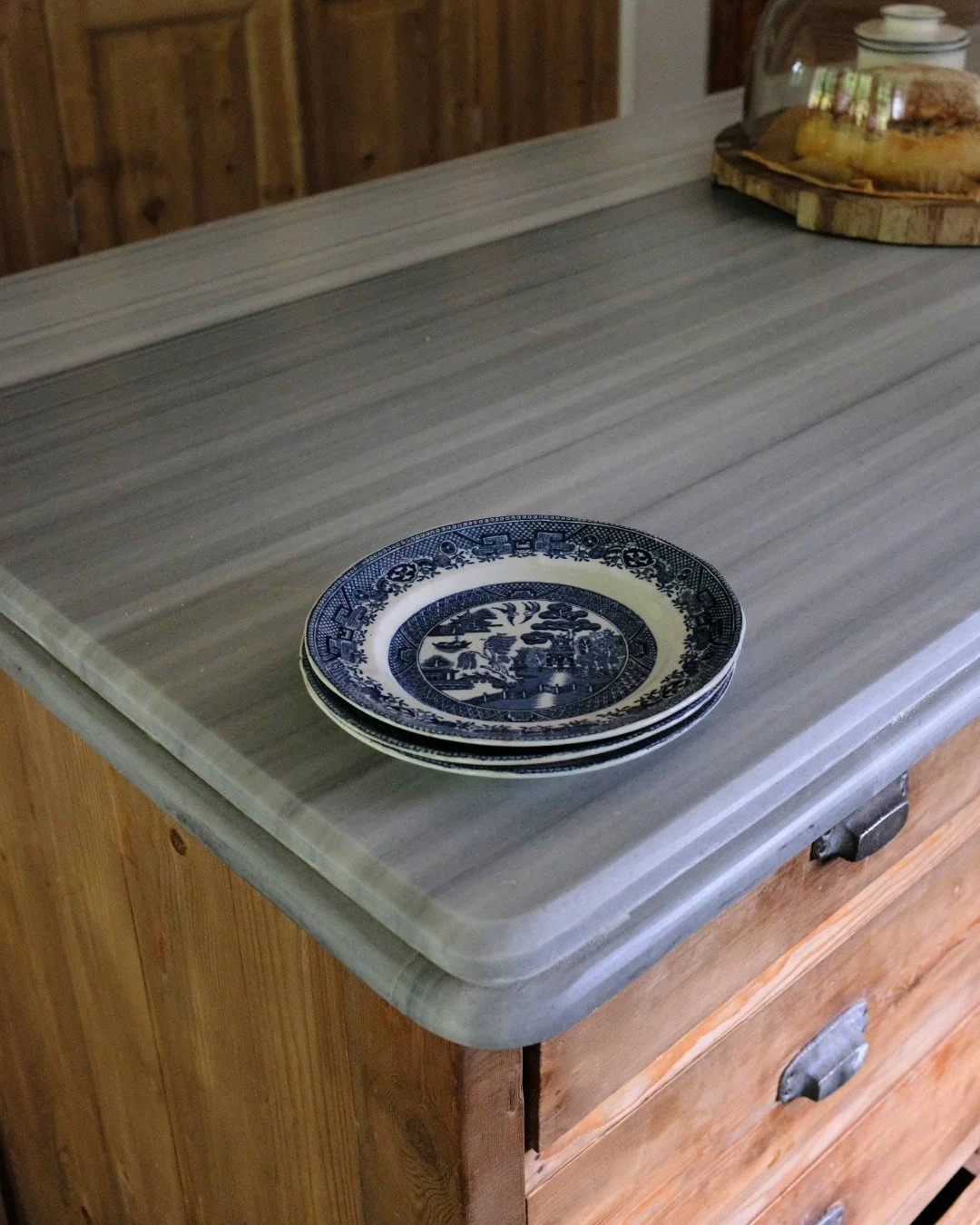
W. Adams & Sons of Tunstall is a well-documented Staffordshire name, marked here simply "England" — a wording that narrows production to the 1890s rather than leaving it open to the century. Three plates survive from the same run: one in perfect order, two carrying small chips to the rear rim.
18cm wide
We've done our best to photograph and describe each piece as accurately as possible, though with antique ceramics, a little craquelure and discolouring is part of the charm rather than a flaw to hide. Every piece is packed with the same care we'd want it to arrive with, and our shipping cost reflects that.
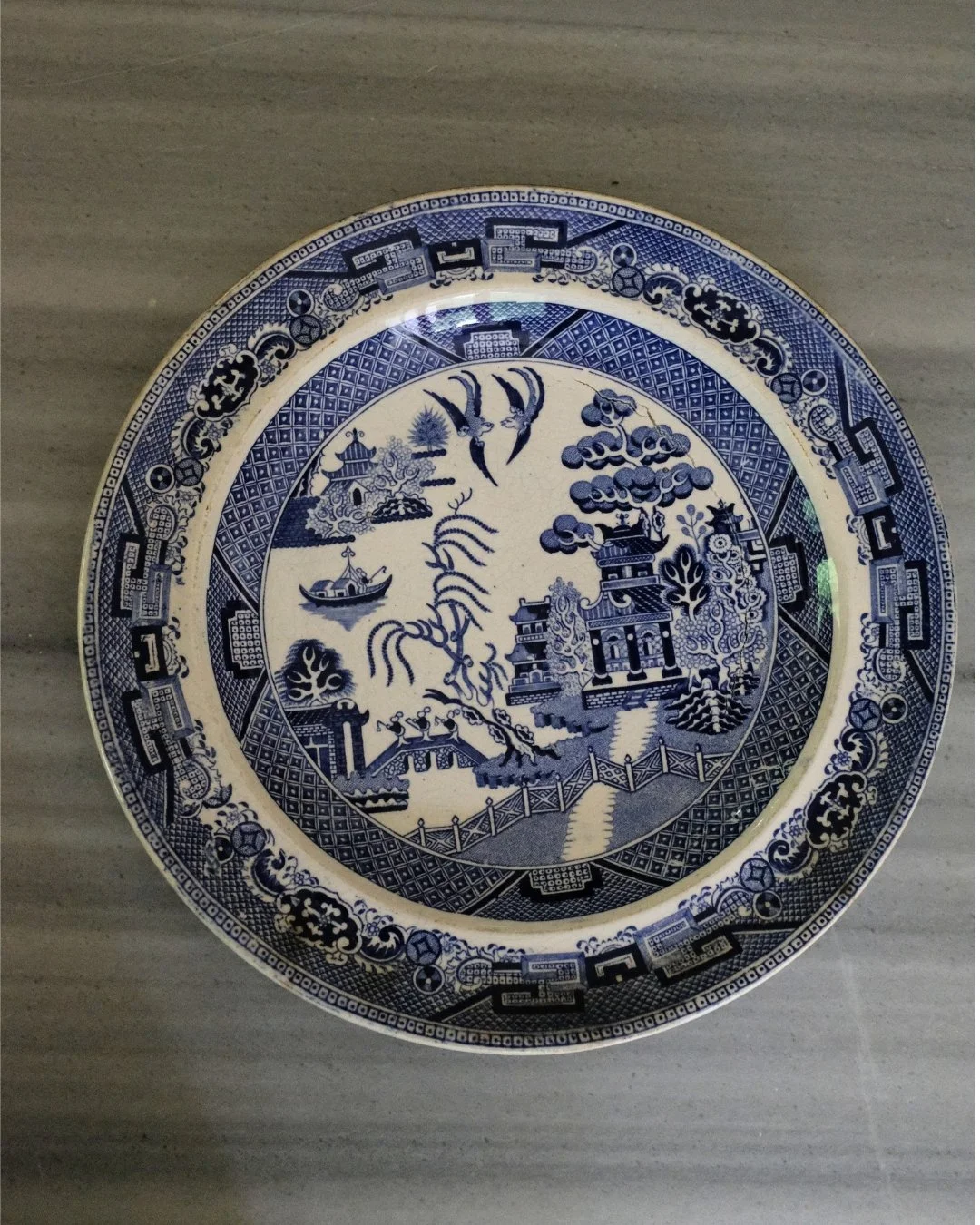
A Victorian ironstone quality mark — a crown within a scrolled ribbon — sits alongside kiln spur marks and heavy crazing, all pointing the same direction: genuinely old, genuinely hand-finished. The crack running through the base was fired in under the glaze at the factory itself rather than broken later, which makes it a record of how the piece was made rather than a flaw to work around.
26cm wide
We've done our best to photograph and describe each piece as accurately as possible, though with antique ceramics, a little craquelure and discolouring is part of the charm rather than a flaw to hide. Every piece is packed with the same care we'd want it to arrive with, and our shipping cost reflects that.
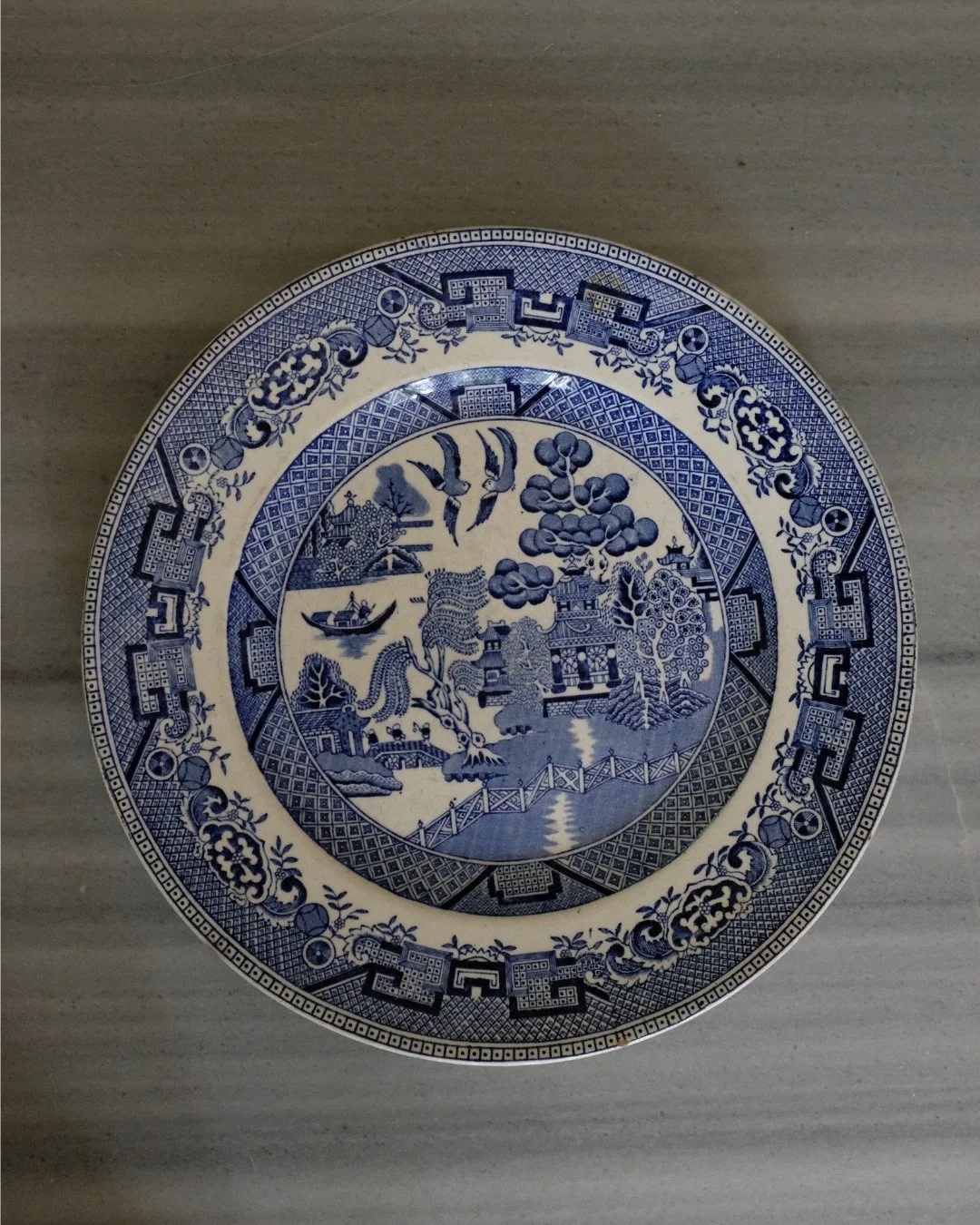
A Burslem maker with a name still recognised today, marked simply "England" rather than "Made in England," which places production before the early 1920s — among the earlier pieces in this collection by that measure. A handful of old chips sit along the rear rim, the kind of wear that comes from a plate that was genuinely used rather than kept behind glass; sold here as decorative rather than table-ready.
25,5cm wide
We've done our best to photograph and describe each piece as accurately as possible, though with antique ceramics, a little craquelure and discolouring is part of the charm rather than a flaw to hide. Every piece is packed with the same care we'd want it to arrive with, and our shipping cost reflects that.
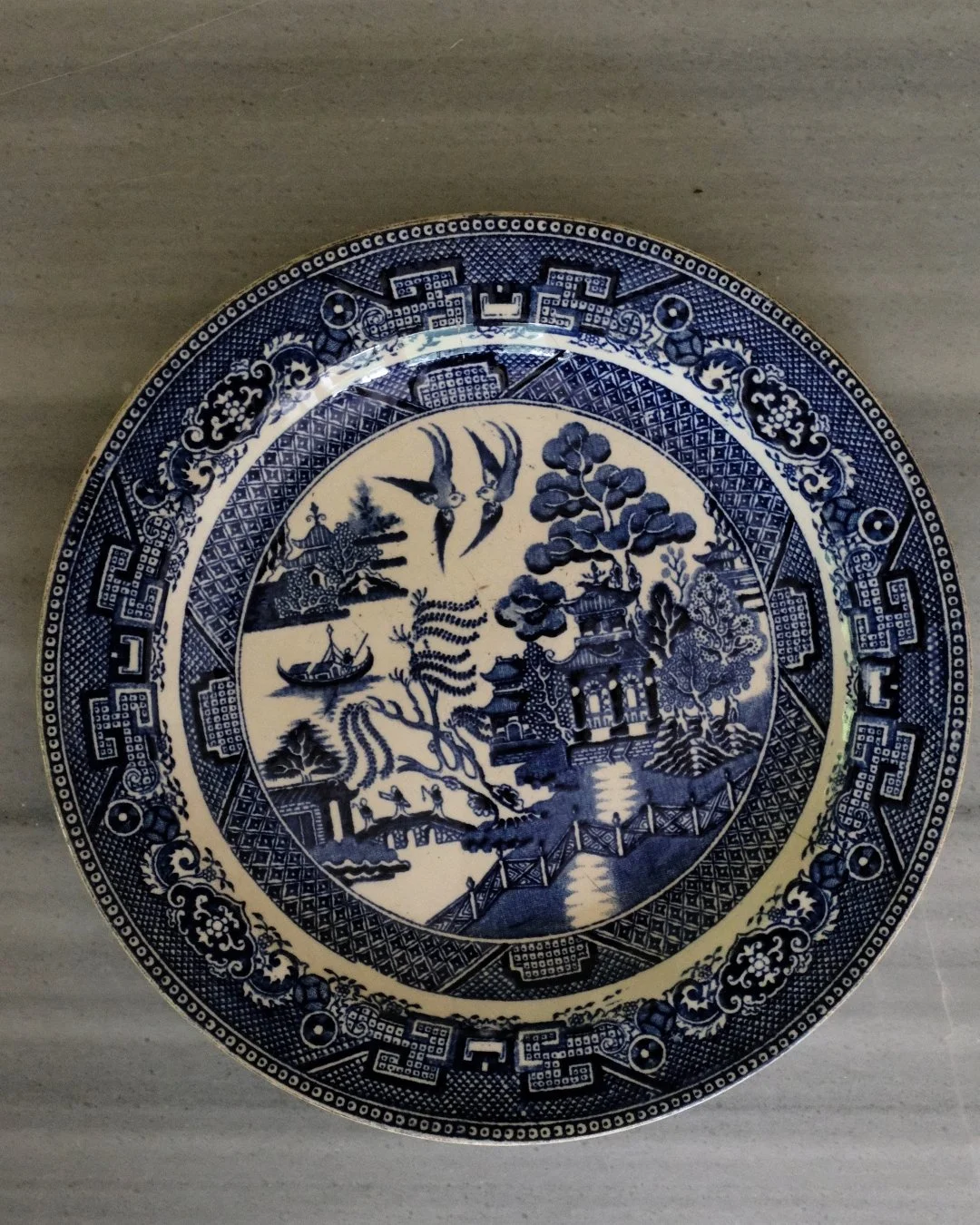
No maker's name survives on this one, only a generic "Semi China Warranted" quality stamp used by several English potteries through the nineteenth century — sold honestly as unattributed rather than dressed up with a guess. What it does have is the fine crazing worked through the entire surface and a tea-brown patina settled deep into the glaze, the kind of wear that only comes from genuine age and use.
24cm wide
We've done our best to photograph and describe each piece as accurately as possible, though with antique ceramics, a little craquelure and discolouring is part of the charm rather than a flaw to hide. Every piece is packed with the same care we'd want it to arrive with, and our shipping cost reflects that.
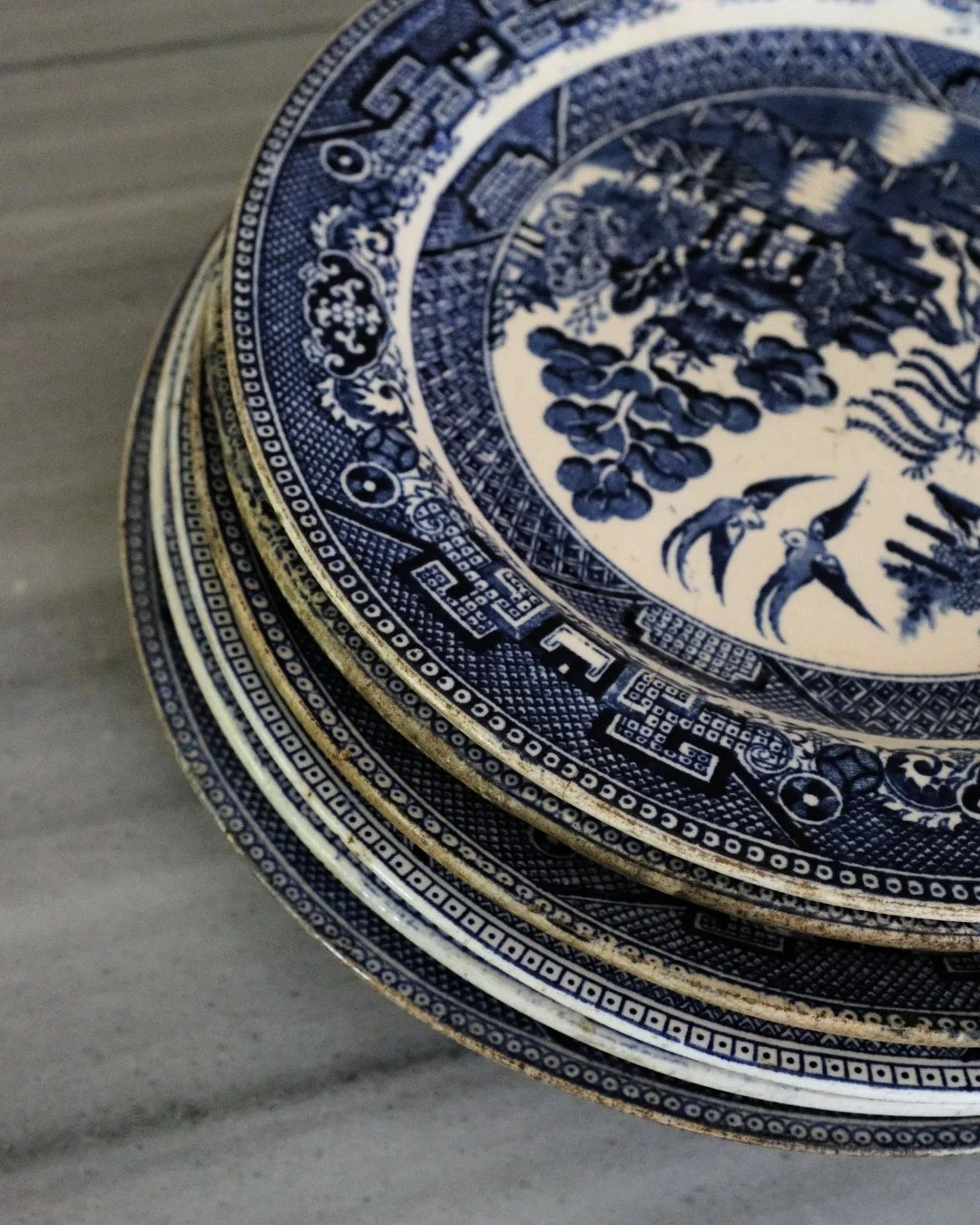
A scrolled "Stone Ware" quality stamp with initials too worn to resolve into a maker's name, sold honestly as unattributed rather than guessed at. What carries this one is the crazing and patina worked into both sides — the kind of surface that only develops after well over a century of handling, and a convincing case on its own for genuine nineteenth-century production.
27cm wide
We've done our best to photograph and describe each piece as accurately as possible, though with antique ceramics, a little craquelure and discolouring is part of the charm rather than a flaw to hide. Every piece is packed with the same care we'd want it to arrive with, and our shipping cost reflects that.
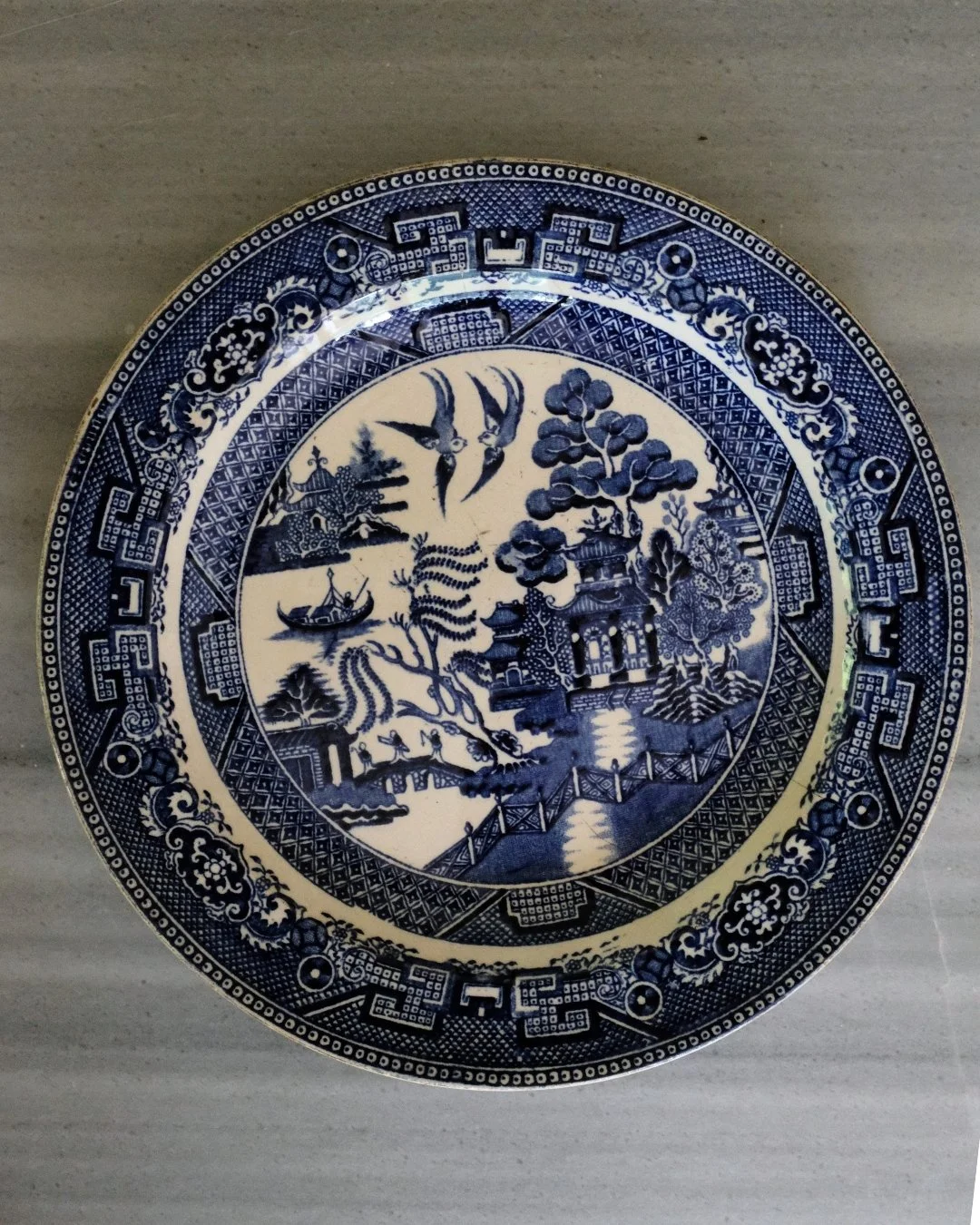
The Cappellemans factory in Jemmapes operated for a single, documented stretch — 1847 to 1870 — working in partnership with the English maker William Smith, which is why this plate reads so convincingly English despite being Belgian through and through. That short, closed window of production is unusually precise for antique china, which more often carries a rough guess spanning fifty years rather than twenty-three; two fine hairlines mean this one wants a wall rather than a table.
24,5cm wide
We've done our best to photograph and describe each piece as accurately as possible, though with antique ceramics, a little craquelure and discolouring is part of the charm rather than a flaw to hide. Every piece is packed with the same care we'd want it to arrive with, and our shipping cost reflects that.
No maker's mark, but three small spur marks on the underside — the scars left by kiln supports during firing, a detail that all but disappears once production moves to later, mechanised methods, and a reliable sign of genuine hand-finished nineteenth-century work. The weight and the slightly uneven glaze tell the same story from a different angle.
24,5cm wide
We've done our best to photograph and describe each piece as accurately as possible, though with antique ceramics, a little craquelure and discolouring is part of the charm rather than a flaw to hide. Every piece is packed with the same care we'd want it to arrive with, and our shipping cost reflects that.
Made in Maastricht by Société Céramique, whose "Made in Holland" mark dates to after 1891 — one of the small handful of genuinely Dutch pieces among china that is otherwise almost entirely English and French, which makes it a natural fit for a collection with its own roots close by. A fine hairline runs through the base, worth knowing before it goes on a shelf rather than a table.
24,5cm wide
4cm high
We've done our best to photograph and describe each piece as accurately as possible, though with antique ceramics, a little craquelure and discolouring is part of the charm rather than a flaw to hide. Every piece is packed with the same care we'd want it to arrive with, and our shipping cost reflects that.
Wedgwood is one of the very few English ceramics names recognised well outside the trade, and this plate carries an impressed mark rather than the later printed version — a detail that places production in the earlier stretch of the twentieth century, before Wedgwood moved to printing its marks. The body is noticeably thin and light for its size, consistent with the finer potting of that earlier period, and the willow scene beneath it is complete and sharply defined.
24,5cm wide
4cm high
We've done our best to photograph and describe each piece as accurately as possible, though with antique ceramics, a little craquelure and discolouring is part of the charm rather than a flaw to hide. Every piece is packed with the same care we'd want it to arrive with, and our shipping cost reflects that.
A Table That Brings Everything Together
Finally, the dining area is where antiques truly come to life.
A large antique wooden table instantly anchors the room. These solid tables are often easier to find than people think — and frequently more affordable than newly made ones.
Around the table we like to mix antique chairs, including bobbin chairs collected over time. A built-in bench layered with cushions made from antique fabrics adds comfort and softness.
Nearby, a small bobbin table can hold a cup of tea, a cookbook, or a plate of biscuits while browsing recipes.
Together these pieces create a kitchen that feels welcoming, personal and full of quiet history.
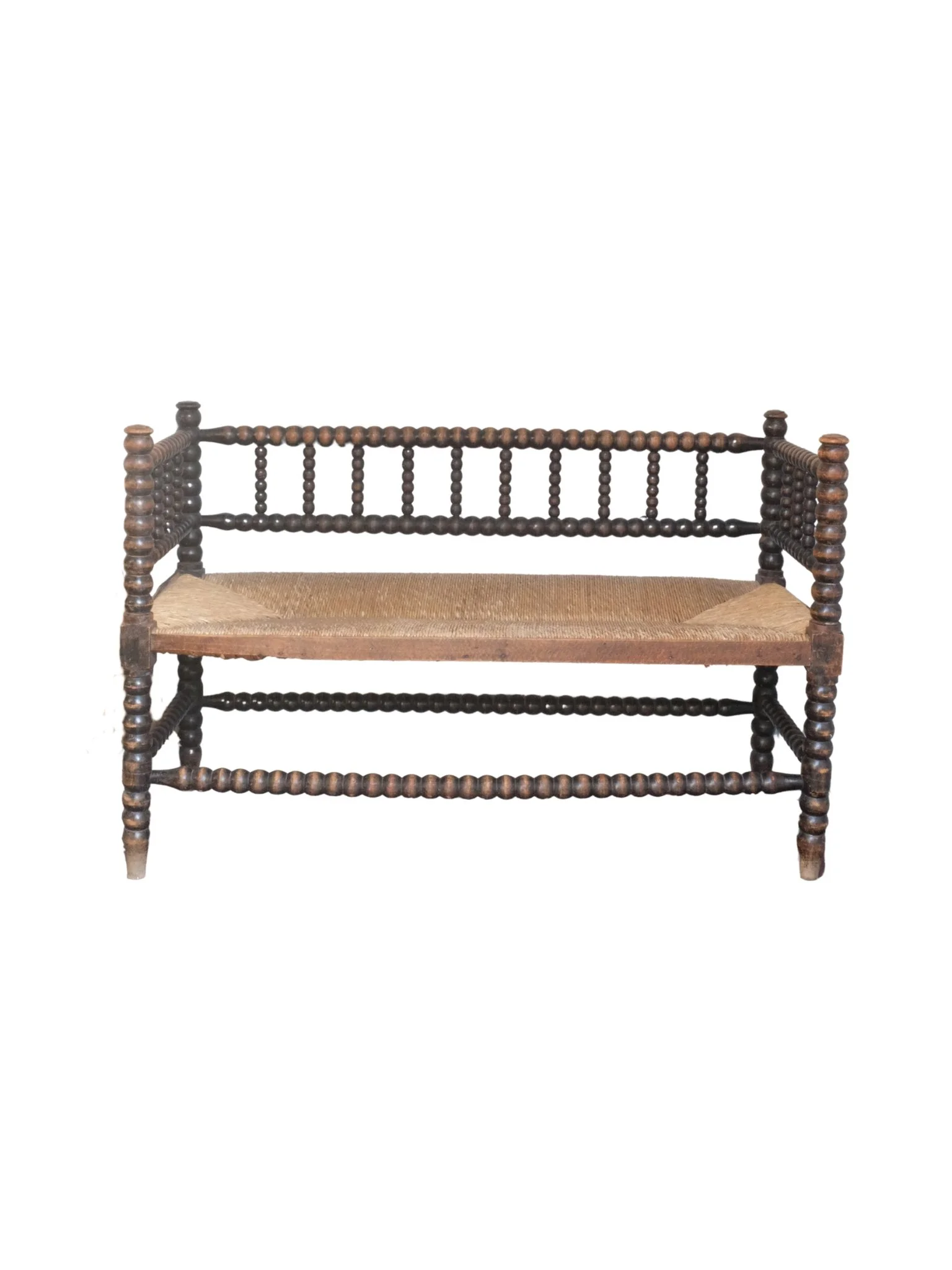
An antique bobbin bench, easy to place throughout the home. Over 100 years old and entirely one of a kind, each bench retains its original wood and patina, with subtle signs of age that add character.
Suitable for use in the hallway, at the foot of a bed, or as an accent piece beneath artwork.
This bobbin bench is in great antique condition. The seat and wood are in beautiful shape, rich in character with that time-worn patina only antique pieces can offer.
108,5cm width
45cm depth
70cm height
39cm seat height
Please note: as with all antique items, small variations and imperfections are part of the charm and authenticity of the piece.
An antique bobbin bench, easy to place throughout the home. Over 100 years old and entirely one of a kind, each bench retains its original wood and patina, with subtle signs of age that add character.
Suitable for use in the hallway, at the foot of a bed, or as an accent piece beneath artwork.
This bobbin bench is in lovely antique condition. The seat shows a little wear from age (a broken strand and a darker spot) whilst the wood is in beautiful shape, rich in character with that time-worn patina only antique pieces can offer. At some point two of the stretchers have been removed, leaving a mark on the legs.
101cm width
43cm depth
67cm height
38cm seat height
Please note: as with all antique items, small variations and imperfections are part of the charm and authenticity of the piece.
An antique bobbin stool in classic proportions, easy to place throughout the home. Over 100 years old and entirely one of a kind, she retains her original wood and patina, with subtle signs of age that add character.
Ideal as a hallway stool, bedside table, child’s chair or accent piece.
Width: 42 cm
Total height: 70 cm
Seat height: 38 cm
Please note: as with all antique items, small variations and imperfections are part of the charm and authenticity of the piece.
An antique bobbin stool in classic proportions, easy to place throughout the home. Over 100 years old and entirely one of a kind, she retains her original wood and patina, with subtle signs of age that add character.
All bobbin stools can be painted in one of five paint colours, or custom colours on request.
Width: 42 cm
Total height: 65 cm
Seat height: 35 cm
Please note: as with all antique items, small variations and imperfections are part of the charm and authenticity of the piece.
An antique bobbin stool in classic proportions, easy to place throughout the home. Over 100 years old and entirely one of a kind, she retains her original wood and patina, with subtle signs of age that add character.
All bobbin stools can be painted in one of five paint colours, or custom colours on request.
Width: 39,5 cm
Total height: 70,5 cm
Seat height: 41 cm
Please note: as with all antique items, small variations and imperfections are part of the charm and authenticity of the piece.
An antique bobbin bench, easy to place throughout the home. Over 100 years old and entirely one of a kind, each bench retains its original wood and patina, with subtle signs of age that add character.
Suitable for use in the hallway, at the foot of a bed, or as an accent piece beneath artwork.
This bobbin bench is in great antique condition. The seat and wood are in beautiful shape, rich in character with that time-worn patina only antique pieces can offer.
108,5cm width
45cm depth
70cm height
39cm seat height
Please note: as with all antique items, small variations and imperfections are part of the charm and authenticity of the piece.